

 DirectStay
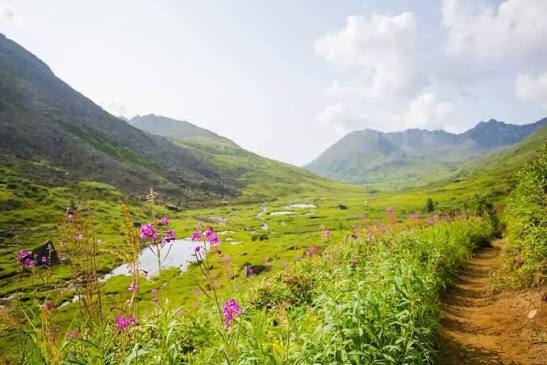
A day at Hatcher Pass in the Mat-Su Valley depends on the season so completely that visitors a month apart might not recognize the same road. In July, the tundra above Independence Mine erupts in wildflowers — lupine, fireweed, dwarf dogwood — carpeting slopes that stretch toward the Chugach Range and Alaska Range in every direction. Gold Cord Lake sits cold and turquoise at the end of a short climb, and the ruins of a gold mine that once employed two hundred workers stand weathered against ridgelines at nearly four thousand feet. But return in January, and the wildflower meadows have vanished under several feet of powder. Skeetawk's triple chair carries skiers up slopes the Dena'ina called Shk'ituk't — "where we slide down" — while backcountry riders skin upward past the old mine buildings toward terrain that earned its reputation decades before any lift existed. Same pass. Same road from Palmer. A completely different place.
The drive from Palmer takes roughly twenty-five minutes before the valley floor drops away. Hatcher Pass Road follows the Little Susitna River upward through spruce forest, then climbs above tree line into alpine tundra. The paved road reaches Independence Mine at Mile 17.2. Beyond that, the summit road opens around the Fourth of July most years and threads through gravel switchbacks toward Willow. Most visitors turn around at the mine.
Independence Mine State Historical Park holds what remains of one of Alaska's largest hard-rock gold camps. The Alaska-Pacific Consolidated Mining Company operated here from the late 1930s through 1951, employing over two hundred workers at peak and blasting nearly twelve miles of tunnels into Granite Mountain. The mine manager's house has become a visitor center, and Salmon Berry Tours leads guided walks through restored bunkhouses, mess halls, and the collapsed mill. The setting does half the work: abandoned structures against an alpine bowl at nearly four thousand feet, with views that reach across the valley on clear days.
The trails radiating from the mine parking area are where summer earns its reputation. Gold Cord Lake Trail runs 1.7 miles round trip to an alpine lake rimmed by scree and wildflowers that peak in July. The Fishhook Trailhead at Mile 16.5 connects to longer routes — Reed Lakes and Gold Mint push into glacial valleys and blue lakes, while late-summer blueberry picking turns the upper slopes purple with fruit. Above it all, paragliders launch from Marmot Mountain and spiral down to the parking lot.
Two miles past the mine turnoff, Summit Lake sits high in the alpine — a cirque lake with a backdrop of the Willow Creek Valley and enough silence to reset whatever pace you brought from below.
By October, the pass begins its other life. Snow arrives early — some of the earliest in the state — and stays through April. The road stays open from Palmer to Independence Bowl year-round, giving access to groomed cross-country trails maintained by the Mat-Su Ski Club. The Government Peak Recreation Area at the base holds Nordic loops designed by former Olympian Bill Spencer, with a chalet for warming and gear rental.
Skeetawk Ski Area opened in 2020 as a grassroots nonprofit — the valley's first lift-served downhill skiing. The name comes from the Dena'ina word Shk'ituk't. A triple chair accesses thirty skiable acres across three hundred vertical feet, from beginner runs to a terrain park. Snowmaking equipment installed in 2025 extended the reliable season. It sits twenty-five minutes from Palmer, and the atmosphere stays local in a way larger resorts rarely manage.
Backcountry skiing and snowboarding draw a different crowd to the terrain above the mine. The slopes above Fishhook Trailhead and Archangel Road access steep, unmaintained lines in avalanche country — beacons, shovels, and probes are non-negotiable. The payoff is untracked powder in terrain that once served as Junior Olympic ski training grounds. Snowmobiling runs west of the pass. Sledding near Independence Mine is free and popular with families. And on clear winter nights, Summit Lake's open sky and mountain backdrop make it one of the valley's stronger aurora viewing positions.
Late August through mid-September, the tundra shifts from wildflower green to fall colors — amber and rust against grey granite. They arrive fast and leave faster. Blueberry picking peaks during this window, the trails thin out, and September marks the start of aurora season. A late-summer visit stacks fall color, berries, and northern lights into the same few weeks.
Late May and June bring a different uncertainty — snow retreats unevenly, and post-holing through hip-deep drifts is common on higher trails even in late June. The summit road usually isn't open until July. But you get the first green of the year and few other hikers.
Access: Hatcher Pass Road is accessible from the Glenn Highway north of Palmer or the Parks Highway in Willow. Paved to Mile 17.2 (Independence Mine). The summit road is gravel, steep, and typically open July through mid-September — not recommended for RVs. Check road status before planning a through-drive.
Parking: $5 day-use fee at Independence Mine. Lots fill on summer evenings and peak weekends.
Independence Mine tours: Salmon Berry Tours operates guided lectures mid-June through Labor Day. Self-guided access to three buildings during visitor center hours. Pedestrian access available after gate hours from Independence Bowl lot. Verify current dates and pricing at Alaska State Parks or Salmon Berry Tours.
Skeetawk: Season typically late November through late April. Rentals, lessons, food truck on-site. Current conditions and pricing at skeetawk.com.
Services: None on the pass. Fill up in Palmer or Wasilla. No cell service above the valley floor — download offline maps before you leave.
Weather: Conditions at four thousand feet differ dramatically from Palmer. Pack layers and rain gear even on clear days. In winter, dress for well below freezing and check avalanche conditions before any backcountry travel.
Lodging note: Hatcher Pass draws visitors year-round, and proximity to the trailheads matters most for dawn starts and evening alpenglow. Guests who plan ahead can build a full day on the pass — arriving early, packing lunch, and treating the drive back as the transition to evening rather than a rush. Booking lodging in advance opens up quieter, more spacious options in surrounding communities.
🏠 HOST INSIGHT OPPORTUNITY: "What do your guests usually get wrong about Hatcher Pass, or what do you always tell them before they go?"
✅ IF HOST PROVIDES WISDOM: "But the thing most visitors don't realize is [HOST INPUT HERE]."
⬇️ ALTERNATE (if no host wisdom): "But locals who use this pass like a weekly tool know the real variable isn't the trail you pick — it's the hour you arrive. By mid-afternoon on summer weekends, the Independence Mine lot is full and the alpine quiet that makes the place worth visiting has been replaced by the hum of a busy parking area. The morning belongs to hikers. The evening belongs to photographers chasing alpenglow on Pioneer Peak. The middle of the day belongs to everyone else."
The season decides what Hatcher Pass gives you. Wildflowers or powder, gold rush history or groomed Nordic loops, alpine silence or the creak of a chairlift. The pass doesn't care which version you came for — it just asks that you check the road conditions, pack an extra layer, and fill your tank before you leave the valley floor.
Want to feature your business on the DirectStay Blog?
Want to feature your business on the DirectStay Blog?

Connect with travelers, share your space, and join a community of hosts earning together.
Become a host