

 DirectStay

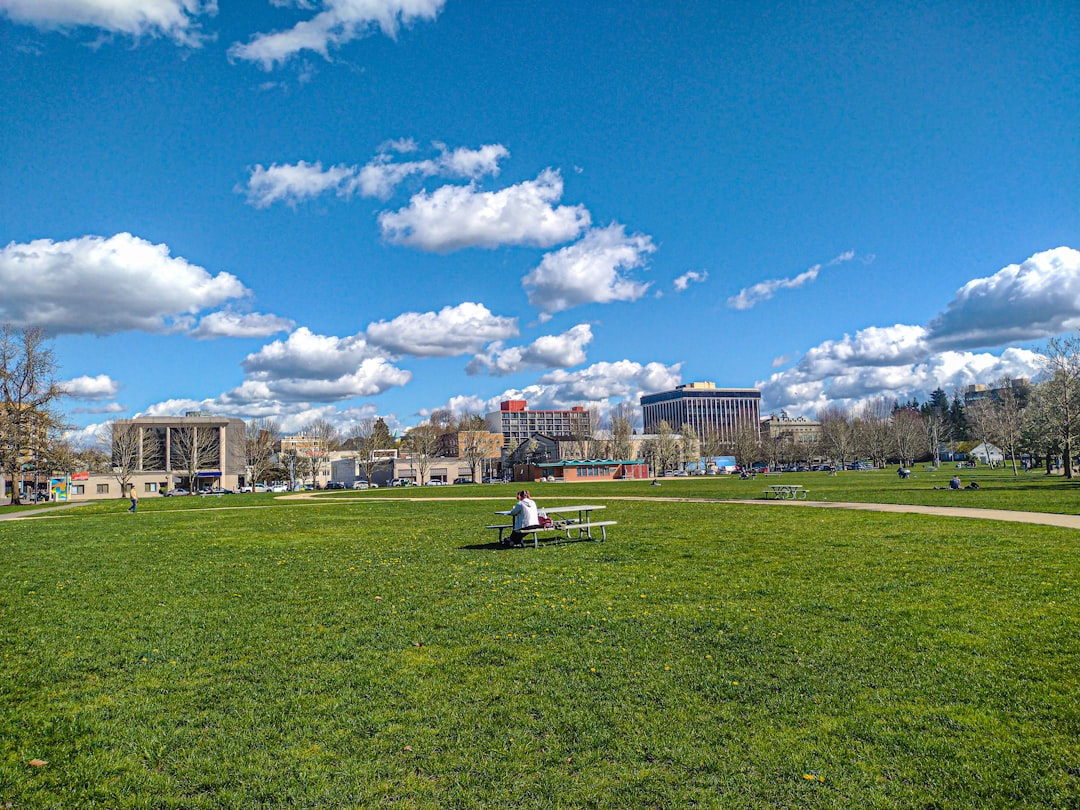
Washington Park holds five major destinations inside 410 acres on the west side of Portland, and from the parking lot they all look equally reachable. The map suggests you could visit the rose garden, walk to the Japanese garden, loop through the arboretum, and still get to the zoo by afternoon. Families try this every summer weekend. By the second stop, someone is dragging. By the third, the group has fractured — half wanting to sit in silence near water, half wanting to press buttons and watch animals move. The park doesn't warn you. It lets you discover, on your own schedule, that it has been two parks wearing one name the entire time. One side slows your breathing. The other side accelerates it. And the afternoon goes better once you stop pretending you can have them in the same four hours.
The International Rose Test Garden sits at the top of the park on an open hillside, free to enter, and visible from several approach paths. It has been testing rose varieties here since 1917 — this is the garden that earned Portland the name "City of Roses," and it still holds more than 10,000 bushes representing over 650 varieties. The bloom peaks between June and September, but the garden functions year-round as a place where walking speed drops by half within minutes of arriving. Mt. Hood fills the eastern horizon on clear days, and the terraced rows create the kind of structured openness where kids wander between bushes and adults lose track of how long they've been standing in one spot.
The Portland Japanese Garden sits adjacent, up the hill, and operates at a different register entirely. Architect Kengo Kuma redesigned the garden's Cultural Village in 2017, and the result is 12 acres of eight distinct garden styles enclosed by forest. This is a nationally ranked garden — consistently cited as the finest Japanese garden outside Japan — and it earns that through deliberate pacing. The paths are designed so you can't rush. Sightlines reveal themselves one at a time. The experience asks for an hour minimum, rewards two, and punishes anyone who tries to check it off a list between other stops.
Between them, Hoyt Arboretum stretches across 190 acres with 2,300 species collected from six continents and 12 miles of walking trails — including a connection to the Wildwood Trail that links Washington Park to Forest Park. The arboretum is free, open daily, and serves as the physical bridge between the contemplative garden side and the rest of the park. It is also the part most families skip, which means it's the quietest acreage in the entire complex on any given Saturday.
Oregon Zoo sits at the western end of Washington Park, accessible by MAX light rail — the only zoo in the Pacific Northwest you can reach by train. It is AZA-accredited, and its conservation programs include the California condor recovery effort that has helped bring the species back from fewer than two dozen birds. The zoo is built for energy. Kids move from exhibit to exhibit at their own pace, and the layout rewards curiosity over planning. A family can spend three hours here without sitting down, and most of them will.
OMSI — the Oregon Museum of Science and Industry — is not technically inside Washington Park, but it connects by transit and sits along the Willamette waterfront on the east side of the river. The museum holds a planetarium and the submarine USS Blueback, a decommissioned Navy fast-attack submarine docked on the waterfront. OMSI is the destination that families discover on a rainy morning and then never make it to the park at all — and that's a perfectly complete day, not a consolation prize. The hands-on exhibits run long enough that a family of four can split across floors and reconvene for lunch without anyone running out of things to touch.
The tell is usually age — but not always. Families with children under eight tend to gravitate toward the zoo and OMSI, where the environment is built to absorb energy rather than contain it. Families with older kids or mixed-age groups often split: one parent takes the younger children to the zoo while the other walks the Japanese Garden at the pace it was designed for. Couples without children almost always underestimate the Rose Test Garden and almost always stay longer than they planned.
The arboretum belongs to everyone and to no one in particular. It is the place where the person who needs to walk without a destination can disappear for an hour while the rest of the group does something loud. It is also the connecting tissue — the trails that link the garden side to the zoo side run through it, which means the arboretum is how the park breathes between its two identities.
Washington Park, SW Portland, accessible from W Burnside Road and SW Canyon Road. The park spans multiple entrances — the garden complex sits on the eastern ridge, the zoo on the western side.
MAX Blue and Red lines stop at Washington Park station, one of the deepest transit stations in North America. The station sits between the zoo entrance and the garden complex. TriMet bus service also connects from downtown.
Limited and competitive on weekends, especially during summer bloom season. Washington Park manages parking with a reservation system during peak periods. Check Portland Parks & Recreation for current parking policies before driving.
The International Rose Test Garden and Hoyt Arboretum are free. The Portland Japanese Garden and Oregon Zoo charge admission — check their websites for current pricing and timed entry availability. OMSI charges separately and is located across the river at 1945 SE Water Avenue.
The gardens are open year-round. Rose bloom peaks June through September. The Japanese Garden's experience holds across seasons — fall color and winter structure are part of the design. The zoo and OMSI operate rain or shine, making them the natural wet-weather defaults.
Not permitted in the Japanese Garden or the zoo. Allowed on leash in Hoyt Arboretum and on Washington Park trails.
Washington Park is Portland's most-visited natural attraction, and weekend demand during peak bloom compresses available parking and timed-entry windows. Guests staying in surrounding neighborhoods benefit from arriving early — before mid-morning on weekends — and building the park visit into a full west-side day rather than treating it as a midday stop.
Want to feature your business on the DirectStay Blog?
Want to feature your business on the DirectStay Blog?

Connect with travelers, share your space, and join a community of hosts earning together.
Become a host