

 DirectStay

Portland in late May and early June depends on a timeline most visitors don't know exists. The Rose Festival has been reshaping this city since 1907 — not for a weekend, but across three weeks of parades, waterfront carnival, dragon boat sprints on the Willamette, and a rose garden hitting peak bloom at the same moment the downtown grid goes sideways. The Grand Floral Parade alone draws hundreds of thousands of spectators to the streets, and the closures ripple outward into transit reroutes, restaurant surges, and neighborhood block parties that turn residential streets into their own small festivals. If your June trip to Portland overlaps with this, you're either planning around it or getting swept into it. Either way works — but only if you know it's happening.
The Rose Festival isn't a single event. It's a cascade. Opening Night kicks off with fireworks over the waterfront on the Friday of Memorial Day weekend, and from there the calendar layers CityFair across three weekends at Tom McCall Waterfront Park, Dragon Boat Races on the Willamette, the Junior Parade through the Hollywood District, and the signature Grand Floral Parade through downtown.
What catches visitors off guard is the duration. Most city festivals compress into a weekend. Portland's stretches from late May into mid-June, and during that window, the waterfront you planned to jog along becomes a carnival midway. The Pearl District restaurants you expected to walk into on a Saturday night are two-deep at the host stand because parade crowds haven't dispersed.
Parade days close streets through the downtown core. The Grand Floral Parade — the second-largest all-floral parade in the country — sends flower-covered floats, marching bands, and equestrian units along a route that reshapes vehicle access for hours. For 2026, the Rose Festival Foundation has combined the Grand Floral Parade with the evening Starlight Parade into a single Grand Floral Starlight Parade, beginning with floral floats in daylight and transitioning into illuminated floats after dark. The structure may continue evolving — check rosefestival.org for the current year's format.
During parade windows, downtown parking becomes adversarial. TriMet buses and MAX reroute around closures. Rideshare pickup points shift. The practical move is arriving early, on transit, or on foot — and building the parade into the day rather than working around it.
CityFair transforms Tom McCall Waterfront Park into carnival grounds for three consecutive weekends. Rides, food vendors, live music stages, and headlining performers take over the park along the river. The Willamette waterfront path — normally one of the city's best walking and cycling corridors — diverts around the footprint.
If your morning routine involves waterfront access, that routine shifts during CityFair weekends. The park doesn't disappear, but the version of it you're imagining does.
The Dragon Boat Races pull international teams onto the Willamette, typically the second Saturday after Memorial Day. The Portland-Kaohsiung Sister City Association has organized this tradition since 1989 — over fifty teams racing in traditional-style boats brought from Taiwan, with spectators lining the waterfront. The races run Saturday and Sunday, free and open to the public, and they turn a section of the Willamette into a spectator sport that most Portland visitors never expect.
If you're anywhere near the South Hawthorne Waterfront Park during race weekend, you'll hear the drums before you see the boats.
The festival's footprint extends well beyond downtown. The Junior Parade marches through the Hollywood District. Neighborhoods host block parties and sub-events that ripple outward from the central programming. Surrounding dining corridors see elevated foot traffic during festival weeks — not because the festival is happening there, but because downtown compression pushes people into neighboring districts for dinner, drinks, and breathing room.
Restaurant reservations in the Pearl District and downtown tighten noticeably during parade weekends.
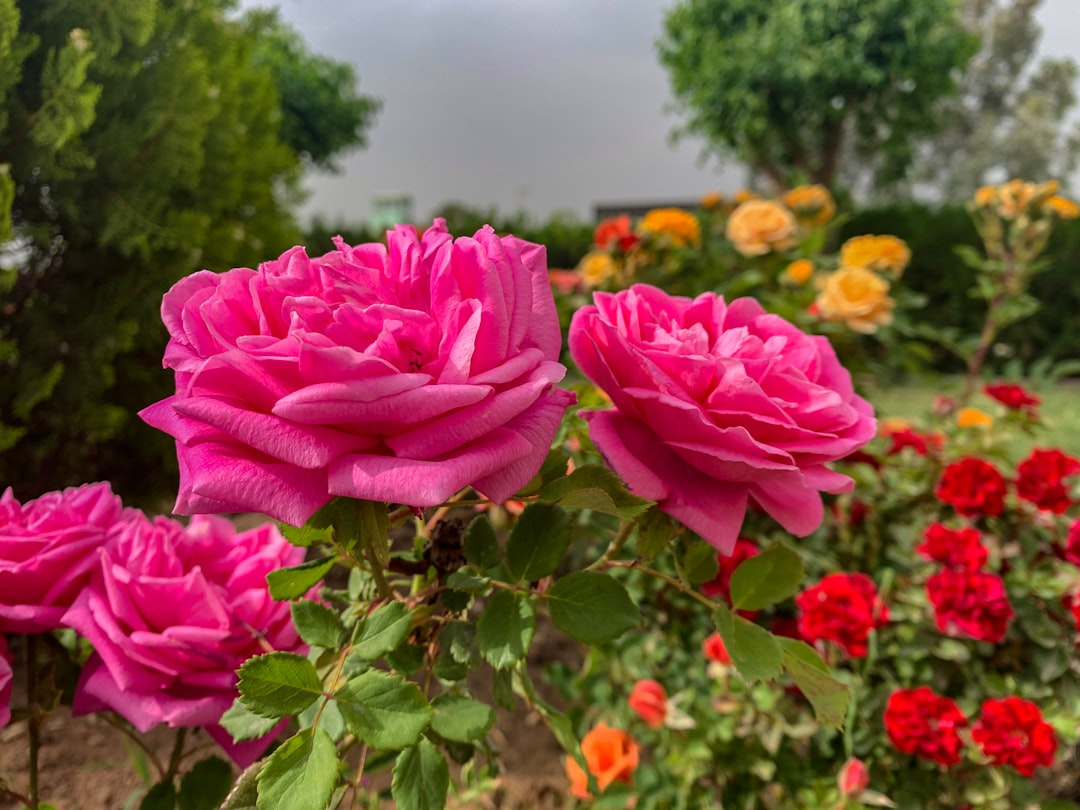
While the parades and carnival draw the crowds, the International Rose Test Garden in Washington Park hits peak bloom during the same window. Founded in 1917, it's the oldest continuously operated public rose test garden in the country — over 10,000 bushes representing more than 600 varieties, terraced across hillsides with views of downtown and Mount Hood. Admission is free. The Rose Festival's timing isn't accidental; the city's identity and its signature flower peak together.
The garden is the part of the Rose Festival that doesn't close any streets, reroute any buses, or require any planning beyond showing up. On a clear June morning, it's the version of the festival the parades can't give you — quiet, fragrant, and entirely self-paced.
Portland Rose Festival. Annual, typically late May through mid-June. Verify this year's dates and schedule at rosefestival.org.
Multiple venues. CityFair at Tom McCall Waterfront Park, downtown. Parades through the downtown core. Dragon Boat Races at South Hawthorne Waterfront Park on the Willamette. Rose Test Garden in Washington Park.
The festival spans approximately three weeks. CityFair typically runs three consecutive weekends. Parade dates shift annually — confirm the current year's schedule before planning around specific days.
Downtown parking during parade days is severely limited. TriMet MAX and bus service reach all major festival areas. Arriving by transit or on foot is the practical default during festival weekends.
Parade viewing is free along the route — curbside access is first-come. Grandstand seating is typically available for purchase. Dragon Boat Races are free and open to the public at the waterfront.
Washington Park, west side. Free admission. Open daily. Peak bloom late May through June. Parking at Washington Park is metered — consider MAX light rail (Blue or Red line) to the Washington Park station and the free Washington Park shuttle.
Pearl District and downtown restaurants fill faster than usual during parade weekends. Reservations recommended for weekend evenings throughout the festival window.
The Rose Festival is Portland's largest annual event and draws visitors from across the region. Accommodations in the metro area fill earlier than a typical June weekend. Guests staying in surrounding communities can park once downtown, build a full day around the festival, and treat the drive home as wind-down time. Booking lodging early in June opens up quieter, more spacious options outside the city center.
The Rose Festival doesn't ask permission. It shows up every year the way it has since 1907 — parades, carnival, boats on the river, roses in bloom — and the city rearranges itself accordingly. The only question for a June visitor is whether you build your trip around the festival's footprint or let the festival become the trip. Both work. But the version where you didn't know it was happening doesn't.
Want to feature your business on the DirectStay Blog?
Want to feature your business on the DirectStay Blog?

Connect with travelers, share your space, and join a community of hosts earning together.
Become a host