

 DirectStay

A Portland golf weekend gives you permission to want something most visitors never consider: a course people fly in to play. That pull — the one where the round itself justifies the trip — lands you at Pumpkin Ridge's Ghost Creek, carved into North Plains farmland where the Coast Range fills the horizon and the fairways feel like they belong to a different century. Bob Cupp designed the layout in the old style, leaving wetlands and tree stands intact, and the result is a course that drew tournament attention within a year of opening. You walk Ghost Creek and the city dissolves somewhere around the third hole. Then there's the course fifteen minutes from downtown that shouldn't play this hard — the one designed by Robert Trent Jones II on Columbia River lowlands where great blue herons stalk the water hazards between your approach shots, and the pedigree rivals anything behind a membership gate.
Ghost Creek sits roughly twenty-five miles west of downtown Portland, in North Plains — far enough that the commute itself becomes a transition. The agricultural landscape flattens out, the Coast Range sharpens, and by the time you reach the clubhouse you've already left the city behind in a way that no urban course can replicate.
The course opened in 1992 and immediately drew tournament attention. The 1993 Nike Tour Championship played here, where David Duval mounted a comeback after a double bogey on nine to take the title. The USGA brought both the Junior Amateur and Girls' Junior to the property in 2000. Witch Hollow — Pumpkin Ridge's private side — hosted Tiger Woods's third consecutive U.S. Amateur win in 1996 and two Women's U.S. Opens. Ghost Creek is the public course, but it shares the same architect, the same land, and the same standard of conditioning.
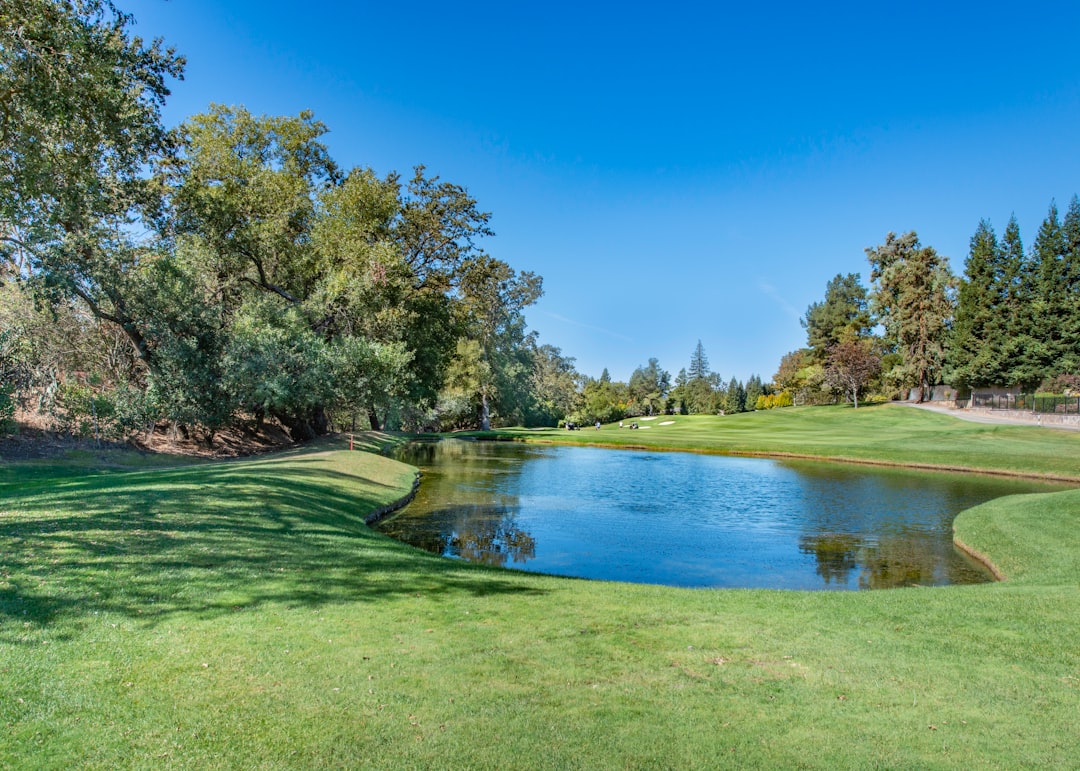
What stays with you isn't the tournament history. It's the way the course thinks. Cupp routed holes through forested corridors and wetland edges where the fairways narrow gradually — wide enough off the tee to swing with confidence, tight enough by the green to punish lazy strategy. The creek itself appears and disappears throughout the round, sometimes crossing the fairway, sometimes running parallel just close enough to tighten your line. Greens are fast, multi-tiered, and defended by bunkers that sit slightly further from the putting surface than they appear. The course rewards planning over power, and it asks you to read the land before you swing.
Ghost Creek plays as a par 71 at roughly 6,800 yards from the back tees, with bent grass fairways and greens. Four sets of tees on every hole mean the course scales to your game. The practice facilities — driving range, putting green, chipping area — are separate from the private side and fully appointed. The clubhouse has a grill with views of the course.
Heron Lakes Golf Club sits in North Portland, just off Interstate 5, near Portland International Raceway. The address reads urban. The experience doesn't.
The Great Blue course — the more demanding of Heron Lakes' two eighteens — was completed in 1992, designed by Robert Trent Jones II on 340 acres of Columbia River flood plain. The property is owned and operated by Portland Parks and Recreation, which means greens fees stay accessible. But the design doesn't play like a municipal discount. Jones II built a links-style layout with water on nearly every hole, bunkers guarding elevated greens, and fairways that narrow toward putting surfaces featuring severe undulations. The finishing three holes are a genuine test — risk-reward dilemmas where water runs parallel and the safe play costs you strokes.
The course has hosted the U.S. Amateur Public Links Championship, the Northwest Open, and the Neil Lomax NFL Quarterback Shootout. Golf Digest rated it four stars. Golf World readers placed it in the top fifty public courses nationally. These aren't participation trophies — they're recognition that a city-owned course on a flood plain plays at a level most private clubs envy.
What distinguishes Great Blue from the typical muni experience is the land itself. The property doubles as an urban wildlife corridor — herons nesting on the water features, Mt. Hood visible from multiple fairways, Mt. St. Helens on clear days. The course opened in 1971 as West Delta Park Golf Course (the Greenback side came first, designed by both Robert Trent Jones Sr. and Jr.), and the property carries layers of Portland history underneath it. The flood plain was once part of Vanport, Oregon's second-largest city during World War II, destroyed by a catastrophic flood in 1948.
Heron Lakes also has the Greenback course — a more forgiving parkland-style eighteen — plus an all-grass driving range, putting green, and chipping green. The facility supports The First Tee of Greater Portland, and Portland Parks golf courses participate in Youth on Course, which means golfers under eighteen can play for five dollars.
Both courses are public. Both play at championship caliber. Both sit within a thirty-five-minute drive of downtown Portland. The tension isn't quality — it's what you came for.
Pumpkin Ridge asks you to leave the city. The drive is part of the experience. You arrive in farmland, you play a course designed to feel timeless, and the round carries a sense of occasion that starts before you reach the first tee. The greens fees reflect that positioning — check pumpkinridge.com for current rates, which vary by season.
Heron Lakes asks you to reconsider what a city course can be. The Great Blue is fifteen minutes from downtown, greens fees are a fraction of destination-course pricing, and the Jones II pedigree means you're playing a layout that was engineered to host national championships. The occasion is quieter. The design is not.
If the round is the reason you came to Portland — if you've been talking about this tee time for months — Pumpkin Ridge's Ghost Creek is the course that meets that expectation. If you want a round that earns your respect without requiring a pilgrimage, Heron Lakes' Great Blue is the course that changes what you thought a public layout could be.
North Plains, OR — approximately 25 miles west of downtown Portland. Tee times can be reserved two weeks in advance. Check current greens fees and book at pumpkinridge.com. Proper golf attire required — collared shirts, no denim. The course is open year-round, with peak season May through September.
3500 N Victory Blvd, Portland, OR 97217 — just off I-5 in North Portland. Check current rates and book tee times at portlandparksgolf.com. The facility includes the Greenback course, all-grass practice facilities, and a clubhouse grill.
Both courses have dedicated lots with no fee. Pumpkin Ridge's lot is adjacent to the Ghost Creek clubhouse. Heron Lakes' lot serves both courses.
Portland-area golf trips benefit from advance planning — peak season weekends fill across the metro. Booking lodging early opens up quieter, more spacious options in surrounding communities, and the drive to either course is already part of the day.
Want to feature your business on the DirectStay Blog?
Want to feature your business on the DirectStay Blog?

Connect with travelers, share your space, and join a community of hosts earning together.
Become a host