

 DirectStay

A day trip to Mt. Hood from Portland boils down to a single variable that predetermines everything else before you pack the car: what month is it? The mountain sits close enough that you can see it from the city on a clear morning, anchoring the eastern skyline like something that belongs to Portland personally. But that proximity is deceptive. The Mt. Hood you visit in January and the Mt. Hood you visit in July share a silhouette and almost nothing else. One version buries its trails under snowpack and hands you goggles. The other opens meadows full of beargrass and lupine and asks only that you brought enough water. The activities barely overlap. The gear lists don't. The planning questions are completely different. And the mountain doesn't split the difference — it commits fully to whichever season you arrive in.
Start here no matter when you come. Timberline Lodge sits at roughly 6,000 feet on Mt. Hood's south face, built in 1937 as a Works Progress Administration project during the Great Depression. It's a National Historic Landmark, and the handcrafted interior — wrought iron, carved wood, hand-loomed textiles — reflects a scale of public craftsmanship that no longer gets funded. The building served as the exterior for the Overlook Hotel in Stanley Kubrick's adaptation of The Shining, though the interior was shot on a soundstage.
What makes Timberline structurally unusual is that it operates year-round. The Palmer Snowfield above the lodge holds snow into summer, making Timberline one of the few places in North America where skiing and snowboarding are possible in July. In winter, that same snowfield connects to a full ski area. In summer, visitors who have no interest in skiing come for the Cascade Dining Room, the architecture, and the views south toward Jefferson and the Sisters.
Timberline is the constant. Everything else on the mountain depends on when.
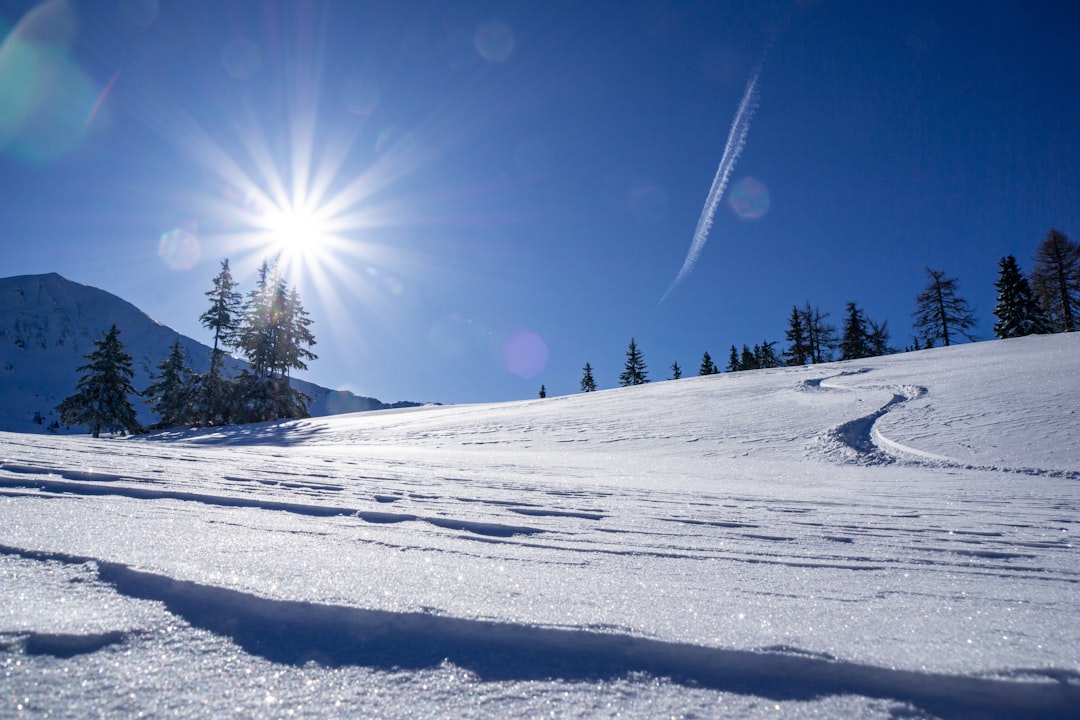
If you arrive between November and April, the mountain's personality is vertical. The question isn't where to go — it's how much cold, speed, and elevation you want.
Timberline Ski Area covers the upper mountain. The runs are above treeline, wide, and exposed — the views are the selling point as much as the terrain. Conditions are Pacific Northwest snow, which means heavier and wetter than what Colorado or Utah skiers expect.
Mt. Hood Skibowl in Government Camp sits at lower elevation and operates under a different philosophy. It's the closer, more accessible option — historically the region's go-to for night skiing, tubing, and riders who want a shorter drive and a less alpine commitment. The runs are tree-lined, the vibe is neighborhood-mountain, and the tubing hill draws families who aren't looking for anything that requires a lesson first.
Mirror Lake in winter becomes a snowshoe destination. The trail is roughly a mile and a half round trip from the Highway 26 trailhead, and the frozen lake with Mt. Hood reflected in whatever ice and snow conditions exist that day is worth the cold hands. Trillium Lake, accessed via Forest Road 2656, offers similar winter conversion — the summer picnic lake becomes a cross-country ski and snowshoe corridor.
Winter Mt. Hood asks you to plan around gear, road conditions, and tolerance for elevation. The reward is a mountain that feels genuinely alpine less than two hours from a city with a streetcar.
Sometime between June and July — the exact date shifts with snowpack every year — the trails below Timberline begin to clear. And when they do, Mt. Hood reveals a completely different set of destinations that were inaccessible or invisible three months earlier.
Mirror Lake in summer is the easy payoff. The same trail that required snowshoes in February is now a flat, well-maintained walk through forest that ends at a lake reflecting the mountain's full profile in still water. It's short enough for young kids. It's photogenic enough to feel earned. It asks almost nothing of you.
Trillium Lake becomes the picnic-and-paddle version. Summer opens the campground and the water to kayaking, canoeing, and fishing. The Mt. Hood reflection from Trillium's south shore is one of the most photographed compositions in Oregon, and unlike Mirror Lake, you can drive to the shore.
Ramona Falls is where summer Mt. Hood asks something back. The loop trail runs roughly seven miles round trip from the Muddy Fork trailhead, crossing the Sandy River on a seasonal footbridge and ending at a 120-foot cascade that fans across a mossy rock face. The falls don't pour — they spread. The trail is summer-only because the access road closes with snow, and the river crossing depends on seasonal bridge installation. This is the commitment hike, and it rewards the commitment.
Mt. Hood Skibowl converts in summer to an adventure park — alpine slides, zip lines, mountain biking. The infrastructure that runs chairlifts in winter repurposes for gravity-fed recreation. It's the option for visitors who want Mt. Hood's setting without a trail.
This isn't a mountain where you pick an activity and then figure out timing. The timing picks the activity.
has no access to Ramona Falls. A July visitor has no access to night skiing at Skibowl. The mountain doesn't hedge.
Which means the real planning question for a Portland day trip to Mt. Hood is simpler than it looks: what month are you here? Answer that, and the mountain tells you what it has.
Mt. Hood is east of Portland via US-26. Government Camp and Timberline Lodge are in the Mt. Hood corridor. Allow time for mountain road conditions in winter.
Chains or traction tires may be required on US-26 and surrounding forest roads between November and April. Check TripCheck.com or ODOT for current requirements before driving.
The lot fills on winter weekends and powder days. Arriving early helps. Summer parking is typically less constrained.
Summer trail access depends on annual snowpack melt. The Forest Service and recreation sites post trail status updates — check current conditions before planning a specific hike. Ramona Falls access in particular depends on the seasonal footbridge installation over the Sandy River.
Much of the Mt. Hood corridor falls within Mt. Hood National Forest. Some trailheads require a Northwest Forest Pass or equivalent day-use fee. Check the Forest Service site for current pass requirements.
The Mt. Hood corridor draws visitors year-round, with winter weekends and summer holiday weeks filling available accommodations earliest. Guests staying in surrounding communities should plan to arrive in the corridor early and build a full day on the mountain — the drive home becomes the decompression, not the obstacle. Booking lodging in advance opens up quieter, more spacious options outside Government Camp.
Want to feature your business on the DirectStay Blog?
Want to feature your business on the DirectStay Blog?

Connect with travelers, share your space, and join a community of hosts earning together.
Become a host