

 DirectStay

Ocracoke Island spends most of the year operating at a pace that requires a ferry crossing just to enter. The village sits at the southern tip of a sixteen-mile strand of National Seashore, reachable only by water, and that geographic fact shapes everything — the rhythm of the restaurants, the size of the crowds, the way a Saturday morning sounds when most of the island is still asleep. But twice a year, the Berkley Manor grounds fill with stages and tents, the ferry lines stretch longer than usual, and the village that felt like it belonged to its thousand year-round residents suddenly holds a few thousand visitors who all chose to cross the water.
The first turn comes in early June. The second arrives near the end of October. They share a venue, a village, and a ferry — and almost nothing else.
The Ocrafolk Festival has been drawing musicians, storytellers, and artisans to the Berkley Manor grounds since 2000. It runs across a weekend in early June — three days of performances on multiple stages, a juried artisan market, a Saturday-night square dance led by a local islander, and the kind of programming that reflects a year-round community of roughly a thousand people choosing to share its living room with visitors.
Ocracoke Alive, the nonprofit that produces Ocrafolk, funds year-round arts and education programming on the island with ticket revenue. The performers include island residents alongside regional folk artists. The artisan vendors go through a juried application process. The square dance is led by a local historian who has been teaching the Ocracoke tradition for decades. None of this is imported spectacle. It grew here, and the festival weekend is when the rest of the coast gets invited in.
The sound profile is acoustic — fiddles, banjos, storytelling, sea songs. Stages scatter across the grounds and into the village. Families bring blankets. Dogs on leashes are permitted. Saturday performances run into the evening, and the village restaurants absorb the crowd without the frantic energy of a summer-peak dinner rush.
Blackbeard's Pirate Jamboree occupies the same Berkley Manor grounds, but the atmosphere has a different weight. The event falls on the last weekend of October — two days of living-history encampments, reenactments, and colonial demonstrations built around the historical fact that Blackbeard met his end in the waters just off this island in November 1718.
The Jamboree grew from a memorial service. In 2008, NC historian Kevin Duffus brought a handful of living-history reenactors to Springer's Point — the spot nearest to where Lieutenant Maynard's crew killed Blackbeard — for a small ceremony. By 2013, the community had expanded it into a full weekend festival.
The Saturday schedule opens with a cannon blast. A pirate parade winds through the village to the encampment. Colonial reenactors demonstrate period navigation, medicine, and cooking. Kids learn sword fighting. The centerpiece is a reenactment of Blackbeard's final battle, staged along the harbor within sight of the waters where the original engagement happened three centuries ago. The event is free.
October on Ocracoke is shoulder season. The crowd skews toward history enthusiasts, families with older kids, and visitors who came specifically for the pirate weekend and the fall quiet that surrounds it. Where Ocrafolk fills the village with acoustic warmth, the Jamboree fills it with gunpowder smoke and sea shanties and the energy of people wearing tricorn hats without irony.
The island absorbs both events through the same infrastructure.
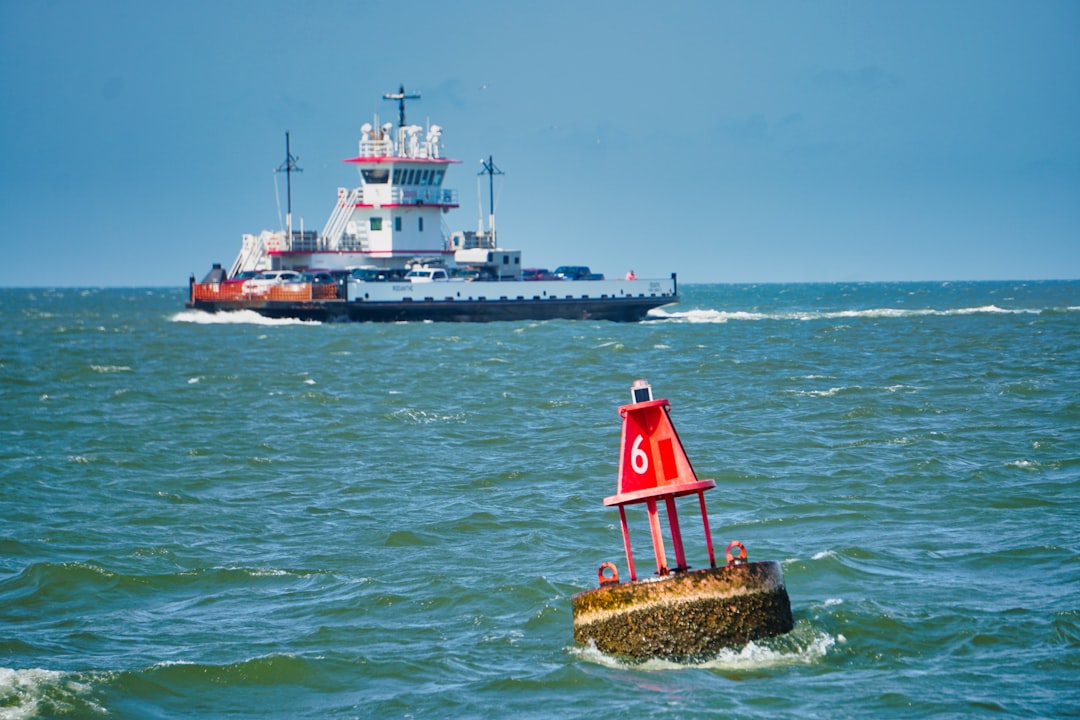
The ferry is the bottleneck. The free Hatteras-Ocracoke vehicle ferry operates first-come, first-served with no reservations. During festival weekends, morning departures from Hatteras fill earlier than usual, and the return crossing compresses into longer-than-typical lines. The seasonal Ocracoke Express passenger ferry — which docks directly at the village rather than the terminal thirteen miles north — runs roughly Memorial Day through Labor Day, making it available for Ocrafolk but not for the Pirate Jamboree. October visitors rely on the vehicle ferry or the mainland toll routes from Cedar Island and Swan Quarter.
Lodging tightens. Ocracoke's rental inventory is limited by the island's size, and both festival weekends rank among the most-requested of the year. When the island books out, the nearest overflow is Hatteras, which adds a ferry crossing to every day of the trip.
Dining concentrates around the harbor during both weekends. October restaurants extend their hours for the Jamboree. June restaurants absorb a noticeable density increase. Neither festival overwhelms the village the way a peak July Saturday does — but planning dinner rather than improvising it is the smarter move.
The most common miscalculation is underestimating the ferry. Visitors who drive to Hatteras expecting to catch the next boat sometimes wait through two or three departure cycles during festival weekends. The crossing itself takes over an hour. Add the thirteen-mile drive from the ferry terminal to the village, and a casual morning departure from central OBX can turn into a half-day transit.
The second miscalculation is booking too late. Ocracoke's lodging supply doesn't flex. When the island fills, it fills — and the alternative is a daily ferry commute from Hatteras that turns a festival weekend into a logistics exercise.
Ocrafolk Festival: Annual, typically the first weekend in June. Three days. Tickets required — early bird sales historically open in December, general admission in May, walk-up tickets available at the gate. Verify this year's dates and purchase tickets at ocracokealive.org.
Blackbeard's Pirate Jamboree: Annual, typically the last weekend of October. Two days. Historically free admission. Verify this year's dates and details at the Blackbeard's Pirate Jamboree Facebook page or visitocracokenc.com.
Where: Both events take place on the Berkley Manor grounds, 58 Water Plant Road, Ocracoke Village. Adjacent to the NPS parking lot.
Ferry access: The Hatteras-Ocracoke vehicle ferry is free, first-come first-served. Crossing takes over an hour. Check the current schedule at ncdot.gov/ferry. During festival weekends, arrive for an early-morning departure. The Ocracoke Express passenger ferry runs seasonally and docks directly at the village; verify availability at ncferry.org. Cedar Island and Swan Quarter toll ferries cross from the mainland with reservations available — for visitors arriving from the south, they eliminate the Hatteras wait entirely.
Getting around the village: On foot, by bicycle, or by the free village tram. Golf carts are not permitted on festival grounds.
Both festival weekends are among the island's highest-demand periods. Ocracoke's limited rental inventory books well in advance. Visitors who wait may find the island full and face a daily ferry commute from Hatteras — still workable, but a fundamentally different trip.
The question with Ocracoke is never whether to go. It's which version of the island you want to meet — the one tuning its fiddles in June, or the one firing its cannons in October. The ferry crossing is the same. What changes is the story the island decides to tell.
Want to feature your business on the DirectStay Blog?
Want to feature your business on the DirectStay Blog?

Connect with travelers, share your space, and join a community of hosts earning together.
Become a host