

 DirectStay
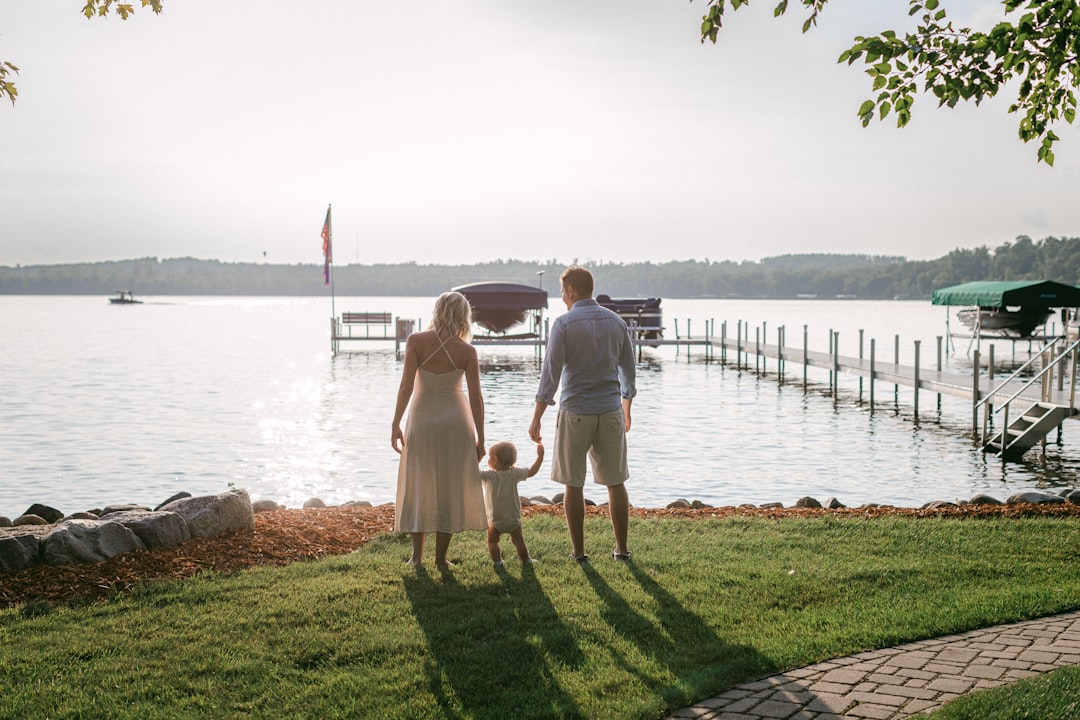
Most families visiting North Lake Tahoe carry a loose plan — a beach day, a hike, maybe a restaurant somebody bookmarked. The afternoon sits open. And the instinct is to fill it with something the kids will remember. That impulse leads to North Tahoe Paddle, where a stack of kayaks and paddleboards wait at the waterline in Kings Beach and the only instruction anyone gets is which direction the wind is blowing. There is no itinerary after launch. The four-year-old trails a hand in the water. The twelve-year-old races ahead. Parents drift. Nobody asks what time it is. That version of the afternoon assumes kids know what they want if you stop telling them. But pull back from the shore and drive into the trees near Tahoe City, and a different assumption surfaces — one where the harness goes on first, the ground school comes before the first platform, and every bridge crossed is a bridge earned. That place runs on structure. And the kids who come back down talk about what they did, not where they were.
At North Tahoe Paddle, the transaction is simple. You show up at Secline Beach, pick a vessel — sit-on-top kayak or stand-up paddleboard — and receive a paddle, a life vest, and a few words about wind patterns. After that, the afternoon belongs to whoever is holding the paddle.
There is no guide. No route. No checkpoint. The shoreline stretches in every direction, and the decision about where to go happens on the water, in real time, negotiated between family members who may not agree on anything else. The younger kid wants to stay near the rocks. The older one wants to reach the next beach. Someone wants to float. Someone wants to sprint. All of it is allowed because nobody drew a line on a map.
What makes this work for families is the absence of consequence. A wrong turn is just a different view. A tired paddler can stop. A bored paddler can switch vessels. The rental window is flexible — an hour, a half day, a full day — and the only thing that ends the experience is the decision to come back to shore.
Parents who choose North Tahoe Paddle tend to share a particular belief: that unstructured time is not wasted time. That the memory gets built in the gaps between activities, not inside them. The kid who spends forty-five minutes watching minnows from a kayak didn't miss anything. That was the thing.
North Tahoe Paddle also drops off equipment — free of charge across the North Shore — to vacation rentals, hotels, and beaches from Incline Village to Tahoma. Which means the afternoon doesn't have to start at Secline Beach. It can start wherever the family already is.
Granlibakken's Tahoe Treetop Adventure Park sits on seventy-four forested acres just off the road into Tahoe City. The property is tucked behind the lodge, quiet from the parking lot, and then suddenly vertical. Ninety-seven tree platforms. Twenty-seven zip lines. Sixty bridges made of cable, rope, and wood — strung between pines and old-growth cedars at heights that look manageable from below and feel less manageable once the harness clips in.
The session starts on the ground. Staff fits harnesses, checks helmets, and walks everyone through the safety system. This is ground school — how to clip, how to brake, how to read the course markers that grade each route the way a ski mountain grades its runs. Green. Blue. Black. Nobody goes up without going through it.
Once released, families have roughly two and a half hours to move through the courses at their own pace. But "own pace" here means something different than it does on the water. The pace is governed by obstacles. A wobbly bridge demands balance. A cargo net demands grip. A zip line demands the willingness to step off a platform thirty feet above the forest floor and trust the cable. Each course builds — easier obstacles at the start, harder ones near the finish — and the progression is deliberate.
Kids who come to Granlibakken tend to leave with a different kind of story. Not "we floated around" but "I made it across the black diamond bridge" or "I went upside-down on the zip line." The memory is task-shaped. There is a before and an after. The before is nervous. The after is proud. Parents don't architect that shift — the course does.
What makes this work for families is the scaffolding. The experience has edges. Kids who freeze on a platform get coaching from staff positioned at each course. Kids who fly through can repeat routes or attempt harder ones. And kids who aren't ready to participate can walk the trails below and watch from the ground — the forest paths run directly underneath the courses.
Both of these experiences cost money, take a few hours, and happen outdoors in North Lake Tahoe during summer. Both are appropriate for families with kids as young as five or six. Both create memories that outlast the standard beach day.
But they answer different questions about what a family afternoon is for.
North Tahoe Paddle answers: What happens when nobody is in charge? The afternoon is shaped by mood, wind, curiosity, and the willingness to let the lake decide. There is no performance and no progression. The value is in the looseness.
Granlibakken's Treetop Park answers: What happens when the challenge is bigger than the kid expects? The afternoon is shaped by difficulty, coaching, and the moment someone does something they weren't sure they could do. The value is in the stretch.
Neither is better. They reveal what your family needs on that particular day. Some families arrive at Tahoe wound tight from the drive, and the last thing they need is more structure. Other families arrive bored, restless, or mid-argument, and the last thing they need is open space with no objective. The right call isn't about the kids' ages. It's about the energy they walked in with.
Choose North Tahoe Paddle when:
The family has been on a schedule for too long. School, sports, logistics — and the trip is supposed to be the break from all of that. Putting kids on a lake with no agenda is the purest version of that break. Nobody needs to perform. Nobody needs to finish anything. The afternoon simply happens.
This also works when the group spans a wide age range. A three-year-old in a double kayak with a parent and a teenager on a paddleboard can share the same stretch of water without anyone compromising. The rental accommodates the spread because there's no shared objective to coordinate around.
And it works when the weather is the activity. When the lake is flat and glassy, when the light is doing something worth watching, when the air temperature makes the water feel like the only place to be — that's when the absence of a plan becomes the plan.
Choose Granlibakken when:
Someone in the family needs a win. Not a participation trophy — an earned moment. The kind where the hands shake on the platform, the staff says "you've got this," and the kid steps off anyway. That sequence doesn't happen on calm water. It happens thirty feet up, clipped to a cable, with the next platform visible but not guaranteed.
This also works when the family has already done the beach, the lake, the float. When the kids are asking "what are we doing today?" with that specific tone that means give me something hard. The Treetop Park meets that tone. The courses are physical, graduated, and finishable — which means the satisfaction is concrete.
And it works when parents want to participate alongside their kids without directing the experience. On the course, everyone is a beginner. The twelve-year-old might clear an obstacle the parent can't. The roles shift. The hierarchy flattens. That recalibration is part of the design.
For families staying multiple days in North Lake Tahoe, the answer is often both — but not on the same day and not in the same mood.
The paddle day tends to land early in the trip, when the lake is still new and the family is still decompressing. It's a low-commitment morning or afternoon that sets the tone: we're here, the water is right there, nobody has to do anything.
The Treetop day tends to land mid-trip, when the novelty of lounging has worn off and the kids are ready to be challenged. It's a planned half-day with a booking, a drive, and a clear start time — which by that point feels welcome rather than constraining.
Stacking them on the same day is possible but rarely wise. The energy they require is different. Drift followed by structure feels like a bait-and-switch. Structure followed by drift feels like a reward — but most families are physically done after two and a half hours in the trees.
Location: Secline Beach, 141 Secline St, Kings Beach, CA
Phone: (530) 448-7054
What they rent: Stand-up paddleboards and sit-on-top kayaks. All rentals include paddles, personal flotation devices, dry bags, basic instruction, and safety tips.
Delivery: Free delivery and pickup for multi-day rentals anywhere in the North Lake Tahoe area — Incline Village, Crystal Bay, Kings Beach, Tahoe Vista, Carnelian Bay, Tahoe City, Homewood, and Tahoma.
Rental minimums: One-hour minimum at the Kings Beach location.
Season: Summer operations. Confirm current availability and schedule at northtahoepaddle.com
Current rates and availability: northtahoepaddle.com/rates
Location: 725 Granlibakken Rd, Tahoe City, CA 96145
Operated by: Tahoe Treetop Adventure Parks / North Tahoe Adventures, located on Granlibakken's 74-acre property.
What it includes: 97 tree platforms, 27 zip lines, and 60 bridges and obstacles across multiple courses graded by difficulty (green, blue, black diamond). Full-body harness and helmet provided. Ground school before each session.
Session length: Approximately 2.5 hours.
Age and requirements: Participants must be at least five years old, wear closed-toe shoes, and follow staff instructions. Advanced courses require a minimum height of 49 inches.
Weather policy: Operates rain, snow, or shine. Only severe weather (lightning, high wind, fire) closes the courses.
Season: Summer operations. Confirm current season dates and book in advance at tahoetreetop.com
Current rates and booking: tahoetreetop.com/tahoe-city-treetop
Granlibakken resort information: granlibakken.com
The families who come back from North Tahoe Paddle talk about the afternoon in soft terms — the light, the drift, the way nobody rushed. The families who come back from Granlibakken talk in specifics — the course they finished, the zip line that scared them, the bridge they almost didn't cross. One story is about where they were. The other is about what they did. The right one depends on which version of the trip your family is building — and what they need from the next few hours to feel like they found it.
Want to feature your business on the DirectStay Blog?
Want to feature your business on the DirectStay Blog?

Connect with travelers, share your space, and join a community of hosts earning together.
Become a host