

 DirectStay
Golden hour in North Lake Tahoe happens on a schedule most visitors never learn. The lake sits in a granite basin ringed by peaks, which means the light doesn't just rise and fall — it redirects. The granite point at Crystal Bay catches the first direct light of morning, facing east toward the Sierra crest while the rest of the north shore is still in blue shadow. Sit on the boulders above the deepest water in the basin and watch the sun clear the ridge — the surface goes from slate to copper in minutes, and nobody else on the shore is awake yet. That feels like enough. And it is — if dawn is what you came for. But the travelers who return year after year know a different window. Farther west along the same shoreline, where Tahoe City meets the lake and a wide beach faces the setting sun, the evening sky does something the morning can't — it paints the peaks across the water in bands of amber and rose while the shore fills with people who weren't planning to stop but did anyway.
Sunrise and sunset in North Lake Tahoe aren't the same experience with different timestamps. They reward different behavior. Morning light favors the early riser who picked a spot and waited — the person who drove to the water before the surface had a ripple on it. Evening light favors the walker who happened to be near the shore when the sky changed. One demands intention. The other rewards presence. The spots below fall on one side or the other.
The north shore's easternmost point. Crystal Bay sits where the California–Nevada state line cuts through granite, and the shoreline faces east and south across the widest stretch of water in the basin. The deepest point in Lake Tahoe — 1,645 feet — lies just offshore. At dawn, the sun clears the eastern ridge and hits this point before it reaches the beaches farther west. The light arrives direct and warm while the rest of the north shore is still waking up.
What makes Crystal Bay work for sunrise is its geography. The granite boulders along the point give you an elevated perch above the waterline. The bay is small, rocky, and informal — no concession stands, no parking kiosks. You pull off State Route 28 near the state line, walk to the shoreline, and the lake is right there. On winter mornings, when the air is cold and dry, the alpenglow — that rose-gold light that makes granite look lit from inside — lingers on the peaks across the water long after the sun itself has fully risen.
A different kind of morning. Carnelian Bay sits a few miles west of Crystal Bay on the north shore, and the pebble beach slopes gently into water that stays calm longer than almost anywhere else on the lake. The bay is sheltered enough that wind rarely reaches it before mid-morning. On still days, the reflection doubles the mountain line and the color shift happens in two directions at once — above and below.
Carnelian Bay doesn't catch direct sunrise the way Crystal Bay does. Instead, it catches the aftermath: the soft, warming light that fills the basin once the sun is above the ridge. The water goes from pewter to glass. Photographers know this window — the surface is mirror-flat, the shore is empty, and the alpenglow on the far peaks holds longer here because there's no wind to break the reflection. Patton Landing, on the east side of the bay, has a small parking area and a pebbly three-acre beach maintained by the California Tahoe Conservancy. Carnelian West, on the other side, sits adjacent to Gar Woods Grill and Pier with free parking and year-round restrooms.
This is where sunset finds people who weren't looking for it. Commons Beach sits in the heart of Tahoe City — a four-plus-acre park with sand, grass, and a wide shoreline that faces south across the lake. The Tahoe City Marina is steps away, where the Truckee River begins its run out of the lake through the dam at Fanny Bridge. By late afternoon, the beach is already occupied. Families are finishing picnics. Kayakers are returning rentals. Someone is walking the lakefront path with no particular destination.
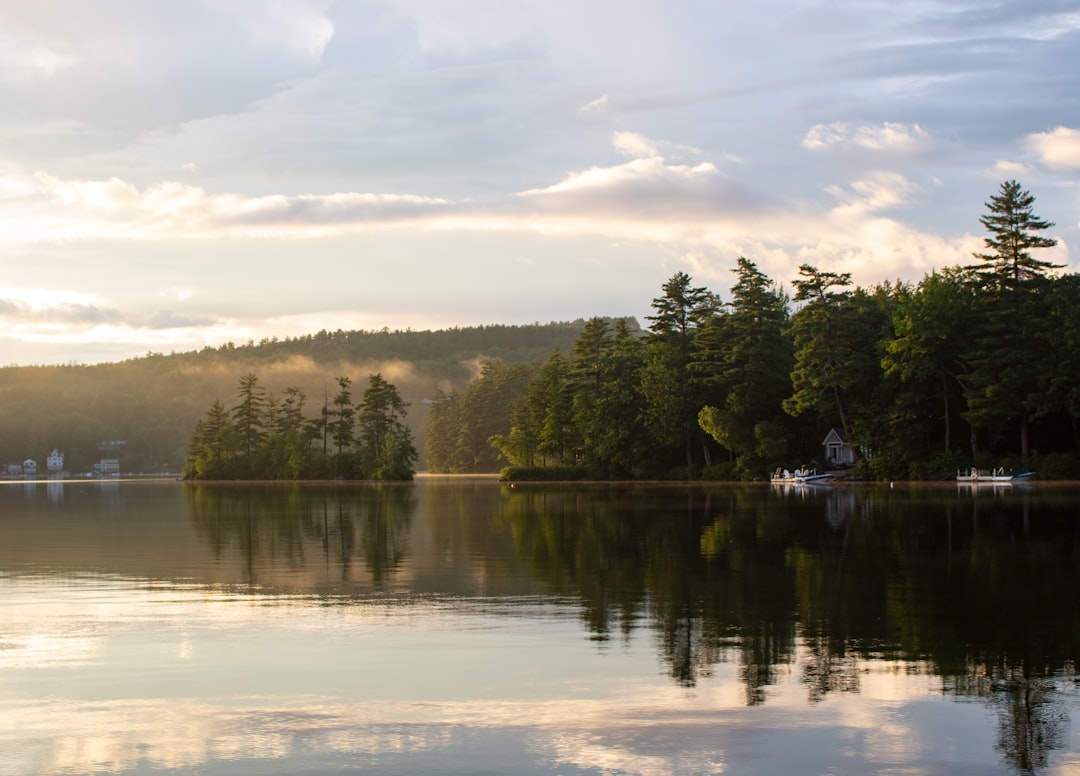
Then the sky changes. The sun drops toward the western ridge behind you, and the peaks on the far shore light up in amber and pink. The color reflects off the lake surface and the whole basin holds it. At Commons Beach, you don't have to find a viewpoint. You're already at one. The playground, the grass, the bench where you sat down to rest — all of it becomes a front-row seat without any planning. Summer Sunday concert evenings overlap with this window. The light shifts behind the stage while the music plays.
Carnelian Bay earns a second mention because it works at both ends of the day. Carnelian West — the 530-foot public beach on the west side of Sierra Boat Company — catches the evening light directly. The same sheltered water that was mirror-still at dawn turns into a front-row seat for sunset color. The beach is maintained by Gar Woods on behalf of the California Tahoe Conservancy, with free parking in the shared lot, picnic tables at the water's edge, and year-round restrooms.
Fewer visitors know Carnelian West as a sunset spot. It doesn't appear on most sunset lists for Tahoe, which tend to send people to Emerald Bay or the east shore. But the combination of calm water, open sky to the west, and almost no foot traffic in the evening makes this one of the quieter places to watch the day end on the north shore. If you watched sunrise from Patton Landing on the east side of the bay and came back here for sunset, the lake would look like a different body of water.
The quality of a Tahoe sunrise or sunset depends on three things visitors rarely check.
Wind. A calm lake reflects the sky. A choppy lake scatters it. Morning glass — that mirror-flat surface — is most reliable before 8 AM in summer, earlier in shoulder season. By afternoon, thermals push wind across the basin and the reflection breaks. This is why sunrise photographers and sunset watchers have different experiences at the same beach.
Cloud cover. Tahoe's clearest skies happen after storms pass. A cloudless evening produces a clean gradient — pretty, but flat. A sky with scattered high clouds produces the layered color that makes people stop their cars. The locals who always seem to be at the right spot aren't lucky. They checked the forecast.
Season. Winter sunsets arrive earlier and the low sun angle means the light rakes across the peaks at a steeper angle, intensifying the alpenglow. Summer sunsets last longer but compete with afternoon haze. The shoulder seasons — late September through early November, and April through May — often produce the most dramatic color because the air is clear and the sun angle is transitional.
Two windows. Same lake. Different light, different shore, different version of the same question: did you come here to see it, or did it find you while you were already here? The travelers who remember Tahoe's light years later aren't always the ones with the best photographs. Sometimes they're the ones who looked up at the right moment — and the lake was already waiting.
Where: North Lake Tahoe's north shore, spanning from Tahoe City (west) through Carnelian Bay to Crystal Bay (east) along State Route 28. All locations are public-access shoreline.
Crystal Bay access: Multiple informal shoreline access points along State Route 28 near the California–Nevada state line. Roadside pullouts and casino-adjacent lots serve the area. No dedicated parking lot for sunrise viewing — arrive early and pull off where safe. Walking from Crystal Bay's commercial strip to the waterfront takes minutes.
Carnelian Bay access: Two public beach areas maintained by the California Tahoe Conservancy. Patton Landing (east side, 5166 North Lake Blvd) has a small parking area, pebbly beach, restrooms, and the Waterman's Landing coffeehouse and paddle sport rentals. Carnelian West (west side, 5074 North Lake Blvd) has free parking in a shared lot adjacent to Gar Woods, year-round restrooms, picnic tables, and barbecues.
Commons Beach access: 400 North Lake Blvd, Tahoe City, CA 96145. Paid parking lot with limited spaces — arrive early or use alternative transportation. The beach is open dawn to dusk. No pets permitted at the park or beach. Kayak and paddleboard rentals available seasonally at the concession on-site.
Timing: Sunrise and sunset times shift significantly by season. In midsummer, sunrise arrives around 5:45 AM and sunset lingers past 8:30 PM. In midwinter, sunrise comes closer to 7:15 AM and sunset by 4:50 PM. For exact times on your travel dates, check timeanddate.com for the Tahoe City or Incline Village station.
Morning glass window: The mirror-flat lake surface is most reliable before 8 AM in summer and before 9 AM in shoulder seasons. Afternoon thermals typically break the reflection by midday.
Conditions: Cloud cover after passing storms produces the most dramatic color. Check weather forecasts the day before — scattered high clouds at sunset are the signal. Clear-sky sunsets are softer. Overcast skies wash out entirely.
Winter note: Winter alpenglow — the rose-gold light on snow-covered peaks visible after the sun dips below the ridgeline — is a phenomenon specific to cold, dry conditions. It typically lasts ten to twenty minutes after official sunset. Dress for temperatures that drop fast once the sun is gone.
Sunrise and sunset viewing reward proximity. Guests staying in the north shore communities between Tahoe City and Crystal Bay can reach any of these shorelines in minutes, making it possible to catch both windows in a single day without a long drive. Planning lodging along this corridor keeps the golden hour accessible without an alarm-clock commute.
Want to feature your business on the DirectStay Blog?
Want to feature your business on the DirectStay Blog?

Connect with travelers, share your space, and join a community of hosts earning together.
Become a host