

 DirectStay

Every visit to Jockey's Ridge pivots on one thing — the sand underfoot. You climb, you watch the sound turn copper at sunset, you let the wind press against your chest and wonder what it would be like to let it carry you. Most days the dunes belong to that impulse: families kicking off shoes at the boardwalk, kids tumbling down the eastern face, kite lines tangling in the thermals. Then, for four days each May, the ridge becomes something else entirely. The crest fills with assembled hang gliders — aluminum frames and dacron sails arranged like the skeletons of enormous birds — and the people who came to watch the sunset find themselves watching human beings step off the tallest natural sand dunes on the East Coast and ride the Atlantic wind. The Hang Gliding Spectacular has been doing this to Nags Head since the early 1970s. It is the longest-running hang gliding competition in the world, and it turns a state park into an amphitheater without altering a thing about the landscape.
The shift isn't dramatic the way a road closure or a fireworks crowd is dramatic. It's atmospheric. Jockey's Ridge State Park still opens at its normal hours. The parking lot off Carolista Drive still fills the same way it always does — except it fills earlier, and the cars belong to people who brought binoculars instead of boogie boards.
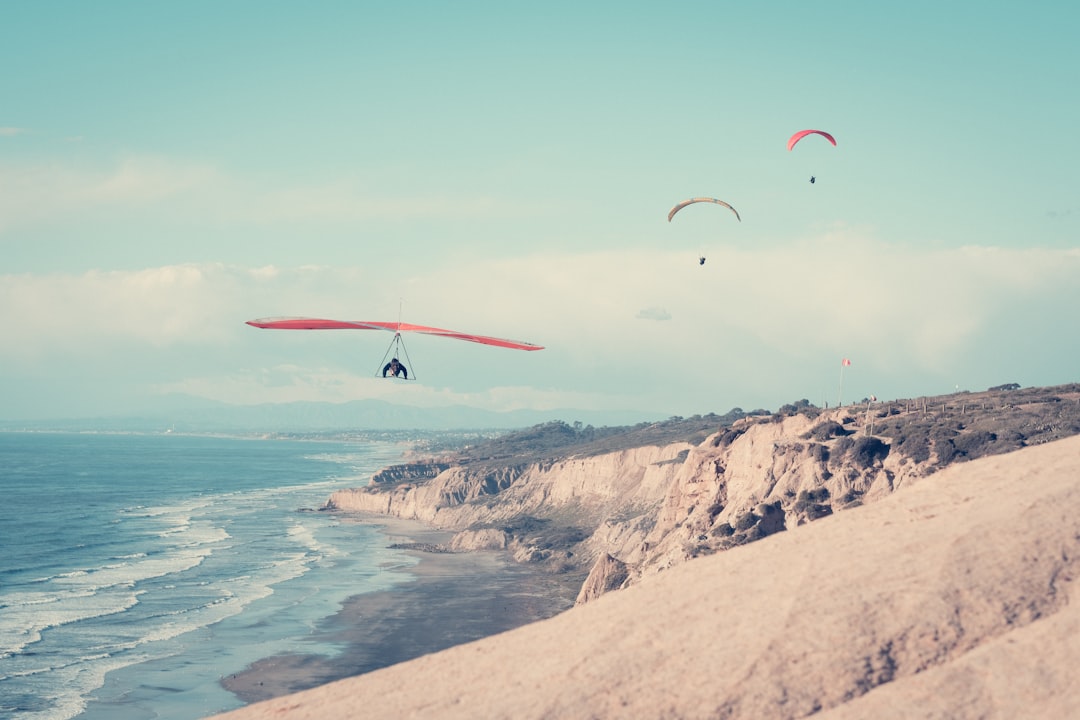
The competition draws pilots from across the country — in recent years, more than a hundred have registered. They launch from the dune crest in assigned groups, sprinting into the wind and lifting off for targeted landings scored by USHPA rating standards. The flights are short — seconds, not minutes — but the visual is arresting. A person runs, a wing catches, and someone is airborne above the sand you were just standing on.
Spectators line the dune ridge. There are no bleachers, no roped-off sections. You stand where you stand, and you watch from whatever angle the wind gives you. This is not a stadium event. It is a state park that happens to host something extraordinary because the geography allows it.
The Spectacular carries more historical weight than its casual atmosphere suggests. Kitty Hawk Kites, the company that hosts the event, was founded in 1974 by John Harris in a garage across the street from Jockey's Ridge. Harris had seen a photograph of someone flying a hang glider and couldn't let the idea go. He built the school into what is now the largest hang gliding school in the world, teaching over 400,000 students across five decades.
But the deeper thread runs through Francis and Gertrude Rogallo — he a NASA aeronautical engineer, she an educator and co-inventor — who invented the flexible wing in 1948, the airfoil design that made recreational hang gliding possible. The Rogallos retired to Southern Shores, just north of Nags Head, and Francis flew on the Jockey's Ridge dunes until he was eighty. The Rogallo Foundation dinner follows the awards ceremony that closes the Spectacular. That dinner exists because the event is not just a competition — it is a continuation of a line of aviation history that runs from a NASA wind tunnel in Hampton, Virginia, through a kitchen-curtain prototype, to the dunes where tens of thousands of people have taken their first flight.
The most common miscalculation is assuming the Spectacular is a professional-only event that doesn't involve you. It does. Kitty Hawk Kites typically ramps up beginner lesson availability during the week. You can watch pilots compete in the morning and take your own introductory flight in the afternoon — same dunes, same wind, different altitude. The lessons run about three hours and include five solo training flights. Children as young as four can participate.
The second misunderstanding is about scale. The Spectacular is free to watch. There are no gates, no wristbands, no entry fees for spectators. You walk into the park the same way you would any other day. The competition is happening whether you planned for it or not — which means some visitors stumble into it mid-vacation and find it reshapes their entire week.
The third is about location. The dune competitions happen at Jockey's Ridge, but the towing events — where pilots are pulled aloft by ultralight aircraft and compete at altitude — happen at the Cotton Gin in Jarvisburg, roughly thirty minutes north. If you want to see high-altitude flight, you need to drive there separately.
May on the Outer Banks sits in the gap between shoulder season and peak summer. Rates haven't climbed to July levels. Beaches aren't at maximum density. The Spectacular lands in this window deliberately — the wind conditions that make Jockey's Ridge one of the most iconic places in the world to learn to hang glide peak during this transition.
For travelers who already planned a late-spring trip, the Spectacular is a free addition to whatever else they had in mind. For those booking around it intentionally, the shoulder-season timing means broader availability and a barrier island pace still close to its quieter self.
Event: Hang Gliding Spectacular. Annual, typically held over four days in mid-May. Verify this year's dates at kittyhawk.com/event/hang-gliding-spectacular.
Where: Jockey's Ridge State Park, 300 W. Carolista Drive, Nags Head, NC 27959. Towing competitions held separately at the Cotton Gin, Jarvisburg.
Cost: Free for spectators. Competitions, the Rogallo Foundation dinner, and hang gliding lessons carry separate costs — check the event page for current details.
Parking: The Jockey's Ridge lot fills early during the Spectacular. Arrive before mid-morning if you want a spot close to the park entrance. No overflow shuttle operates for this event.
Spectating: Walk up the dune access path to the crest. No reserved areas, no tickets required. Bring water — there is no shade on the dunes and May sun is strong.
Hang gliding lessons: Kitty Hawk Kites offers beginner dune lessons at Jockey's Ridge year-round, with expanded availability during the Spectacular. Book in advance at kittyhawk.com/adventures/hang-gliding.
Dinner timing: Nags Head restaurants near the park see increased foot traffic during the event. Earlier reservations help.
Mid-May occupancy in Nags Head is lower than peak summer but rises around the Spectacular. Booking around the event means shoulder-season availability with one of the most distinctive weekends on the OBX calendar.
The dunes will be there in June, and in August, and in October when the wind shifts south. But for four days in May, the same ridge that most visitors know as a sunset hike becomes a flight line. The wind doesn't change. The sand doesn't change. What changes is what people do with it — and whether you're watching from the crest or clipping into a harness for the first time, the ridge gives you what it gave a retired NASA engineer who flew here until he was eighty: a reason to stay longer than you planned.
Want to feature your business on the DirectStay Blog?
Want to feature your business on the DirectStay Blog?

Connect with travelers, share your space, and join a community of hosts earning together.
Become a host