

 DirectStay

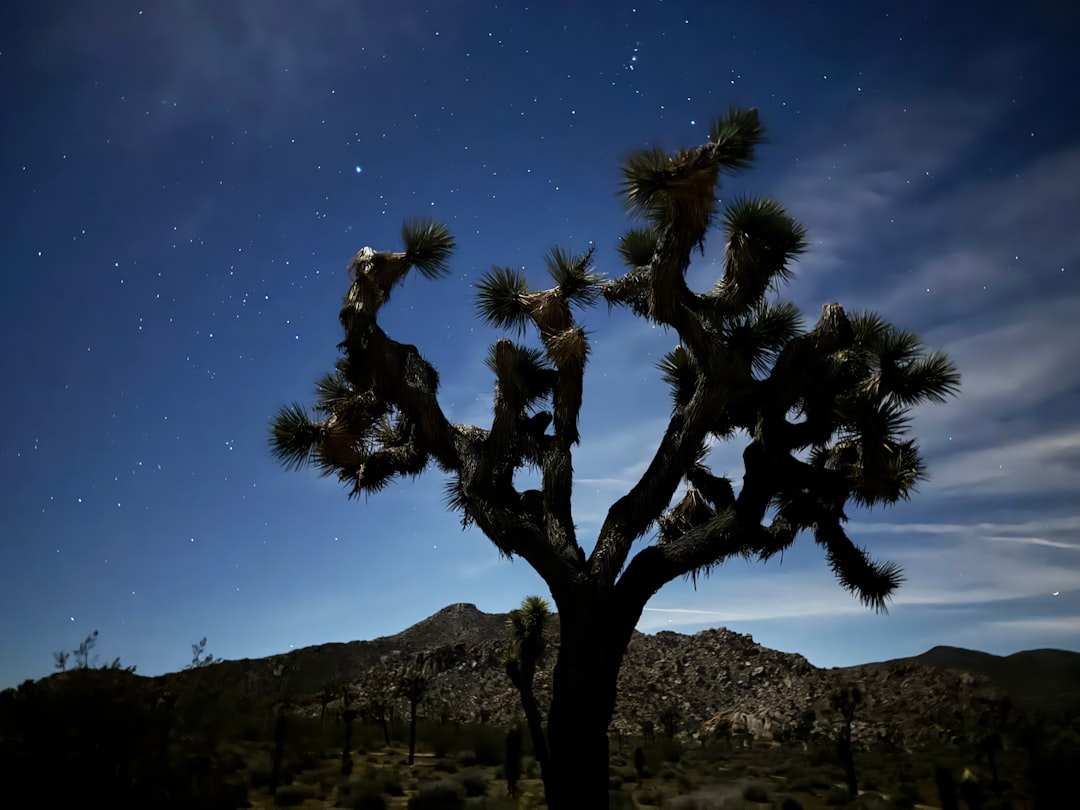
A dark sky tour in Joshua Tree comes down to one question: did you come to learn about the sky, or to remember what humans once knew about it? Addicted2Wonder drops you into the desert with military-grade night vision goggles and a guide named Tony who has spent years tracking down the star stories that Aboriginal, Maori, Hawaiian, and Inuit peoples encoded in the constellations before light pollution made most of the sky invisible to the naked eye. You settle into a gravity chair, the goggles light up the heavens the way they looked a thousand years ago, and the stories begin — a cosmic shark named Beizam, a snake with a large butt, seven boys who became geese. Then there's the path where the telescope does the talking. A professional astronomer punches a keypad, and a pre-programmed lens swings to a nebula you couldn't see with ten lifetimes of naked-eye staring.
Most travelers booking a dark sky experience near Joshua Tree National Park default to the version with the telescope. That instinct makes sense. You came to see things — galaxies, nebulae, Saturn's rings — and a professional astronomer with state-of-the-art equipment is the obvious path to seeing them. Stargazing Joshua Tree delivers exactly that. Their two-hour program starts with a short walk through a scale model of the solar system, which sets the distances in your body before you sit down to observe them. Celestron telescopes and Unistellar eVscope 2 units are pre-programmed with the night's object list. One button press moves the lens from Jupiter's atmospheric bands to the Andromeda Galaxy. Yogibo lounging pods conform to your body while astronomers walk the group through constellations, mythology, and the mechanics of what you're seeing. Binoculars sit within reach. Hot cocoa appears. Deep-sky astrophotography captures what the telescopes find, and the images arrive in your inbox afterward — souvenirs that look like they came from a space agency, not a desert tour.
The equipment creates the experience. That's the value proposition, and it's real. But it's also the reason the night unfolds in a particular direction — outward. You learn what's out there. You see structures that exist at distances your brain can accept as numbers but cannot truly process.
Addicted2Wonder runs a fundamentally different night. Tony doesn't point at constellations and name them. He tracks down the stories that indigenous peoples attached to those patterns — stories that governed planting seasons, navigation, spiritual practice — and tells them while Gen 3 AN/PVS-7 night vision goggles show you the sky as it appeared before light pollution dimmed 97 percent of visible starlight. The goggles don't magnify. They intensify. The effect is disorienting: suddenly the sky is full in a way you've never experienced, and the stars Tony's narrating aren't abstract dots but part of a populated landscape your ancestors navigated by.
The tour runs roughly ninety minutes, though Tony's stories have a way of stretching the evening. Groups are kept small. Gravity chairs angle you toward the sky. Blankets and hand warmers appear because the desert floor drops temperature fast after sunset — a detail first-timers underestimate. Tony and his partner Molli handle the logistics and communication, and a team member called Cuz manages the site and equipment. The meeting point is near the West Entrance Station, shared twenty-four hours before the tour, and the drive to the viewing location is part of the experience — deeper into the dark, further from any glow on the horizon.
Tony is not an astronomer. He says so directly. The tour is not an astronomy program. It's a storytelling experience that uses the night sky as its text. Aboriginal dreamtime narratives sit beside Inuit wayfinding, Hawaiian star compass traditions, and dozens of other cultural lenses that once made the sky a readable, essential document. The GEN3 goggles are the technology bridge — they restore the visual conditions those stories were born under.
Both tours operate under the same certified dark sky — Joshua Tree holds International Dark Sky Park designation, and the eastern reaches of the park sit far enough from Palm Springs that the wash of city light fades to almost nothing. Both are weather-dependent and will reschedule or refund if clouds shut down the sky. Both require advance booking, and both fill quickly during peak season. The difference is not quality or professionalism. It is orientation. One points you outward toward the universe as measured by instruments. The other points you inward toward the relationship humans have sustained with the sky for millennia.
Where (Addicted2Wonder): Meeting point near the West Entrance Station, Joshua Tree. Exact location shared 24 hours before the tour. Book directly through addicted2wonder.com or via Viator. Small groups — book well in advance.
Where (Stargazing Joshua Tree): Remote observation site in the Morongo Basin. No cell service or restroom facilities at the site. Detailed directions provided upon booking. Book through stargazingjtree.com or Peek.
Duration: Addicted2Wonder runs approximately 90 minutes. Stargazing Joshua Tree runs a full 2-hour program.
Cost: Check current pricing on each company's site — rates vary by season and booking platform. Both operate in the premium range.
What to bring: Layers. The desert drops sharply after sundown, even when the daytime was warm. Closed-toe shoes. Download directions before you leave cell service. Both tours provide seating, blankets, and hot beverages.
Moon phase matters: Both experiences are best during or near the new moon. A full moon washes out faint stars and deep-sky objects. Check a moon calendar before booking — this one detail changes everything about the night.
Milky Way core season: The galactic core is visible roughly May through August, appearing after midnight in spring and earlier in summer. If the Milky Way is what you came for, plan around it.
Both tours run after dark, and the drive home happens on unlit desert roads. Guests staying in surrounding communities should plan an easy return — the drive back becomes part of the evening's decompression, not a chore. Booking accommodations in advance opens up quieter options outside the gateway towns.
Two ways to spend an evening under the same dark sky. One fills you with data about what exists at distances you cannot comprehend. The other fills you with stories about what humans believed for thousands of generations before anyone built a telescope. The sky doesn't care which you choose.
Want to feature your business on the DirectStay Blog?
Want to feature your business on the DirectStay Blog?

Connect with travelers, share your space, and join a community of hosts earning together.
Become a host