

 DirectStay
Most people who visit the Smokies and complain about not seeing wildlife made the same mistake. They arrived at the wrong hour. They drove the full loop without stopping. They pointed a phone at a treeline from a moving car and expected something to appear. Then they left disappointed and assumed the animals weren't there. The animals were there. They're almost always there. Elk graze the same fields at the same time of day with a consistency that would bore a scientist. Bears move through the same corridors spring after spring. White-tailed deer stand in Cades Cove meadows at dawn so reliably that locals stop mentioning it. The gap between seeing wildlife and not seeing it has almost nothing to do with luck. It has to do with whether you were willing to be in a specific place at an inconvenient hour — and then stay still long enough to let the landscape settle around you.
Elk are the largest animal in Great Smoky Mountains National Park. Adult bulls can weigh up to nine hundred pounds. They are not hiding. They are grazing in open fields, often within clear view of the road, but almost exclusively during the first and last light of the day. Between roughly six and eight in the morning and again from five to seven in the evening, elk emerge to feed. By midmorning they've moved into the treeline. By midday they're gone entirely.
The most reliable elk viewing happens on the North Carolina side of the park. Cataloochee Valley is where the original herd was reintroduced — twenty-five elk from the Land Between the Lakes National Recreation Area along the Tennessee-Kentucky border arrived in 2001. The following year, twenty-seven more arrived from Elk Island National Park in Alberta, Canada. Today approximately two hundred and seventy elk live in western North Carolina, with around a hundred and fifty spending at least part of the year within the park boundary. Cataloochee remains a primary habitat. The Oconaluftee area near Cherokee has become increasingly reliable as the herd has migrated — elk are regularly spotted in the fields near the Oconaluftee Visitor Center, sometimes standing in the river itself.
What locals do that most visitors don't: they arrive before the elk do. At Cataloochee, that means pulling into the valley by six-thirty in the morning, parking near one of the open fields, and waiting. Not driving. Waiting. Thirty minutes, sometimes an hour. The elk don't appear because you showed up. They appear because the valley is quiet enough for them to emerge.
The same principle applies at Oconaluftee, though the logistics are easier — the Visitor Center is directly accessible from US-441, and the fields are visible from the parking area. Late afternoon tends to be more productive at Oconaluftee than at Cataloochee, where the valley's orientation catches morning light better.
A note on Cataloochee access: Hurricane Helene caused significant damage to Cataloochee Valley in September 2024, closing the area for six months. Portions reopened in April 2025, but vehicular access remains limited, campgrounds are closed, and trail conditions include damaged sections and missing footlog bridges. Check current conditions at nps.gov/grsm before planning a Cataloochee visit. Oconaluftee is fully accessible and currently the more practical option for elk viewing.
The Smokies are home to approximately fifteen hundred black bears — roughly two per square mile, one of the densest populations in the eastern United States. You will see a bear eventually if you spend enough mornings in the park. The question is whether you see one because you planned for it or because you happened to be in the right place.
Bears are most active in early morning — roughly six to nine — and again in late afternoon, from about four to seven. Spring and summer bring them out more predictably, especially during berry season when they forage along roadsides and in clearings. Cades Cove and Newfound Gap Road are the two corridors where bear sightings happen most frequently, though bears inhabit every elevation of the park.
The local pattern is straightforward: arrive early, drive slowly, and watch the edges. Bears move along the transition between forest and clearing. They use the same corridors repeatedly. A bear spotted near a particular pullout one Tuesday morning may be in the same area the following week. Repeat visitors learn specific spots and return to them.
What separates a sighting from a near-miss is usually speed. Visitors who drive the Cades Cove Loop at a steady pace looking straight ahead will miss a bear standing twenty yards into the treeline. Visitors who creep through at walking speed, scanning the forest edge, will see the shape that doesn't quite match the undergrowth.
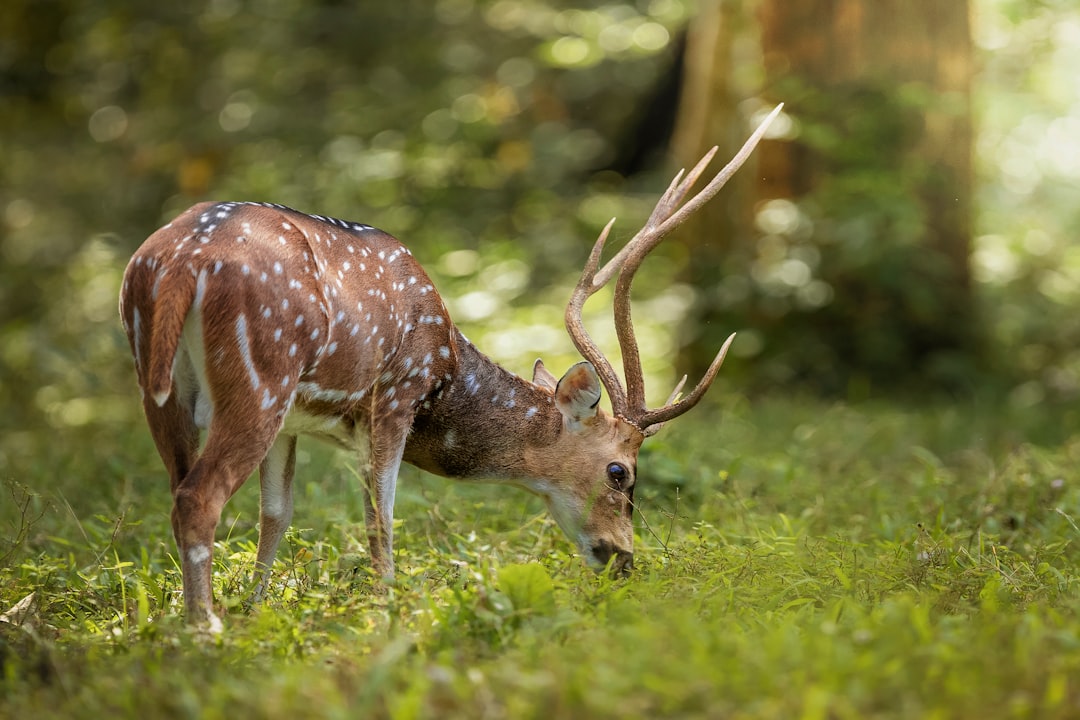
If any single location in the park comes close to guaranteeing a wildlife sighting, it's Cades Cove — but only if you're there at the right time. Dawn in Cades Cove is a different experience from midday in Cades Cove. At dawn, the fields are quiet, the air is cool, and white-tailed deer stand in the open grass in numbers that make them hard to miss. Wild turkeys walk the edges of the road. The occasional bear crosses from one tree line to another. By ten in the morning, the loop is a traffic jam and the animals are gone.
Locals who come specifically for wildlife don't drive the full eleven-mile loop in one pass. They park near the Cable Mill area, walk into the adjacent fields, and sit. They watch. They bring binoculars instead of relying on phone cameras. One of the simplest upgrades to any wildlife trip in the Smokies is a pair of mid-range binoculars — they let you identify an animal at two hundred yards without closing any distance, which means you see more and disturb less.
The vehicle-free Wednesdays during summer — the loop road closes to motor vehicles for the full day, typically from mid-June through late September (dates shift year to year; confirm the current schedule at nps.gov/grsm) — eliminate traffic noise entirely. These days are among the best wildlife viewing windows in the entire park, and locals plan around them.
Federal regulation prohibits willfully approaching within fifty yards — about a hundred and fifty feet, or roughly half a football field — of bears or elk. This isn't a suggestion. Rangers enforce it, and violations can result in fines and arrest.
The regulation exists because both species are unpredictable at close range. Bull elk during the fall rut — early September through mid-October — can charge without warning. Cows with calves are protective and aggressive when they perceive a threat. Bears that associate humans with proximity to food become habituated, and habituated bears have shorter lifespans.
The practical translation: if an animal changes its behavior because of your presence — stops feeding, changes direction, raises its head to watch you — you're already too close. Back away. The goal is to observe animals that don't know you're there, or don't care.
Never feed any wildlife in the park. It is illegal, it is dangerous to you, and it ruins the animal's natural behavior patterns in ways that can ultimately kill them.
The synchronous fireflies at Elkmont are a different kind of wildlife viewing — one that requires advance planning measured in months, not hours. This is one of only a few species in North America known to synchronize their flash patterns, and the display happens during a narrow window in late May to early June. Viewing requires a lottery-based reservation through recreation.gov, and the lottery typically opens months in advance.
This event is covered in depth in a separate guide. What matters here is the principle: the most extraordinary wildlife moment in the Smokies is also the one that demands the most patience and planning. That pattern holds for everything else, too.
Binoculars matter more than any other single piece of equipment for wildlife viewing in the Smokies. A decent pair — even entry-level — lets you identify species, watch behavior, and confirm sightings from a distance that keeps both you and the animal comfortable. Phone cameras, even with digital zoom, produce blurry results from fifty yards and encourage people to close distance they shouldn't close.
Beyond optics, what locals bring for wildlife mornings is simple: layers (dawn temperatures can sit in the forties or fifties even in summer at elevation), a thermos, patience, and a willingness to sit in one spot longer than feels productive. Wildlife viewing in the Smokies is not a scavenger hunt. It rewards stillness over motion.
Fields near the Oconaluftee Visitor Center, accessible via US-441 on the North Carolina side. Best times: early morning and late evening. Free parking at the Visitor Center.
I-40 Exit 20 (North Carolina), then Cove Creek Road approximately eleven miles on narrow, winding gravel. Allow forty-five minutes from the interstate. Check current access status at nps.gov/grsm — the valley sustained significant Hurricane Helene damage in 2024, and access limitations may still apply. No food, gas, or services available in the valley.
Cades Cove Loop Road, accessible from Laurel Creek Road. Best wildlife viewing at dawn. Vehicle-free Wednesdays (full day, summer months — confirm current year's dates at nps.gov/grsm). Restrooms and a camp store at Cable Mill area seasonally.
Bears are frequently spotted along pullouts between Sugarlands and Newfound Gap. Drive slowly and scan the forest edge.
Fifty yards (one hundred fifty feet) minimum from all bears and elk. Federal regulation — fines and arrest for violations.
All vehicles parked for more than fifteen minutes inside the park require a parking tag. Daily, weekly, and annual options available at recreation.gov or park visitor centers.
Synchronous firefly viewing at Elkmont requires a lottery reservation through recreation.gov. Lottery details are typically announced in spring for the late May–early June viewing window.
Check current conditions at nps.gov/grsm. Seasonal closures, weather, and road status change frequently.
The animals in the Smokies don't hide. They follow schedules that repeat with enough consistency that locals can predict, within a reasonable margin, when and where a given species will be visible on a given morning. The elk at Cataloochee and Oconaluftee. The deer at Cades Cove. The bears along Newfound Gap Road and the loop. None of it requires luck. It requires an early alarm, a willingness to sit still, and the discipline to watch from a distance that lets the animal decide you're not worth worrying about. That's the whole secret. The elk were there the whole time.
Want to feature your business on the DirectStay Blog?
Want to feature your business on the DirectStay Blog?

Connect with travelers, share your space, and join a community of hosts earning together.
Become a host