

 DirectStay
Cades Cove pulls more visitors per year than almost any other valley in the Appalachians — and most of them arrive at the same hour, crawl the same stretch of pavement, and leave wondering why it took all morning to see a handful of deer through a windshield. The problem isn't the place. The valley still holds black bears crossing open fields at first light, wild turkeys working the grass near the old churches, and white-tailed deer standing in meadows so still they look staged. The problem is the clock. Locals who live within an hour of this loop have worked out a timing pattern that inverts nearly every instinct a first-time visitor follows — and it starts with understanding that the best mornings in Cades Cove happen on a day most visitors don't even know is different.
The typical Cades Cove visit starts around ten in the morning. A family finishes breakfast in Gatlinburg or Pigeon Forge, drives the roughly hour-long route to the Laurel Creek Road entrance, and joins a line of vehicles that hasn't thinned since the gate opened at eight. By mid-morning, the loop road moves at walking pace. Cars stop in the lane for photos. Pullouts overflow. The campground lot fills. The animals, which were feeding in the open fields an hour earlier, have retreated into the tree line. What's left is a slow-moving procession through scenery that looks better in photographs than it feels at five miles per hour behind a line of brake lights.
This isn't a crowd management failure. It's a timing mismatch. The valley gate opens to motor vehicles at 8 AM and closes at sunset, but the overwhelming majority of visitors arrive in a narrow mid-morning band that turns the loop into a bottleneck. Locals have learned to work around that band entirely.
Every Wednesday from early May through late September, the entire Cades Cove Loop Road closes to motor vehicles for the full day. No cars. No RVs. No tour buses. The road belongs to cyclists and pedestrians from sunrise to sunset.
This is the version of Cades Cove that changes how people talk about the place.
The full loop is eleven miles on a paved, one-way road with gentle grades — manageable for most adults on a basic cruiser bike. Two shortcut options cut the distance: Sparks Lane creates a roughly four-mile loop, and Hyatt Lane creates a roughly eight-mile loop. Both shortcut lanes are unpaved, so plan for dirt if you take them.
Bike rentals are available near the Cades Cove Campground Store on vehicle-free Wednesdays. They're popular, so expect a wait if you arrive mid-morning. If you're bringing your own bike, arrive early. The parking areas near the loop entrance fill quickly in the morning, and once they're full, rangers will turn vehicles away and ask them to return later.
Vehicle-free Wednesdays get the attention, but locals use the same valley on driving days by targeting the hours most visitors skip.
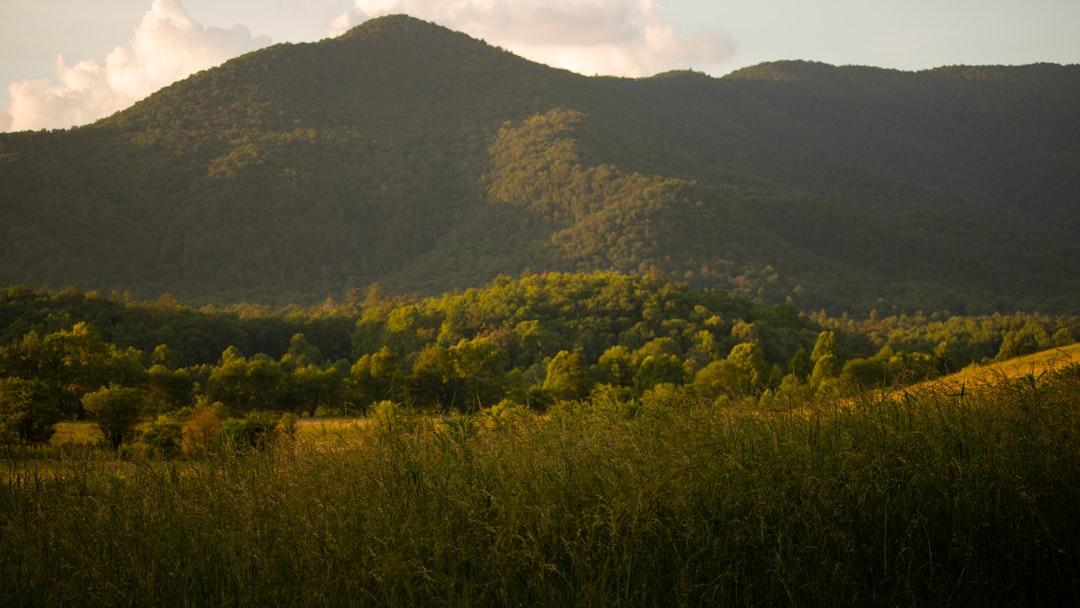
The gate to the Cades Cove Loop Road currently opens to motor vehicles at 8 AM (though pedestrians and cyclists can access the road earlier). From a Sevierville or Pigeon Forge cabin, that means leaving around seven to arrive close to gate time. The drive to the Townsend-side entrance takes roughly an hour depending on your starting point. What you get for that early alarm is a valley that feels like a different place — mist sitting low in the fields, deer feeding in the open, and a road with enough space between vehicles that you can actually pull over, watch, and breathe.
The wildlife viewing difference between 8 AM and 10:30 AM is not subtle. Black bears forage in the fields and along the tree line in the early cool. White-tailed deer graze without urgency. Wild turkeys move through the meadows near the historic churches and the Cable Mill area. By mid-morning, most of that activity has shifted into the forest, and what visitors see from the road drops off sharply.
The second window opens around four or five in the afternoon, when the midday traffic starts to thin and the animals begin returning to the open fields for evening feeding. The light goes golden, the crowds ease, and the loop starts to feel human-scaled again. The trade-off is that you're racing sunset — the road closes at dusk, and you need to be off the loop before the gate closes.
The gear list for Cades Cove depends on whether you're biking a Wednesday or driving a non-Wednesday.
Water bottles and a way to carry them — there are no water refill stations on the loop road itself. Snacks for an eleven-mile ride. A camera or binoculars, not just a phone. Layers if you're starting at dawn, because the valley sits at roughly 1,700 feet and summer mornings can start in the upper fifties. A helmet — required by Tennessee law for riders under sixteen, and strongly recommended for everyone by the park service. And sunscreen, because once you're on the loop there's limited shade on the open field stretches.
Binoculars or a spotting scope — not for the animals you can see from the road, but for the ones across the fields that a phone camera can't reach. Patience. A willingness to pull completely off the road when you stop, not just slow down in the lane. And a realistic expectation that the loop, which should take two to three hours at a normal pace, may take significantly longer on a busy day.
There are things park regulars do that first-time visitors rarely know about — not because they're secret, but because nobody tells them.
Not halfway. Not with your back end still in the lane. All the way into a pullout or onto the shoulder. The single-lane, one-way road means one stopped car blocks every vehicle behind it. This is the single largest source of congestion on the loop, and it's entirely preventable.
If you're stopping every few hundred yards for photos, the cars behind you are not having the same experience you are. Pull over, wave them through, and take your time without creating a rolling roadblock.
The National Park Service requires visitors to stay at least fifty yards from all wildlife — bears, deer, turkeys, everything. That's roughly half a football field. Most visitors underestimate this distance dramatically. Binoculars close the gap without creating a safety problem or habituating animals to human proximity.
It's illegal in the park, it's dangerous, and it changes animal behavior in ways that often end with the animal being euthanized. The bears in Cades Cove are wild. Keeping them that way is the point.
Great Smoky Mountains National Park, Townsend entrance Accessible via Laurel Creek Road from the Townsend side
Early May through late September (2026 dates: May 6 – September 30). The loop is closed to all motor vehicles for the full day (sunrise to sunset). Confirm current year schedule at nps.gov/grsm or call (865) 436-1200.
The gate currently opens to motor vehicles at 8 AM daily (except Wednesdays during vehicle-free season). The road closes at sunset. Pedestrians and cyclists may access the road before the motor vehicle gate opens. Check current gate times at nps.gov/grsm — hours have changed in the past and may change again.
Available near the Cades Cove Campground Store. Rentals are popular and waits are common — arrive early. The NPS confirms on-site bike rental is available on vehicle-free days. Contact the campground store in advance to confirm availability, hours, and reservation options. Class 1 and Class 2 e-bikes are permitted on the loop.
A valid parking tag is required for any vehicle parked more than fifteen minutes in Great Smoky Mountains National Park. Tags are available in advance at recreation.gov or at kiosks at park visitor centers. Current pricing: check recreation.gov. Rangers do enforce — fines apply.
11 miles (one-way). Shortcuts: Sparks Lane (~4-mile loop, unpaved). Hyatt Lane (~8-mile loop, unpaved).
Townsend to Cades Cove entrance: approximately 15–20 minutes Gatlinburg to Cades Cove entrance: approximately 1 hour via Little River Road (about 33 miles) Pigeon Forge / Sevierville to Cades Cove entrance: approximately 50–60 minutes via Townsend
Cable Mill Visitor Center (seasonal), Cades Cove Campground, Cades Cove Campground Store, picnic area. No fuel, no food service beyond the campground store.
The loop road is fully paved and can be driven without leaving the vehicle. Wildlife viewing is possible from the car throughout. The Cable Mill area and several historic structures are accessible from paved or level-graded paths. Restrooms at the campground and picnic area.
Extremely limited to nonexistent in the Cades Cove valley. Download offline maps before arriving.
Maintain 50 yards from all wildlife (NPS regulation). Stay in or near your vehicle if a bear is close to the road. Never approach, feed, or follow wildlife.
Two million visitors a year drive this loop. Most of them see the same version — the mid-morning version, the bumper-to-bumper version, the version where the best wildlife left the fields an hour ago. The version that works differently starts with a different clock: a Wednesday alarm set before six, a Tuesday evening spent loading bikes, a late-afternoon decision to skip the crowds and catch the valley when the light drops low enough to bring the deer back out.
The loop doesn't change. The valley doesn't change. The timing changes everything.
A cabin near Townsend or Wears Valley puts Cades Cove within a short morning drive — close enough that an early start doesn't require a heroic effort, and close enough to go back when the first visit makes you want a second.
Want to feature your business on the DirectStay Blog?
Want to feature your business on the DirectStay Blog?

Connect with travelers, share your space, and join a community of hosts earning together.
Become a host