

 DirectStay

The 1863 Chattanooga Campaign doesn't sit in one place. It moves — from farm roads in northern Georgia, up a foggy mountain bench, across a residential ridge with a view of downtown. A traveler who wants to understand the fight that decided the city isn't visiting a battlefield. They're visiting the landscapes that same fight touched across an autumn. What the ground looks like from below, what it looks like from halfway up, and what it looks like from on top — each of those vantages did something different to the campaign, and the story only resolves if all three are walked. A Chattanooga rental makes that sequencing KNOW BEFORE YOU GO. Battlefield ground is tiring in a way that finishes better at a table and a kitchen than at a hotel front desk.
Civil War sites can be read two ways. Some are monuments — granite and bronze telling you what happened. Others are the ground itself, still shaped the way it was shaped in 1863, still asking the same question the generals were asking: can we hold this? The field is where the killing happened at scale. The ridge is where the city was finally lost. Between them sits a mid-slope farmhouse that got caught in a weather event and became a turning point. Follow the chronology — Chickamauga in September, Lookout Mountain and Cravens House in late November, Missionary Ridge the next day — and the geography starts teaching you the campaign, rather than the other way around.
Chickamauga Battlefield, at 3370 Lafayette Road in Fort Oglethorpe, Georgia, is the largest unit of Chickamauga and Chattanooga National Military Park — the nation's oldest and largest national military park, authorized by Congress in 1890 and dedicated in 1895. The battlefield itself covers roughly 5,300 acres of rolling Georgia pine-and-meadow country where Union and Confederate armies collided on September 19–20, 1863. Total casualties ran to around 34,600 — killed, wounded, captured, and missing. Measured by casualties, it was the second-costliest battle of the entire war.
The park is free. The visitor center sits at the Lafayette Road address, generally open 8:30 AM to 5:00 PM, closed only on Christmas and New Year's Day; the battlefield grounds themselves are open from dawn to dusk. Start inside. The Fuller Gun Collection and the orientation film at the visitor center do enough of the strategic heavy lifting that the auto tour afterward becomes coherent instead of abstract.
The tour is a 7-mile self-guided loop road with 8 numbered stops. The NPS cell-phone audio system lets you call in at each marker for a three-to-five-minute narration; a downloadable NPS app is the backup when the rural cell signal drops. Plan on roughly 3 to 4 hours to do it properly — most stops want 10 minutes; Horseshoe Ridge / Snodgrass Hill and the Wilder Brigade Tower each deserve a full half-hour. At Horseshoe Ridge and Snodgrass Hill, you're standing on the ground where George H. Thomas earned the name "Rock of Chickamauga" — consolidating scattered Union forces on the afternoon of September 20 and holding the line long enough for the rest of the army to retreat north to Chattanooga. That retreat is what makes the second day of the itinerary matter.
What the field teaches: armies of this size fought in woods and farm clearings, not on neat parade grounds. The monuments — hundreds of them, plus tablets and markers — were placed starting in the 1890s by the veterans themselves. They're arguing about where each regiment stood. Read a few of the arguments and the scale of the thing becomes real.
After Chickamauga, the Union army retreated into Chattanooga, and the Confederates occupied the high ground — Lookout Mountain to the southwest, Missionary Ridge to the southeast — and laid siege. By late November, with reinforcements under Grant arriving, the Union moved to break the siege. The second day of the itinerary follows that November sequence.
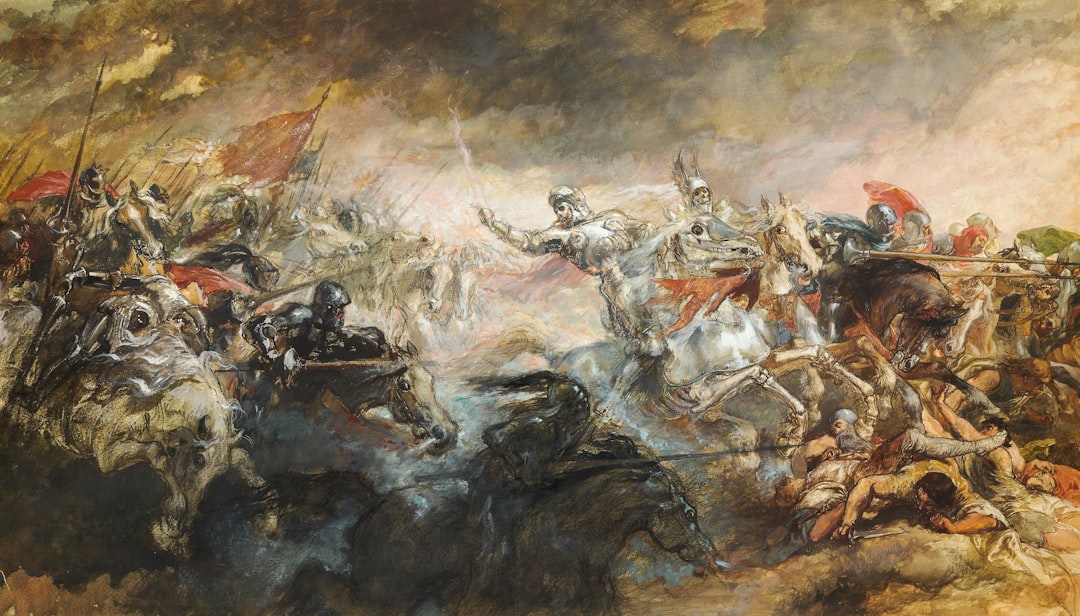
Point Park, off Scenic Highway on Lookout Mountain, is the mountaintop piece. 16 acres at 2,100 feet of elevation, operated by the NPS. The entrance fee is $10 per adult (ages 16 and up); anyone 15 or younger enters free, and an America the Beautiful pass covers the holder plus three additional adults. The grounds hold the New York Peace Monument, cannon batteries positioned at the mountain's north end, and a panoramic overlook straight down into the Tennessee River bend and downtown Chattanooga. The Lookout Mountain Battlefield Visitor Center, just outside the park gate, displays James Walker's "The Battle of Lookout Mountain" — a 13-by-30-foot canvas, commissioned in 1864 and enlarged in 1870, that anchors most rangers' first overview of the November 24, 1863, fight. Hooker rides a white horse at its center.
The drive up Lookout Mountain from downtown runs roughly 20 minutes; parking at Point Park is limited, which rewards an early arrival, and on weekends the Incline Railway from St. Elmo to the summit is a car-free alternative.
Cravens House is the mid-slope piece — and it is the piece most travelers miss. It sits on a shelf-like ledge on Lookout Mountain's eastern slope, facing the city, and it was a major focal point of the fighting on November 24. The home of Robert Cravens, a pioneer Chattanooga ironmaster, the house had been commandeered as the Confederate headquarters of Brigadier General Edward C. Walthall. On that morning, Hooker's Union infantry pushed around the north end of the mountain through thick fog and attacked Walthall's brigade of around 1,500 Mississippians; by early afternoon, the Confederates had been pushed back beyond the house, and during the night all Confederate forces withdrew from Lookout Mountain to reinforce Missionary Ridge. The Cravens family had already fled the house under sustained Union artillery shelling in the weeks before and moved to Woods Station near Ringgold, Georgia. The house itself survived the battle intact — but in the days after, Union soldiers and war correspondents camped on the grounds stripped it for tent flooring, firewood, and souvenirs. When Robert Cravens returned, KNOW BEFORE YOU GOly nothing of his home was left. He rebuilt on the same site in 1865–1866; that rebuilt house is the one standing today.
Cravens House is the oldest surviving structure on Lookout Mountain. The house itself is not currently open to the public except during special events (a Christmas Open House program and occasional ranger-led programs), but the grounds are open and visitors are free to roam, read the interpretive markers, and take in the view back toward downtown from the house porch. The site can be reached by car from Point Park via the narrow mountain road, or on foot via a 3-mile round-trip trail that descends from the Point Park cliff face.
Standing on the Cravens terrace, looking back up at the bluff where Point Park sits, is where "Battle Above the Clouds" stops being metaphor and starts being weather. The fog wasn't scenery; it was the reason the artillery on top of the mountain couldn't see what Walthall's men were fighting.
Missionary Ridge closes the campaign. On November 25, 1863 — the day after Cravens — Union forces under Grant, Sherman, and Thomas assaulted the Confederate line running along the ridge's crest. What happened next was not in the plan: Thomas's men, ordered only to take the rifle pits at the base, kept going up the slope under fire and scattered Bragg's forces at the top. Bragg resigned shortly after. The siege of Chattanooga was over, and the road to Atlanta was open.
Today, Missionary Ridge is a residential neighborhood — one of the older affluent ridgelines in the city — with Crest Road running the length of the old Confederate line. The ridge is one of the four main areas of Chickamauga and Chattanooga National Military Park, but it doesn't behave like a gated park site the way Point Park does. It's a public residential road with a scattering of NPS reservations tucked between private homes. Moving north from Rossville, Georgia, the principal stops are Iowa Reservation at the southern terminus, Bragg Reservation (Confederate headquarters site, marked by the Illinois Monument), Ohio Reservation (commemorating Ohio troops), Turchin Reservation (honoring Union General John Turchin), DeLong Reservation (one of the Union breakthrough points), and Sherman Reservation at the northern end — where Sherman's forces unsuccessfully attacked the north end of the Confederate line. Sherman Reservation is the largest; it requires a short uphill walk to reach the main monument cluster and is rated worth a half-hour on its own. The others are essentially street-corner parcels with monuments, artillery, and interpretive tablets.
Driving the ridge south-to-north takes roughly 25 to 30 minutes if you only drive it; double that if you stop at the monuments. Two things to know before you go:
The residents live here. The monuments in front-yard orientation are on NPS land, but the residential street itself is their street. Courtesy matters — pull in, read, move on.
The "Ridge Cut" under I-24 is where a quarter-mile of the ridge was blasted away for the interstate. The Crest Road route goes around it; don't try to cut through.
The view from the ridge back toward downtown — with Lookout Mountain on the far horizon — is the third landscape, and it's the one that closes the loop. Standing where Bragg's men stood, looking at the ground Thomas's men came up, the question of whether that slope could have been held is still right there under your feet.
Chickamauga Battlefield — 3370 Lafayette Road, Fort Oglethorpe, GA 30742; (706) 866-9241. Free admission. Visitor Center typically 8:30 AM–5:00 PM; grounds dawn to dusk. Closed Christmas and New Year's Day. Roughly 20–25 minutes south of downtown Chattanooga. 7-mile self-guided auto tour, 8 numbered stops, NPS cell-phone audio tour and NPS app both available. Plan 3–4 hours for the auto tour; longer with kids or with the Ranger-guided Car Caravan Tour (seasonal schedule varies; a minimum number of adult participants is generally required — sign up at the visitor center or call ahead).
Point Park (NPS) — Scenic Highway, Lookout Mountain, TN 37350. $10 per adult (16+); free for 15 and under; America the Beautiful pass holder plus three additional adults enter free. Lookout Mountain Battlefield Visitor Center adjacent, 8:30 AM–5:00 PM. Roughly 20 minutes from downtown by car; parking at the summit is limited. Incline Railway from St. Elmo is a car-free alternative — arrive by 10 AM on weekends for easier parking.
Cravens House — 110 Point Park Road, Lookout Mountain, TN 37350. House interior not currently open to the public except during special events such as the annual Christmas Open House program. Grounds are accessible and visitors are free to roam and view from the house porch. Free. Reachable by car from Point Park via the narrow mountain road, or on foot via a 3-mile round-trip trail from Point Park. Allow about a half hour for a grounds visit. For current tour availability or special events, call the Lookout Mountain Battlefield Visitor Center at (423) 821-7786.
Missionary Ridge — Crest Road corridor from Rossville, Georgia north to the Sherman Reservation in north Chattanooga. Free; open daily. Principal NPS reservations along the ridge, moving north from Rossville: Iowa, Bragg, Ohio, Turchin, DeLong, and Sherman (plus smaller associated monuments). Free parking at each, with monuments, artillery, and interpretive tablets. Drive-and-stop loop; budget 45–60 minutes without hikes, longer if you walk the Sherman Reservation trail. Residential neighborhood — observe posted speed limits and private-property boundaries; reservations have the only parking on the ridge. Late afternoon light silhouettes Lookout Mountain on the west horizon — the shot most photographers come for.
Sequencing: Day one — Chickamauga Battlefield (full day with auto tour and visitor center). Day two — Point Park in the morning, Cravens House mid-day, Missionary Ridge in the afternoon. The chronology of the campaign matches the chronology of the itinerary, and that's the version that makes the geography teach you the history.
Cell service: Variable at Chickamauga, especially mid-loop. Download the NPS app and any audio material before leaving the visitor center.
Weather window: Late fall matches the actual campaign dates, but bare trees in winter open up sight lines that are hidden in summer. Spring and fall are the comfortable months for the Chickamauga auto tour. Summer on the battlefield and at Point Park means early morning or late afternoon — the middle of the day is exposed.
Point Park parking capacity (hour limit and space count vary by source); Cravens House special-event interior-tour schedule for publication period; Chickamauga Ranger Car Caravan Tour current schedule; any active NPS construction or trail closures at publication.
A Chattanooga rental makes this trip work the way it should work. Two days on battlefield ground builds up a kind of quiet by evening, and you want a kitchen, a porch, and room to spread maps across a table rather than a lobby bar. Come back after Chickamauga with dirt on your shoes and the 1860s still loud in your head. The second day finishes quieter, on a ridge, looking at a city the fight was about. End that day home, not out.
Want to feature your business on the DirectStay Blog?
Want to feature your business on the DirectStay Blog?

Connect with travelers, share your space, and join a community of hosts earning together.
Become a host