

 DirectStay

A meadow day in Yosemite depends on what you want the ground beneath your feet to do. In the Valley, it frames what towers above — granite walls, falling water, the silhouette of Half Dome caught in the river's surface from Sentinel Bridge when conditions line up right. Cook's Meadow sits at the center of all of it, a mile-long boardwalk loop where every few steps hand you a different postcard angle and nobody pretends they came for the grass. Most visitors cross it on their way to something vertical. Then there's the meadow twenty-five miles south, where no famous rock formation stands at the edge of anything, where the trail follows a road built in 1891 and has been slowly dissolving back into earth ever since. Wawona Meadow asks nothing of the skyline. The wildflowers don't compete with waterfalls. The birdsong doesn't share airspace with shuttle brakes. What you notice here is what's underfoot — and what people left behind over centuries of passing through.
Cook's Meadow and its neighbor Sentinel Meadow occupy the floor of Yosemite Valley, fed by the Merced River and Yosemite Creek. The loop trail covers about a mile with virtually no elevation gain — boardwalks and paved paths the entire way, wheelchair accessible, open year-round. The Valley shuttle stops at both ends.
What makes this meadow pull people in isn't the walking. It's the geometry. Stand at Sentinel Bridge and Half Dome rises directly upstream, its face caught in the river's surface when the water runs low and still — a reflection that sharpens in fall and winter, though photographers gather at sunset year-round hoping for the right conditions. Walk the boardwalk west and Yosemite Falls fills the frame — upper and lower together, a view that professional photographers return to season after season because the foreground changes while the falls stay fixed. Sentinel Rock anchors one side. Royal Arches hold the other. The meadow is the stage, and everything around it performs.
The ecosystem beneath the boardwalk deserves its own attention, even if most visitors are looking up. Black oaks and cottonwoods line the edges, and their leaves turn the Valley golden in late October. In June, wildflowers press through — cow parsnip, western azalea, species that thrive in the wet-dry rhythm of Sierra snowmelt. The NPS is direct about this: off-trail travel compacts meadow soil and crushes the plants that sustain the ecosystem. Boardwalks keep feet on a path so the meadow can keep growing. Staying on them isn't a suggestion. It's what keeps the meadow alive.
Wildlife follows its own schedule here. Deer graze at dawn and dusk, unbothered by the foot traffic a hundred yards away. Birds move through the oaks. The NPS recommends early morning or late afternoon for the strongest chance of sighting something — the same hours when the light on Half Dome earns its reputation.
The crowd factor is real. Yosemite Valley draws the vast majority of the park's visitors, and the meadow loop sits near the center of it. Sunset at Sentinel Bridge draws a crowd that rivals any overlook. But the boardwalk disperses people better than a trailhead does — because there's no single destination, the density spreads. A Tuesday morning in May feels different from a Saturday evening in July.
Wawona Meadow sits in southern Yosemite, just across the road from the historic Wawona Hotel, approximately four and a half miles from the park's South Entrance. The loop trail covers three and a half miles on an unpaved fire road with almost no elevation gain. It takes about ninety minutes at a walking pace. Dogs on leash are welcome. Bikes and horses are welcome. The trail once carried vehicle traffic — paved sections are still visible in patches near the start before the forest reclaims them.
There is no Half Dome here. No waterfall in the background. No shuttle stop. The meadow is bordered by conifers and black oaks, and the views are across grass toward Wawona Dome — a mass of granite that doesn't appear on most visitors' itineraries. That absence is the point. Without the iconic skyline competing for your eyes, the meadow itself comes forward.
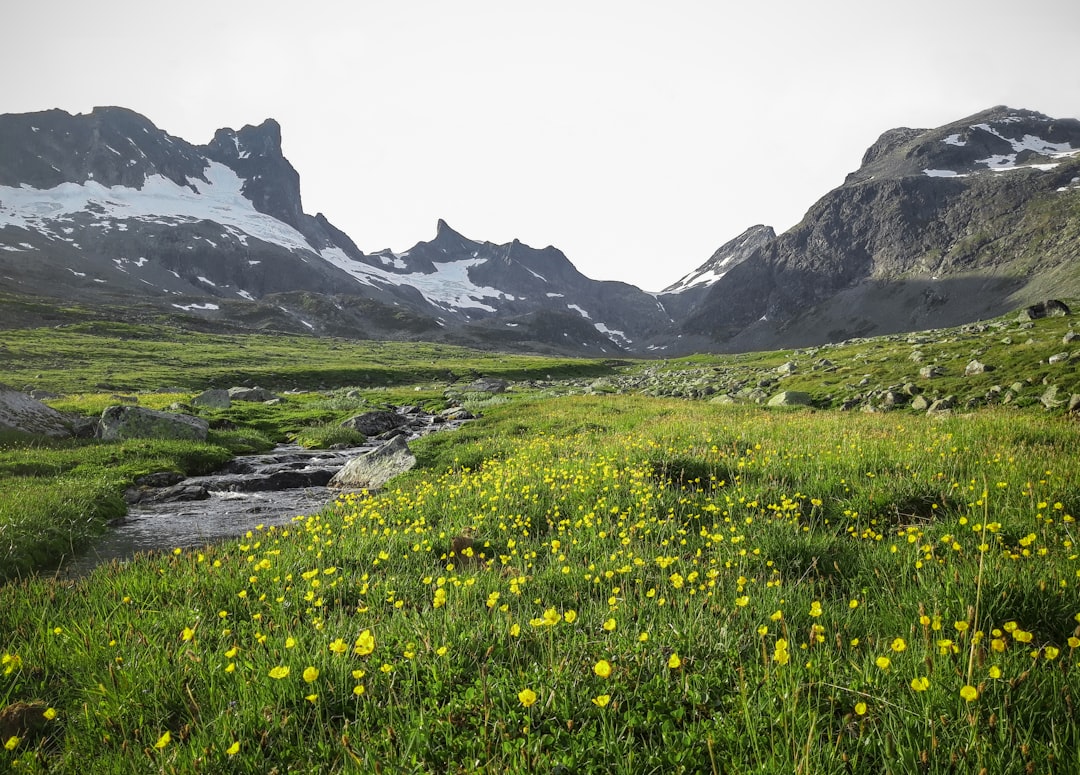
In spring, wildflowers line the trail — star tulips, lupine, species that bloom in the wet-dry cycle of Sierra snowmelt. Birders know this loop for warblers, vireos, flycatchers, woodpeckers, and the occasional owl tucked into the canopy. The mixed forest and meadow edge create habitat that the Valley's concentrated foot traffic doesn't support as visibly.
The human history underfoot is layered deeper than most trails in the park. The people who lived here called this area Pallahchun — translated as "a good place to stop." Native American mortars — rounded holes worn into flat rocks — are visible along the trail where people once sat preparing food overlooking the meadow. The Mariposa Battalion passed through in 1851 on their way to Yosemite Valley. From the mid-1850s through the early 1930s, the Wawona Hotel operators used the meadow for growing produce and grazing livestock. Horses from the Wawona Stables were pastured here as recently as the 1970s. Split-rail fences and an old cattle chute still mark the edges. In 1918, a nine-hole golf course was constructed at the meadow's northwest end — it has historically remained in operation, though the adjacent Wawona Hotel closed indefinitely in December 2024 for condition assessment, and amenity status may be affected. Verify before planning. The trail loops around the meadow's southeast side, leaving the golf course area behind within the first few minutes.
Interpretive signs along the loop describe the meadow's ecology and restoration. The NPS has been working to undo decades of non-native use — removing invasive plants, allowing the natural wet-dry cycle to reassert itself. The trail itself is part of this story: a road built for one purpose, slowly returning to something older.
The choice between these meadows isn't about quality. It's about what you want the experience to do.
Cook's Meadow works when you want the greatest hits in a single frame — when the granite and the water and the light are the reason you traveled here, and the meadow is the place that holds them all at once. It works on a tight schedule, on a first visit, on a day when you want to cover ground without climbing anything. It works at sunset, when Sentinel Bridge turns into a communal gathering of people watching the same mountain catch the same light.
Wawona Meadow works when you've already seen the granite and you want something the Valley can't give you — quiet, dogs on the trail, a meadow that holds centuries of human passage without a single informational kiosk competing with the birdsong. It works on the way in from the South Entrance, on the way back from Mariposa Grove, on a day when the Valley parking lots filled by mid-morning and you drove south instead.
Neither meadow asks much of your body. Both reward attention. The difference is where the attention lands.
Yosemite Valley floor. Trailhead at Sentinel Bridge parking area (shuttle stop #11) or near Lower Yosemite Falls (shuttle stop #6).
Cook's Meadow Loop is approximately one mile. The combined Sentinel and Cook's Meadow loop extends to roughly two miles. Flat, boardwalk and paved paths throughout.
Year-round. Wheelchair accessible except when covered in snow. Leashed pets, bikes, and strollers are permitted on the paths.
Limited spaces at Sentinel Bridge lot. Overflow at Yosemite Village day-use lot or Curry Village, with free shuttle service back to the meadow area. Valley lots typically fill by mid-morning in peak season — arrive early or plan to use the shuttle.
Early morning and late afternoon for wildlife and light. Sentinel Bridge for the Half Dome reflection — best when the river runs low and still (typically fall and winter), though photographers gather at sunset year-round. June for wildflowers. Late October through early November for fall color in the black oaks.
Off-trail foot traffic damages the meadow ecosystem. The NPS enforces this actively.
Southern Yosemite, across Wawona Road from the historic Wawona Hotel. Approximately four and a half miles from the South Entrance on Highway 41.
Wawona Meadow Loop is approximately three and a half miles. Unpaved fire road, nearly flat. Allow ninety minutes at a walking pace.
Year-round, though spring flooding can make creek crossings impassable — check conditions before heading out. One of the few trails in Yosemite that permits leashed dogs and bicycles.
The Wawona Hotel is currently closed indefinitely for condition assessment — verify parking availability before visiting. Historically, the hotel lot has served as the primary trailhead parking. A small dirt pullout near the trailhead on the south side of Wawona Road is sometimes available but occasionally closed.
Spring for wildflowers and meadow flooding. Autumn for color in the black oaks and dogwoods. Morning for birding. The trail is mostly shaded, making it a strong afternoon option when Valley temperatures climb.
Check the NPS website for current trail status, especially in spring when snowmelt can flood sections of the loop. nps.gov/yose
Wawona Meadow's location near the South Entrance means guests staying in surrounding communities along Highway 41 — Fish Camp, Oakhurst — can reach the trailhead without entering the Valley at all. Pair it with Mariposa Grove for a full south-side day that avoids Valley traffic entirely. Booking accommodations in advance opens up quieter options with more space than the corridor closest to the park.
Two meadows inside the same national park, at roughly the same elevation, asking roughly the same thing of your legs. In one, you walk through the floor of the most photographed valley on earth and the granite does all the talking. In the other, the granite steps back and the ground takes over — wildflowers, birdsong, mortars worn into stone by hands that were here long before the road. The park holds both. What you came to see is the only question that matters.
Want to feature your business on the DirectStay Blog?
Want to feature your business on the DirectStay Blog?

Connect with travelers, share your space, and join a community of hosts earning together.
Become a host