

 DirectStay

A visit to Mariposa Grove near Yosemite's South Entrance surfaces one question most people don't realize they're answering until they're already on the trail: do you want the giant sequoias to come to you, or are you willing to climb toward the ones that don't get visited? The Grizzly Giant stands a mile from the shuttle stop — a trunk wider than a two-car garage, bark scored by centuries of fire, branches thicker than the pines surrounding it. Most visitors photograph it, walk through the California Tunnel Tree, and ride the shuttle back. The grove feels finished. But past the tunnel tree, where the trail tilts uphill and the crowd thins to almost nothing, Mariposa Grove becomes a different place entirely — quieter, steeper, and full of trees that have been standing for millennia without anyone lining up to take their picture.
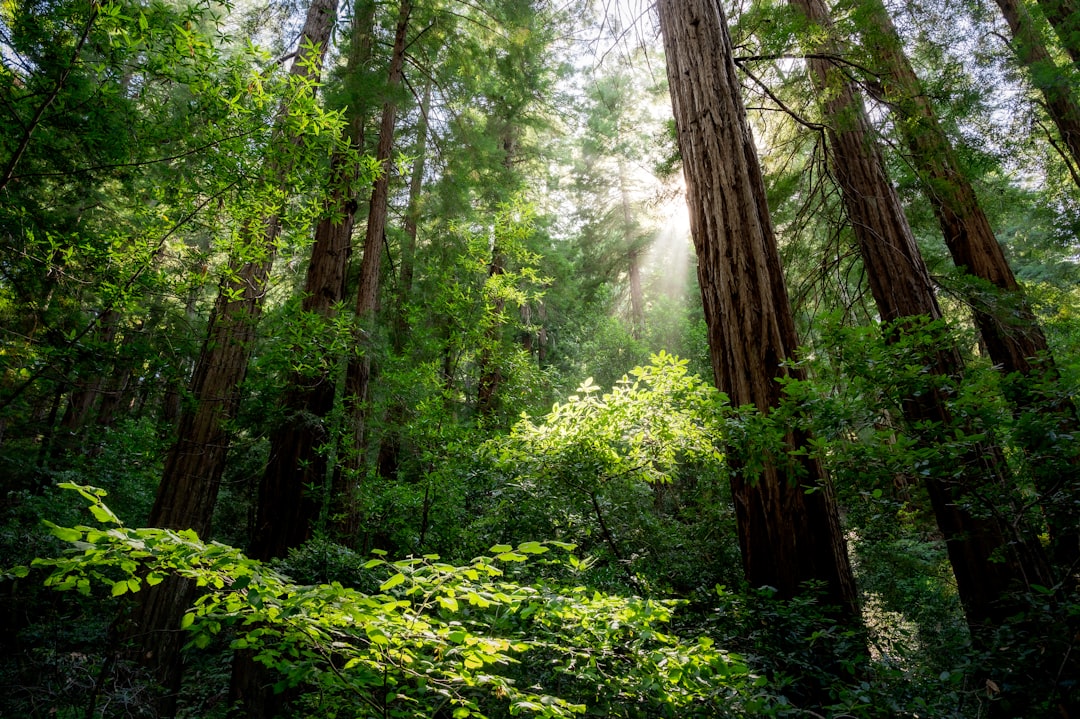
The shuttle drops you at the arrival area, and within minutes you're standing among trees that predate most of recorded history. The Big Trees Loop — a third of a mile, flat, wheelchair accessible — puts the Fallen Monarch directly in your path. Its exposed root system fans out like architecture, illustrating how these giants hold the earth with breadth rather than depth.
The Grizzly Giant Loop stretches the visit to two miles and around three hundred feet of climbing. The Bachelor and Three Graces appear first — a cluster tight enough that their canopies merge overhead. Then the trail bends toward the Grizzly Giant itself. The numbers don't land until you're underneath it: roughly twenty-nine feet across at the base, over two hundred feet tall, somewhere between two and three thousand years of standing. Its first major limb, ninety-five feet up, measures six feet in diameter — larger than most mature trees in the surrounding forest.
A short walk beyond, the California Tunnel Tree still lives despite having its heart carved out in 1895. People line up to stand inside it. The moment is brief, the photo is inevitable, and for most visitors, it marks the turnaround.
This is where the grove splits.
Past the California Tunnel Tree, the Mariposa Grove Trail gains elevation steadily — twelve hundred feet over the full route — and the number of hikers drops sharply. The NPS calls the upper portion "tranquil," and hikers who make the climb consistently report having entire stretches of trail to themselves, even in summer.
The trees here carry different stories. The Faithful Couple grew so close together that their trunks fused at the base — two sequoias that became one over centuries of pressure and patience. The Clothespin Tree took so many fires through its core that the hollow left behind could fit a truck. The Telescope Tree lost its entire interior to flame — stand inside, look straight up, and the sky opens through the trunk like a chimney.
Then there's the Fallen Wawona Tunnel Tree. In 1881, a tunnel was carved through its trunk wide enough for a stagecoach. For nearly a century it was the grove's most famous attraction. It fell during a snowstorm in 1969 and lies where it landed — enormous, hollowed, bark peeling into the soil. The collapse changed how the National Park Service thought about visitor impact on living systems. It still teaches, just differently now.
The Mariposa Grove Cabin sits near the upper loop — built on the site where Galen Clark, the grove's first guardian, sheltered visitors he guided from his station at Wawona. Clark discovered the grove in 1857, and his advocacy helped bring about the Yosemite Grant Act that Lincoln signed in 1864, setting the grove and the Valley aside for public use. The cabin marks the spot where stewardship of this landscape took physical form.
The Guardians Loop covers six and a half miles round trip with four to six hours of walking. The Mariposa Grove Trail to Wawona Point pushes closer to eight miles. Either way, the destination is the same: a panoramic overlook at sixty-eight hundred feet where the Wawona Basin opens below and the Sierra Nevada stretches in every direction.
Hikers who arrive early enough often have the point entirely to themselves. The quiet is structural — most visitors stay within the first mile, and each additional mile filters the crowd further. By the time the trail reaches the upper grove, the experience has shifted from spectacle to something closer to solitude among organisms that have been alive since before the Roman Empire.
The grove closed in 2015 for the largest restoration project in Yosemite's history and reopened in June 2018. Roads that had cut through root systems were removed. The tram that once carried fifty passengers at a time through the grove was eliminated. Natural water flows that had been blocked by pavement were restored. The shuttle system replaced private vehicles entirely — only visitors with disability placards can drive to the Grizzly Giant parking area.
The result is a grove that functions more like a forest and less like a parking lot. The lower loop still draws crowds, but the infrastructure no longer compresses them into the trees' root zones. The upper grove, freed from road access, returned to the quiet it had before the tram era.
The lower grove answers the question most visitors arrive with: what does a giant sequoia look like up close? The Grizzly Giant, the California Tunnel Tree, and the Bachelor and Three Graces deliver that answer within two miles and two hours. Families with strollers, visitors with mobility constraints, and anyone short on time can see trees that have been standing since before the common era and ride the shuttle back feeling like the trip was worth the drive.
The upper grove answers a question most visitors don't think to ask: what does it feel like to be alone among them? The Guardians Loop and the trail to Wawona Point take half a day, twelve hundred feet of climbing, and a willingness to keep walking past the point where most people stop. The trees don't get smaller. The crowds do.
Both are the same grove. Both are Mariposa. The only question is how deep you want to go — and how much quiet you need to hear something that's been growing for three thousand years.
Where: Mariposa Grove of Giant Sequoias, near Yosemite's South Entrance off Highway 41. The Welcome Plaza and parking area sit adjacent to the South Entrance station.
Shuttle: Free shuttle runs from the Welcome Plaza to the lower grove arrival area, typically mid-spring through late fall. Buses arrive roughly every fifteen minutes during peak season. The parking lot holds about three hundred vehicles and historically fills by late morning in summer. Check the NPS Mariposa Grove page for current-year shuttle dates and hours — schedules shift with weather and road conditions.
When the shuttle isn't running: Access the grove via the Washburn Trail — two miles each way with about five hundred feet of elevation gain. Bicycles are allowed on Mariposa Grove Road between the Welcome Plaza and the Grizzly Giant when the road is open.
Accessibility: The Big Trees Loop (0.3 mi) is wheelchair accessible and flat. Vehicles with a disability placard can drive to the Grizzly Giant accessible parking area. A bronze tactile exhibit sits at the arrival area.
Trail distances: Big Trees Loop: 0.3 mi (easy). Grizzly Giant Loop: 2.0 mi, 300 ft gain (moderate). Guardians Loop: 6.5 mi, 1,200 ft gain (strenuous). Mariposa Grove Trail to Wawona Point: 7.75 mi, 1,200 ft gain (strenuous).
Water: Available at the Welcome Plaza year-round and at the arrival area in summer only. No water inside the grove — carry what you need, especially for the upper grove.
No pets. Pets are not allowed anywhere in Mariposa Grove, on the shuttle, or on the Washburn Trail. No exceptions for emotional support animals.
No food services at the Welcome Plaza or inside the grove. Restaurants are available approximately four miles away at Tenaya Lodge in Fish Camp, or seven miles away near the Wawona Hotel.
Winter access: Mariposa Grove Road closes to vehicles typically late November through mid-April. All trails remain open for snowshoeing and cross-country skiing. Access is via the Washburn Trail or the closed road — each about two miles with five hundred feet of gain. Conditions can be icy. Overnight camping is permitted above the Clothespin Tree (December 1–April 15, wilderness permit required) when the road is closed and snow is sufficient.
Conditions and closures: Verify current trail status, shuttle operations, and seasonal road closures at the NPS Mariposa Grove page before planning: nps.gov/yose/planyourvisit/mg.htm
Mariposa Grove sits at Yosemite's southern boundary. Guests staying in surrounding communities like Fish Camp, Oakhurst, or Mariposa can reach the Welcome Plaza without entering the Valley, which simplifies parking and avoids the most congested corridors. Arriving early — before the lot fills — means parking once and spending the full day in the grove without competing for a space on the return.
Want to feature your business on the DirectStay Blog?
Want to feature your business on the DirectStay Blog?

Connect with travelers, share your space, and join a community of hosts earning together.
Become a host