

 DirectStay

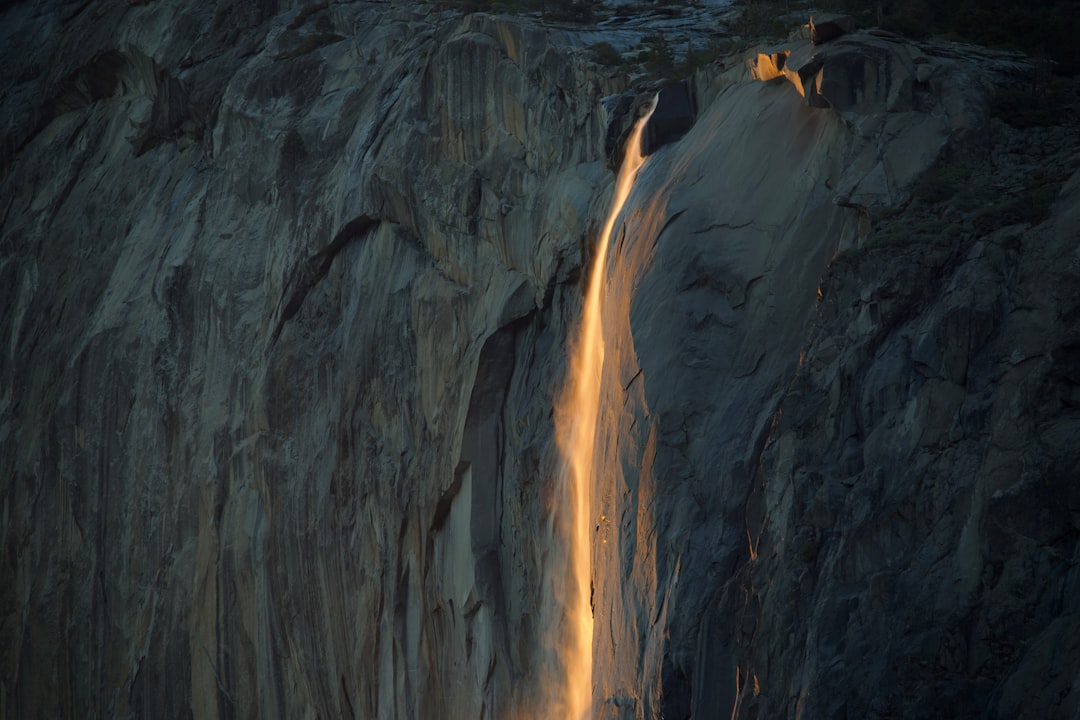
Something happens to Yosemite Valley in the second half of February that turns the whole place sideways. The trails don't change. The waterfalls don't suddenly appear. But the parking fills differently, the shuttle runs a different rhythm, and the crowd gathers in a place it normally ignores — a stretch of Northside Drive where, most of the year, nobody stops. What pulls them is a small, seasonal waterfall on the eastern face of El Capitan called Horsetail Fall. For roughly two weeks, the setting sun hits it at an angle that turns the water a deep, glowing orange — as if the granite itself were pouring fire. The phenomenon lasts minutes. The preparation lasts hours. And the planning, if you're staying anywhere near the park, starts the moment you hear about it.
Horsetail Fall is fed by snowmelt and runoff from the top of El Capitan. Most of the year, it barely registers — a thin stream that dries up entirely by summer. But in mid-to-late February, when the sun drops to a specific angle and the water is flowing, the last light of the day catches the falls and illuminates them from behind. The effect lasts somewhere between five and fifteen minutes before sunset, and then it's gone.
Three things have to align for it to work. The snowpack above El Capitan has to be melting enough to produce visible water flow. The sky has to be clear — even light cloud cover during those critical minutes can block the light entirely. And you have to be standing in the right place at the right time, because the angle only works from a narrow band of the valley floor.
When all three align, the falls glow a molten orange that deepens toward red as the sun drops. When they don't — when clouds roll in at the wrong moment, or the water isn't running — you've made the trip for a cold walk in the dark. That uncertainty is part of what makes it. Nobody who's been there forgets the minutes of silence before the color either arrives or doesn't.
On a normal February weekday, Yosemite Valley is quiet. Winter light, thin crowds, short days. During the Horsetail Fall viewing window, that changes fast.
The National Park Service puts restrictions into effect for the duration. Northside Drive loses a lane to pedestrian traffic between Yosemite Falls parking and the viewing area near El Capitan Picnic Area. The walk is roughly a mile and a half each way. Southside Drive stays open to vehicles, but parking and stopping are prohibited along the stretch between El Capitan Crossover and Swinging Bridge Picnic Area. Pedestrians aren't permitted on or adjacent to that section of road either.
The designated parking for viewers is at Yosemite Falls parking, just west of Yosemite Valley Lodge. When that fills — and on peak days, it fills early — the overflow moves to Yosemite Village or Curry Village, with free shuttle service connecting to the lodge area. An express shuttle runs between Yosemite Village and Yosemite Falls parking during the viewing period.
On the busiest evenings, Northside Drive may close entirely for roughly thirty minutes after sunset while the crowd walks back in the dark. Bring a headlamp. Bring warm layers. The valley floor in February drops fast once the sun disappears, and the walk back is colder than you expect.
The Horsetail Fall viewing window draws photographers, families, couples, and park regulars who've built February trips around it for years. On peak weekends, the NPS has documented over two thousand visitors gathering in the viewing area — an area that historically had no infrastructure for that kind of density.
That's why the restrictions exist. In prior years, visitors spilled onto riverbanks, trampled sensitive vegetation along the Merced, and in one documented case collapsed a section of riverbank under the combined weight of spectators. The current system — designated parking, lane closures, restricted zones — is the park's response to an event that grew faster than the infrastructure could handle.
Understanding this context changes how you plan. This isn't a casual sunset stop. It's a pilgrimage with logistics, and the people who enjoy it most are the ones who treated the logistics as part of the experience — arriving early, settling in, and letting the waiting become the thing.
Even with perfect planning, the Firefall effect is not guaranteed. Cloud cover during those critical minutes before sunset blocks the light entirely. A dry winter with insufficient snowpack means Horsetail Fall may not flow at all. Some years, visitors arrive to find a damp streak on the granite and nothing more.
This is the part that separates Horsetail Fall from a scheduled event. There's no ticketed show, no guaranteed curtain time. The park doesn't announce whether it "happened" on a given evening. You show up, you wait, and you accept whatever the sky decides. Some of the most memorable evenings, according to photographers who return annually, are the ones where broken clouds let a single beam through at the last possible moment — producing a glow surrounded by color that a clear sky wouldn't have created.
The practical implication: don't plan a single-evening trip built entirely around seeing the glow. Build a few days around it. Give yourself multiple sunsets. The valley in February rewards the visit regardless — the winter light on Half Dome, the ice along the Merced, the quiet that the rest of the year doesn't have. Horsetail Fall is the headline, but the valley is the story.
The popular name "Firefall" actually belongs to something else entirely. From roughly the 1870s until 1968, a human-created spectacle took place at Glacier Point: burning embers were pushed over the cliff edge, creating a cascade of fire visible from the valley floor thousands of feet below. It became a nightly summer tradition, complete with a call-and-response ritual between the valley and the cliff top.
The National Park Service ended the practice in 1968. The natural phenomenon at Horsetail Fall was first captured in a now-famous photograph by Galen Rowell in 1973, but it remained relatively unknown for decades. Its explosion in popularity came with the rise of landscape photography on social media — images of the glowing falls spread widely, and attendance surged. The NPS still refers to the natural event as the "Horsetail Fall event," reserving "Firefall" for the historical practice. Most visitors and photographers use "Firefall" for both.
The primary viewing area is near El Capitan Picnic Area, on the north side of Yosemite Valley. This is where the angle aligns best and where rangers and fellow viewers gather. Vault toilets, trash, and recycling are available at the picnic area.
The setup is simple but time-dependent. Arrive early — photographers with tripods begin claiming spots in the early afternoon on peak days. The glow typically begins five to fifteen minutes before sunset. Once it starts, it moves fast. The color shifts from gold to deep orange to red, then fades as the sun drops below the horizon.
Event: Horsetail Fall natural viewing event. Annual, typically occurring during a roughly two-week window in the second half of February. The glow effect is weather- and water-dependent and is not guaranteed on any given evening. Verify the current year's conditions and any access changes at the NPS Horsetail Fall page.
Where: Eastern face of El Capitan, Yosemite Valley. Primary viewing area near El Capitan Picnic Area, accessed on foot from Yosemite Falls parking area (west of Yosemite Valley Lodge). The walk is approximately 1.5 miles each way.
Parking: Yosemite Falls parking is the closest designated lot for Horsetail Fall viewers. When full, Yosemite Village and Curry Village serve as overflow with free shuttle service to the lodge area. An express shuttle runs between Yosemite Village and Yosemite Falls parking during the viewing window. No parking, stopping, or passenger unloading is permitted between Lower Yosemite Fall and El Capitan Crossover. Vehicles displaying a disability placard may drive to El Capitan Picnic Area and park in designated turnouts. Verify current parking and shuttle details at the NPS page before your visit.
Reservations: A reservation is not required to visit Yosemite or the viewing area during the February viewing window. This has varied in prior years — always confirm the current year's policy at the NPS Horsetail Fall page before planning.
Road restrictions: Northside Drive loses one vehicle lane for pedestrian access between Yosemite Falls parking and the viewing area. Southside Drive remains open to vehicles, but stopping is prohibited in the restricted zone. On peak evenings, Northside Drive may close entirely for approximately thirty minutes after sunset. Verify current road status at the NPS page.
What to bring: Warm layers, headlamp or flashlight for each person, traction devices for boots (snow and ice are common on the valley floor in February), food, and water. Expect to stand in one place for an extended period in cold conditions.
Timing: The glow effect, when it occurs, typically begins five to fifteen minutes before sunset. Photographers and viewers begin arriving hours earlier on peak days to secure positions.
Accessibility: Viewers with disability placards may drive closer to the viewing area. The walk from Yosemite Falls parking is on a mix of road and flat terrain, but winter conditions (snow, ice, low light) affect accessibility significantly. Contact Yosemite's accessibility information line for current conditions.
The Horsetail Fall viewing window draws significant visitor volume to Yosemite Valley during a month that is otherwise quiet. Nearby accommodations in gateway communities fill earlier than a typical February weekend. Guests staying in Groveland, Mariposa, or Oakhurst should plan for the drive back in darkness and cold — arrive to the valley early, build a full day around the visit, and treat the return drive as wind-down time rather than a rush.
Want to feature your business on the DirectStay Blog?
Want to feature your business on the DirectStay Blog?

Connect with travelers, share your space, and join a community of hosts earning together.
Become a host