

 DirectStay
The Currahee Mountain trail outside Toccoa, Georgia, hits a fork before you ever reach the trailhead — and the fork has nothing to do with the road. It happens in your head. Colonel Robert Sink Memorial Trail climbs the same gravel road that WWII paratroopers ran in full gear, and the impulse to test yourself against that history is immediate. Three miles up, three miles down, eight hundred feet of elevation gain. The paratroopers finished it in under an hour. Most visitors in reasonable fitness take closer to three. But the people who come here only to run it miss what the people who walk it tend to find — that the mountain carries something besides elevation. Camp Toccoa at Currahee sits at the base, and what remains — one surviving original building, reconstructed barracks from salvaged materials, a C-47 pieced back together by volunteers — still carries the weight of what the place was. The summit waits at the top, and what it returns is not a finish line but a view across northeast Georgia and into South Carolina.
The Colonel Robert Sink Memorial Trail follows the original training route that the 506th Parachute Infantry Regiment — the unit that became the subject of the HBO miniseries and the Stephen E. Ambrose book — used to condition paratroopers beginning in 1942. The route is a gravel road, not a single-track trail. It climbs steadily for approximately three miles, gains roughly eight hundred feet, and returns the same way. There are no trail junctions. No navigation decisions. The path goes up, and the path comes back down.
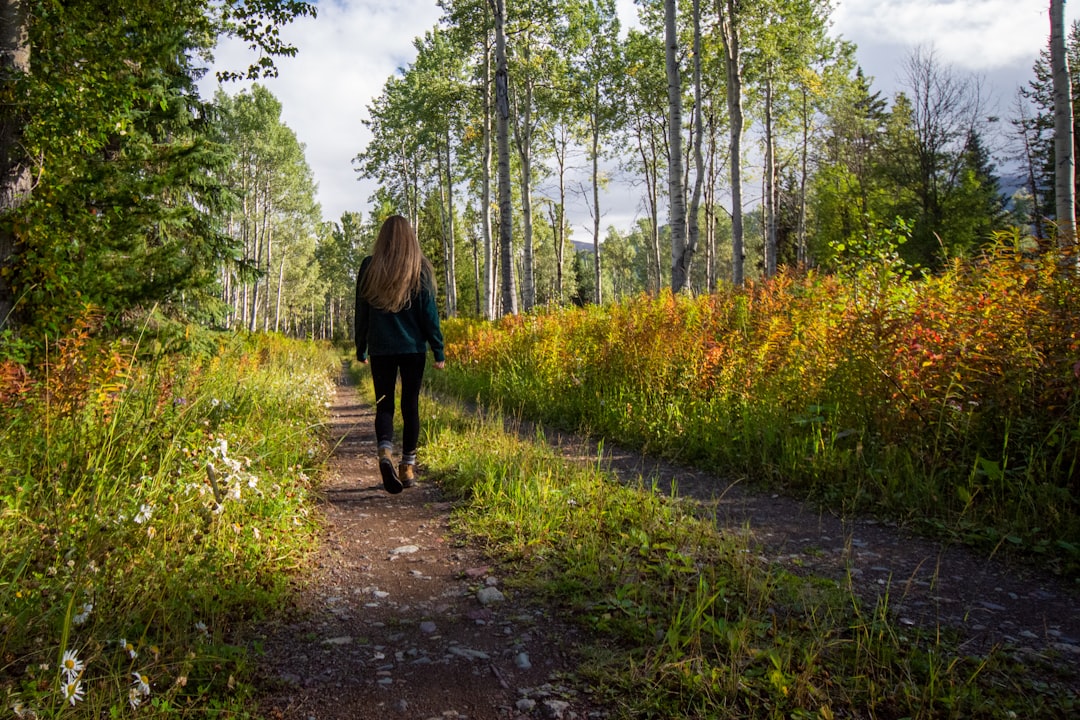
What changes is how you move through it. The physical challengers — runners, fitness hikers, people measuring themselves against the paratrooper story — tend to go heads-down and fast, treating the summit as a turnaround point. The contemplative walkers stop. They notice where the canopy shifts, where the gravel gives way to packed earth. They arrive at the top having spent two or three hours on a trail the runners finished in ninety minutes, and neither group is wrong about what the mountain asked.
Most visitors driving to the Currahee trailhead pass Camp Toccoa at Currahee on the way. The ones who stop first tend to have a different experience on the mountain.
Camp Toccoa sits at 2351 Ayersville Road, roughly five miles west of downtown Toccoa on Highway 123. The grounds are an active restoration project — not a finished museum, not a polished visitor attraction. Only one original WWII-era building remains, though additional structures have been constructed using salvaged original materials, including a reconstructed barracks. A C-47 aircraft is on display outside — partially rebuilt by volunteer craftsmen, not a pristine artifact behind glass. Admission is free, though visitors should verify current hours before planning a trip.
The rawness is the point. The camp site has been through multiple lives since the Army — juvenile detention center, prison, textile mill — before a nonprofit began restoration in 2012. For visitors expecting a curated exhibition, the grounds can feel unfinished. For visitors who understand this is an ongoing labor of recovery, the condition of the site carries its own weight.
Walking the camp before climbing the trail changes the frame. The paratroopers who ran Currahee started from this ground, not from a parking lot. The camp is the context that turns a gravel road into a route with a history attached to it.
Currahee Mountain's summit sits at approximately 1,735 feet. The panoramic view reaches across northeast Georgia and into South Carolina, with the Blue Ridge crest visible to the north on clear days.
The summit is where the two approaches converge. The runners arrive winded and check their time. The walkers arrive slower and sit longer. The summit itself hosts radio towers and a National Geodetic Survey marker, but the viewpoints beyond the fenced tower sites are what hold visitors in place. The mountain gives you the view and nothing else, and that restraint is part of what keeps the experience from feeling commercial.
Do the museum before the camp. Do the camp before the mountain. The Currahee Military Museum in downtown Toccoa provides the narrative context — who trained here, what they were preparing for, what happened after they shipped out. Camp Toccoa translates that narrative into a physical place. The trail translates the physical place into a bodily experience.
Reversing the order still works as a day. But the mountain feels different when you already know whose footsteps the gravel road follows. The contemplative path is built on arriving at the trailhead with context already loaded.
July and August deserve their own mention. While lower sections of the trail are shaded by hardwood canopy, the upper stretches and the final steep mile to the summit are more exposed. Northeast Georgia humidity can turn an otherwise manageable climb into a serious physical effort. Carry more water than you think you need. Start early. The paratroopers trained in Georgia summers because the conditions were deliberately punishing. Visitors do not need to replicate that.
Colonel Robert Sink Memorial Trail. Access adjacent to Camp Toccoa at Currahee, 2351 Ayersville Road — five miles west of downtown Toccoa on Highway 123.
Approximately six miles round trip, eight hundred feet of elevation gain. Gravel road — steady climb, no technical terrain. Moderate for most fitness levels.
No facilities on trail — no restrooms, water, or emergency stations. Use Camp Toccoa restroom before starting. Carry at least two liters of water in warm months.
2351 Ayersville Road, Toccoa, GA 30577. At the corner of Highway 123 and Ayersville Road, five miles west of downtown. Active restoration project with WWII-era structures and a partially restored C-47 aircraft. Free admission. Currently open Fridays noon–3pm, Saturdays 10am–3pm, Sundays noon–3pm — verify current hours at camptoccoaatcurrahee.org before visiting.
160 N Alexander Street, Toccoa, GA 30577, housed in the restored Toccoa Train Depot in downtown. Mon–Sat 10am–4pm, Sun 1–4pm. Verify current hours at toccoahistory.com. Visit before Camp Toccoa for the full sequence.
Early morning starts recommended in summer months. Lower trail sections are shaded; upper sections and the final mile are more exposed. Spring and fall are the most comfortable seasons for the full round trip.
Available at Camp Toccoa, adjacent to the trailhead. The mountain road can be driven to the summit but is eroded in sections — most visitors park at the base.
Currahee draws visitors year-round, with heavier traffic during heritage weekends. Guests staying in surrounding communities can build a full day around the museum-camp-trail sequence and treat the drive home as decompression.
Want to feature your business on the DirectStay Blog?
Want to feature your business on the DirectStay Blog?

Connect with travelers, share your space, and join a community of hosts earning together.
Become a host