

 DirectStay
The drive up Scenic 197 narrows to two lanes, the mountain terrain takes over, and the Soque River appears alongside the pavement before you arrive anywhere worth stopping. Then the river bends, and Mark of the Potter appears — a converted 1930s grist mill that has been a working pottery shop since 1969, six resident potters throwing clay inside a building where you can feed trout from the back porch while the wheel keeps turning. The shelves hold what they made this week. That alone would be enough for an afternoon. But the highway doesn't end at the grist mill. Five miles further north on the same two-lane road, the corridor opens into something wider — a farmhouse where the craft isn't one medium deep but half a dozen mediums across, and where the kiln fires on a schedule that changes what you'll find every three weeks.
The same road. The same afternoon. The question is whether depth or breadth is the version of craft your hands want to carry home.
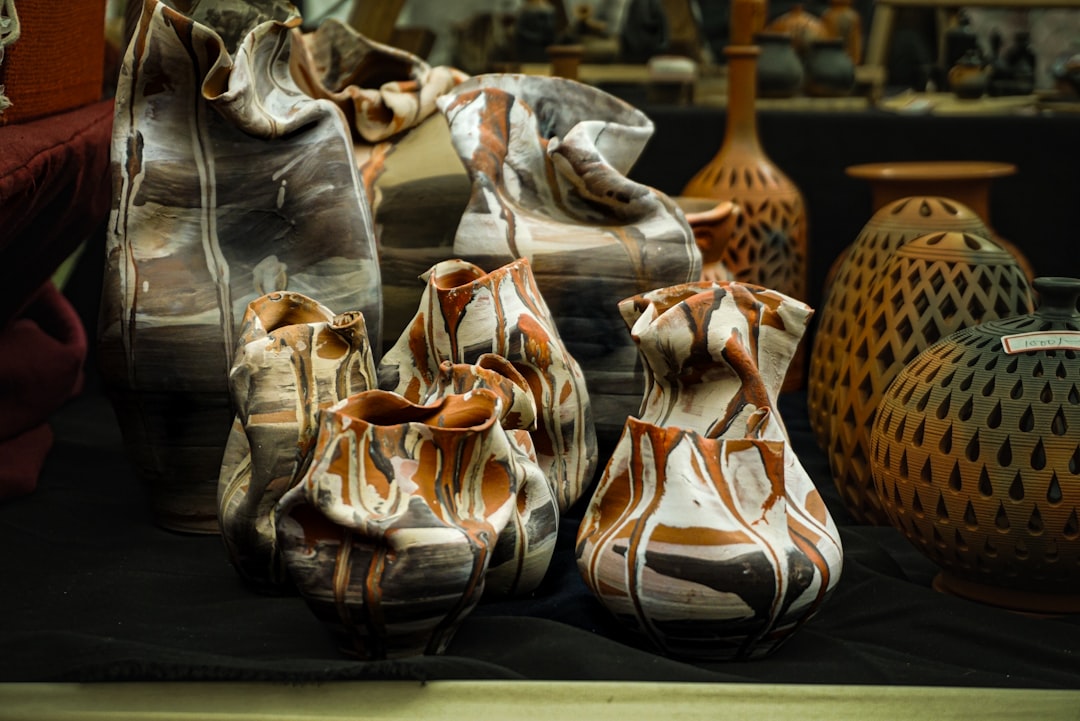
Mark of the Potter doesn't rotate its identity. The grist mill was already old when the pottery shop opened here in 1969, and the building has been doing the same thing since — housing people who shape clay by hand and sell what they make from the room where they made it. Six potters work on-site. The shelves aren't curated from a catalog; they hold what was made on-site by the resident potters, glazed and fired in the same building.
The building matters. The 1930s grist mill sits directly on the Soque River, and the river isn't decorative — it runs close enough to the back porch that feeding the resident trout is part of the visit. The sound of the water, the trout surfacing off the porch, the potters working while you browse — the experience here is singular and concentrated. You're not browsing a gallery. You're standing inside a working production space that happens to let you take things home.
What depth means in practice: if you care about how a glaze behaves at different temperatures, or why one potter's handle pull looks different from another's, or what decades in the same studio teach about a particular clay body — this is where that work is happening. The potters are present. The work is current.
Hickory Flat Pottery sits five miles further north on Scenic 197, inside a farmhouse that has been standing for roughly 120 years. The name says pottery, but the collective operating here houses ten or more artists working across pottery, glass, metalwork, fiber, wood, and jewelry. On any given visit, the farmhouse holds work from that full range of makers, and because the collective rotates, the inventory shifts between visits.
The kiln opening events are the structural difference. Every three weeks, the kiln fires and the collective opens the studio to show what came out. A kiln opening visit is a fundamentally different experience from a standard browsing afternoon. If your trip lands on a kiln opening weekend, plan around it — the farmhouse becomes a different place.
Breadth means this: you walk in looking at a ceramic piece and leave carrying something in glass or metal you hadn't imagined existed on this road. The farmhouse doesn't specialize. It accumulates. And because the collective rotates, the accumulation shifts.
Scenic 197 is sometimes called "the Moonshine Highway," and the drive itself is part of what makes both studios work as afternoon experiences. This is not a strip mall detour. The two-lane road climbs through mountain terrain with the Soque River threading alongside, and the thirty-minute approach from Toccoa functions as a transition — by the time you park at the grist mill or the farmhouse, the pace has already changed.
The honest framing: you can visit both studios in a single afternoon. Five miles apart on the same highway, with no backtracking required. Start at Mark of the Potter where the river bends, spend an hour with the clay, then continue north to Hickory Flat for the breadth. Or reverse it — start with the farmhouse collective to see what ten artists working across half a dozen mediums look like under one roof, then end the afternoon in the grist mill where one medium goes more than fifty years deep.
This blog covers the same Scenic 197 corridor for fly fishing — Blackhawk Fly Fishing and Fern Valley on the Soque operate on this same stretch of highway. A morning on the river and an afternoon in the studios makes a full day without leaving 197.
9982 Highway 197 N, Clarkesville, GA. Open daily 10 a.m. to 6 p.m.; January through March hours shorten to 10 a.m. to 5 p.m. The back porch overlooks the Soque River — the trout are there, and feeding them is part of the visit.
13664 Hwy 197 N, Clarkesville, GA. Check their posted schedule for kiln opening dates — these events run on a roughly three-week cycle. A kiln opening visit and a standard browsing visit are different experiences; plan accordingly.
Scenic 197 is a two-lane mountain road. GPS may estimate thirty minutes from Toccoa to Mark of the Potter and thirty-five to Hickory Flat, but the road is slower than those numbers suggest — curves, elevation changes, and a pace that rewards patience over speed. Budget extra time and treat the drive as part of the afternoon rather than an obstacle to it.
No rideshare coverage exists in this part of Northeast Georgia. The Scenic 197 corridor is a self-drive experience.
The grist mill has been here since the 1930s. The potters have been here since 1969. The farmhouse has been here for more than a century, and the collective keeps changing what fills it. The road connects them — five miles, same highway, same afternoon. What you carry home from Scenic 197 depends on whether you wanted to go deep into one material or wide across many. The corridor holds both answers. The afternoon is yours.
Want to feature your business on the DirectStay Blog?
Want to feature your business on the DirectStay Blog?

Connect with travelers, share your space, and join a community of hosts earning together.
Become a host