

 DirectStay
Most travelers pick their base by scanning a map for the dot closest to the thing they want to do. It makes sense — proximity feels like efficiency, and efficiency feels like a plan. But along the St. Johns River corridor, the four anchor towns sit close enough that most of the region's major draws are reachable from any of them within thirty to forty-five minutes. The distance between towns isn't the real variable. What changes is what you walk into when you step outside in the morning, and what you come home to when the day's over.
Palatka is the town where you can leave a morning open and still fill it. The Magnolia Cafe on St Johns Avenue serves breakfast and brunch in a downtown that's walkable past twenty-five murals and a riverfront park before you've committed to anything. There's a Publix, a Winn-Dixie, a Walmart. There's a hospital. There's a library. If you forgot sunscreen or need a cooler or realize mid-trip that the fishing rod you brought is wrong, Palatka is where you solve that problem without driving forty-five minutes.
St. Augustine sits about forty minutes east. That proximity matters for day trips — but it also matters for travelers who want access to a larger town without staying in one. Palatka functions as a base that keeps the river close while keeping supply runs short.
Mornings here feel like a town that's functioning. You hear traffic. You pass storefronts. You make eye contact with people who live here and work here and aren't on vacation. For some travelers, that's grounding. For others, it's exactly the texture they came to leave behind.
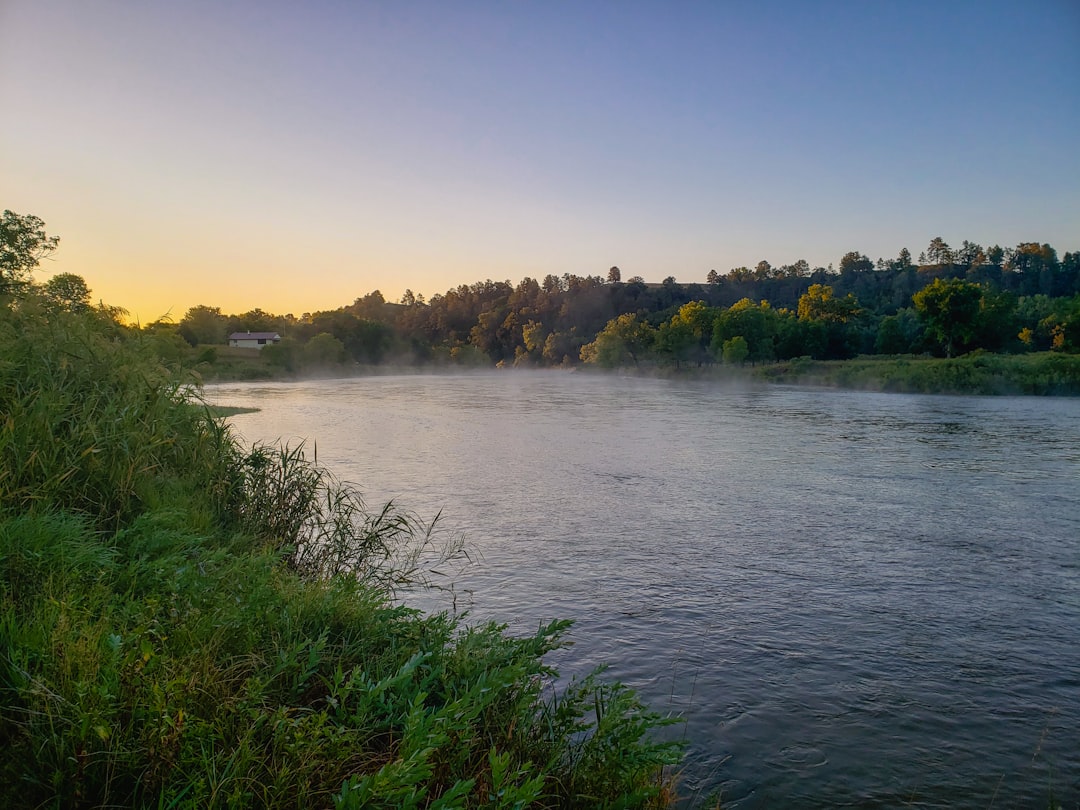
In Welaka, you don't go to the river. The river is already there when you open the door. This is a small community on the east bank of the St. Johns where the grocery situation is a Dollar General and the dining situation requires driving to Palatka or Crescent City. You plan around water here — because water is what the town was built for.
The springs corridor through Ocala National Forest starts nearby. Mud Spring in Welaka State Forest is a two-mile hike from the trailhead. The Fort Gates Ferry crossing — in service since the 1850s — historically connects the east bank to Forest Service roads in Ocala National Forest. Check current operating status before planning around it, as service has been intermittent.
Mornings in Welaka are quiet in a way that takes adjustment. No coffee shop down the street. No errand you can run on foot. What you get instead is a front-row seat to the river itself — the light changing on the water, the wading birds working the shallows, the sound of a boat motor somewhere downstream. Travelers who thrive here are the ones who packed their provisions before they arrived and don't need the town to entertain them.
Crescent City sits between two lakes — Crescent Lake to the east, Lake Stella to the west — and it carries the posture of a town that used to be a destination in its own right. A twenty-two-block National Register Historic District preserves Victorian, Craftsman, and Colonial Revival homes under live oaks that have been standing longer than any of them. The city was incorporated in 1885, and the architecture still reflects that era.
Crescent Lake covers nearly sixteen thousand acres. It's known for crappie fishing — locally called speckled perch — and serious anglers have been making the drive here since well before the lake had a reputation outside Putnam County. The town has a few restaurants, including 3 Bananas on the lake. Services are limited compared to Palatka but more available than Welaka.
Mornings in Crescent City feel lakeside, not riverside. The water is calmer. The town is smaller. If your trip is built around fishing or you want the feeling of a historic small town with enough infrastructure to not worry about running out of coffee, this is the base that fits.
Georgetown is an unincorporated community on the shores of Lake George — Florida's second-largest lake at roughly forty-six thousand acres, eleven miles long and six miles wide. Calling it a lake undersells it. Standing at the shoreline, you can't see the other side. The wind builds across the surface the way it builds across open water.
This is the most remote of the four anchor towns. Services are minimal — Georgetown Marina provides fuel, bait, and basic supplies, but there's no grocery store, no restaurant strip, no downtown. What there is: direct access to some of the strongest bass and crappie water in the state, proximity to Welaka State Forest and Ocala National Forest, and a pace of life that hasn't been adjusted for visitors.
Mornings in Georgetown belong to the lake. You hear it before you see anything else — the water against the dock, the birds working the grass flats, the wind. Travelers who end up here usually know exactly why they came, and it has nothing to do with what's nearby. It has to do with what isn't.
The decision isn't which town is closest to the springs or the best fishing or the festival you want to attend. All four towns sit within reasonable driving distance of the region's major draws. The decision is what you need your base to feel like when you're not doing the thing you planned.
If you need the trip to function smoothly — supplies within reach, a restaurant you can walk to, a backup plan when weather changes — Palatka gives you that. If you need the river to be the entire point of being here, Welaka and Georgetown deliver that, but they ask you to arrive prepared. If you want something in between — a lake town with character, enough services to stay comfortable, and water you can reach from the porch — Crescent City fills that gap.
The right base isn't about distance. It's about what kind of morning you need.
Full grocery (Publix, Winn-Dixie, Walmart), hospital, restaurants, fuel. About 40 minutes to St. Augustine via FL-207.
Dollar General, limited dining, no full grocery. Provision in Palatka before arriving.
Some dining (including 3 Bananas on Crescent Lake), limited grocery, fuel. About 30 minutes south of Palatka.
Georgetown Marina (fuel, bait, basic supplies). No grocery, no restaurant. Most remote option — plan accordingly.
Variable across all four towns, weakest in Georgetown and parts of Welaka near the forest. Download maps and directions before you leave service range.
Want to feature your business on the DirectStay Blog?
Want to feature your business on the DirectStay Blog?

Connect with travelers, share your space, and join a community of hosts earning together.
Become a host