

 DirectStay

Portland's maker culture doesn't shut down when the sun sets — it shifts shape. The city has been running an open-air artisan market since 1974, long enough that Saturday Market has become part of how locals and visitors alike understand the waterfront. Handmade pottery, leather goods, blown glass, screen-printed textiles — arranged under the Burnside Bridge where the smell of international food stalls mixes with river air and busker music drifts between booths. That's the version most people picture when they hear "Portland market." And it's a version worth experiencing on its own terms. But sometime around 2014, a different energy started gathering in warehouses and industrial spaces across the city — quarterly events where the same maker impulse gets reframed by fluorescent signage, DJ sets, and crowds that peak between seven and ten at night. The Portland Night Market took the same handmade ethos and dropped it into a setting that feels closer to a block party than a weekend browse. Which one you choose depends less on what you want to buy and more on when your group's energy crests.
Saturday Market occupies the western edge of Tom McCall Waterfront Park and spills into Ankeny Plaza, running weekends from March through late December. It holds a distinction that shapes everything about how it operates: every item sold must be handmade by the person behind the table. That requirement has held since the market's founding, and it means the browsing experience carries a different texture than a typical craft fair. You're looking at the person who shaped the bowl, stitched the bag, or mixed the glaze — and they can tell you why this batch came out darker than the last one.
The market draws over 250 vendors at peak season. Live music stages anchor different corners. An international food court fills the center with steam and competing aromas — Thai, Ethiopian, Mexican, Salvadoran. People sit along the seawall eating pad thai and watching river traffic. Kids run ahead while parents handle a second lap through the ceramics section. Groups spread out and reconvene. The pace rewards people who arrived without a purchase list.
What changes for the neighborhoods around it: Old Town and the waterfront corridor see elevated foot traffic every weekend during operating months. Restaurants and coffee shops within walking distance of Ankeny Plaza absorb the overflow — brunch spots fill earlier, and afternoon reservations at nearby restaurants tighten. Transit along the MAX Blue and Red lines brings crowds from across the metro area, and street parking near the waterfront compresses by mid-morning. The market itself costs nothing to enter, which means the foot traffic isn't filtered by a gate — it's filtered by the weather and the season.
The Portland Night Market runs on a different clock entirely. Quarterly events — typically spring, summer, fall, and a holiday edition — land in industrial venues that aren't normally pedestrian spaces. The setting matters as much as the vendors. Concrete floors, exposed beams, loading-dock doors propped open to the night air. The venue transforms for a single evening or weekend into something that feels temporary by design — and that impermanence is part of the draw.
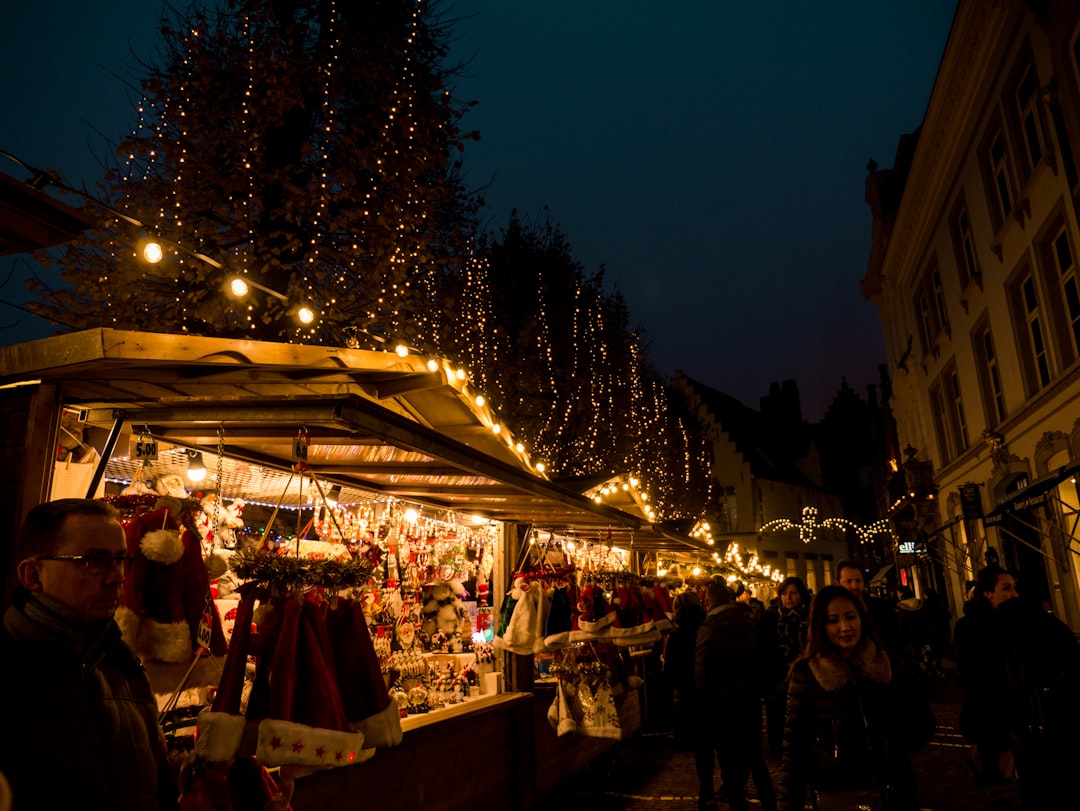
Crowds build after dark. The energy between seven and ten at night runs louder, denser, and more social than anything Saturday Market produces on a Sunday afternoon. Food vendors lean into the atmosphere: dishes designed to eat standing up, drinks that don't need a table. Live music and DJs fill the gaps between vendor rows. Groups move as a unit instead of splitting up. The industrial setting strips away the open-air calm of the waterfront and replaces it with something closer to an event than a market.
What changes for the surrounding area: Night Market locations rotate, which means the impact lands in neighborhoods that aren't accustomed to sudden pedestrian surges. Nearby bars and late-night restaurants absorb the post-market crowd. Parking around the venue fills fast. The quarterly schedule means locals treat each edition as a one-night thing — miss it and you wait months for the next one. That urgency compresses the crowd into a tighter window than Saturday Market's leisurely weekend spread.
Many vendors work at both markets. The same jewelry maker, the same ceramicist, the same leather worker might show up under the Burnside Bridge on Saturday and inside a warehouse on a Thursday night in October. What they're selling doesn't change. How you experience it does.
Saturday Market gives you sunlight, river views, and the space to circle back for a second look at something you weren't sure about. The pace forgives indecision. Night Market gives you a single compressed window where everything happens at once and the crowd momentum pulls you forward. Saturday Market is the version your family visits when someone says "let's see what Portland is about." Night Market is the version your friend group targets when someone checks the quarterly schedule and builds an evening around it.
The maker economy underneath is the same. Portland's artisan identity doesn't change based on the time of day. But the atmosphere — the sound, the light, the crowd density, the pace of decision-making — shifts enough that the two events serve different kinds of trips and different kinds of energy.
Tom McCall Waterfront Park and Ankeny Plaza, Portland, OR. Weekends, typically March through late December. Free admission. Verify this season's dates and hours at portlandsaturdaymarket.com.
Rotating venues — locations announced ahead of each quarterly event. Verify dates, venue, and entry details at pdxnm.com.
Street parking near the waterfront fills by mid-morning on weekends. TriMet MAX stops within walking distance (Skidmore Fountain station on the Blue/Red lines). Arriving by transit or bike avoids the compression.
Industrial venues vary in parking access. Rideshare is the most common arrival method. Check the event page for venue-specific guidance.
Saturday Market works for groups that want to split up and reconvene — the waterfront is easy to navigate and regroup. Night Market works for groups that want to stay together — the single-venue energy keeps everyone moving in the same direction.
Both markets draw from across the metro area, and weekend demand near the waterfront increases during Saturday Market season. Planning accommodations early gives you more neighborhood options — and a kitchen to bring home whatever market produce caught your eye.
The daylight version and the after-dark version answer the same question: what does Portland make, and who makes it? One answers slowly, along the river, with room to wander. The other answers all at once, in a warehouse, with a crowd that knows it only has tonight. Neither version is the whole story — but the one you choose tells you something about what kind of Portland evening you were after.
Want to feature your business on the DirectStay Blog?
Want to feature your business on the DirectStay Blog?

Connect with travelers, share your space, and join a community of hosts earning together.
Become a host