

 DirectStay

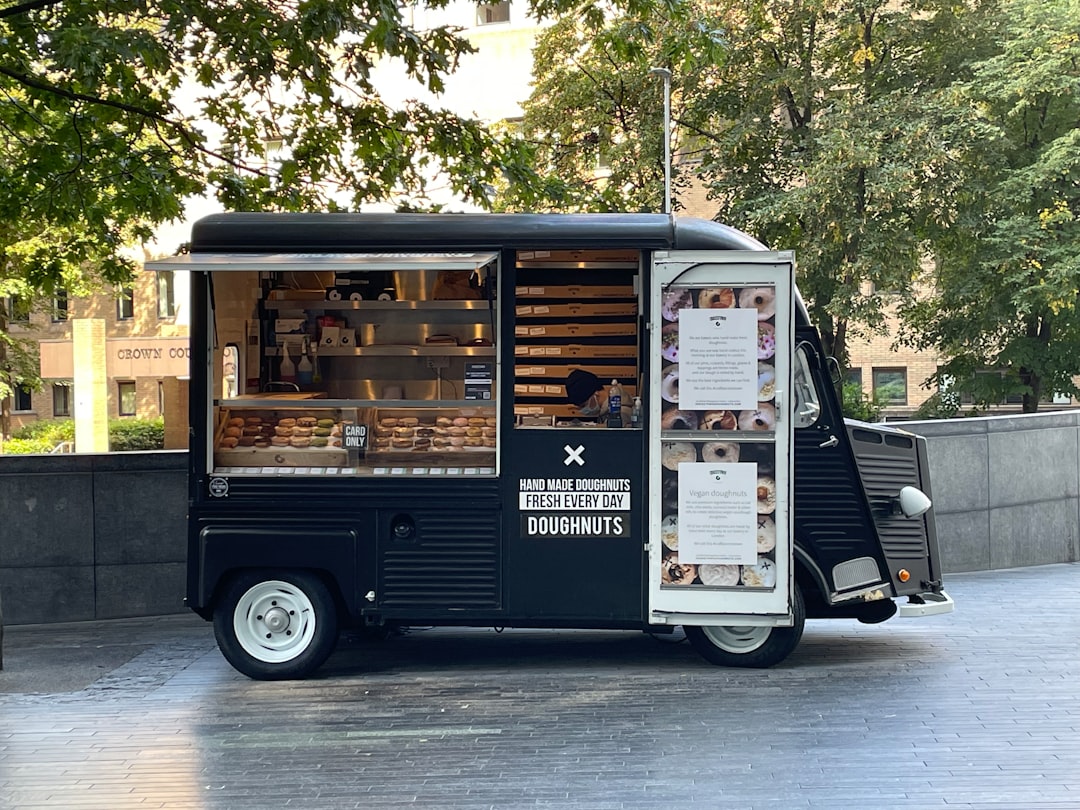
Portland's food cart culture reveals itself the first time you order from a window that faces a parking lot. A chef hands you a plate through an opening barely wider than your shoulders, and you carry it to a picnic table shared with strangers eating cuisines from three continents. Nobody seated you. The meal arrived in under four minutes, and it's among the most considered food you'll eat on this trip.
That parking lot is a pod — and the pod is not an accident. It's the product of quiet policy decisions, made over decades, that turned surface lots into neighborhood anchors. Understanding how the system works changes the way you eat here.
Portland says "food carts," not "food trucks." The difference isn't semantic — it's operational. A food truck is mobile. It parks somewhere in the morning, serves lunch, and drives to the next spot. A food cart is a permanent structure bolted to a fixed location. It has an address. It has regulars. It has a landlord.
That permanence is what creates pods. When a parking lot owner leases individual spaces to cart operators, a cluster forms — and the cluster becomes a destination. Shared picnic tables appear. String lights go up. The pod starts drawing foot traffic on its own, independent of any single cart's reputation.
This is the part most visitors miss: the cart you're eating at didn't choose that pod by chance. It chose a neighborhood. It chose neighbors. The Thai cart next to the Ethiopian cart next to the Venezuelan cart — that's not a food court designer's mood board. That's operators who assessed the foot traffic, the rent, and the complementary cuisines nearby.
Portland's food cart density didn't happen because the city has adventurous eaters — though it does. It happened because Oregon's Health Authority made a specific choice: mobile food units don't need a commissary kitchen if the operator can demonstrate the cart is self-sufficient — prep, dishwashing, and storage all handled onboard. In most American cities, a cart operator must rent commercial kitchen space for those functions — thousands in monthly overhead before a single plate gets served.
Oregon removed that barrier. Portland's permitting process added relatively streamlined approvals. And the city's abundance of surface parking lots — a legacy of mid-century urban planning — created cheap, leasable real estate in walkable neighborhoods.
The economics become clear: an aspiring restaurant owner with a concept and limited capital can open a food cart for a fraction of what a brick-and-mortar lease demands. The barrier isn't eliminated — carts still require health permits, insurance, equipment, and long hours in a confined space — but it's lowered enough that the population of people who can try changes dramatically.
What happened next is what makes Portland's cart culture structurally different from any other city's street food scene. Carts became incubators.
Nong Poonsukwattana started Nong's Khao Man Gai as a single cart in 2009, serving one dish — Thai chicken and rice — from a pod downtown. The cart built a following. The following funded a brick-and-mortar restaurant. Now there are multiple locations across the city.
Matt Vicedomini built Matt's BBQ as a food cart in Portland's Mississippi neighborhood. The brisket earned a reputation that brick-and-mortar barbecue restaurants with ten times the square footage couldn't match. The cart format forced focus — short menu, obsessive technique, no dining room to distract from the product.
The pipeline runs in one direction at first: cart success funds restaurant expansion. But it also runs laterally — established chefs open carts as test kitchens, as ways to try a cuisine they wouldn't commit an entire restaurant to.
The pandemic years reshaped Portland's pod geography. Downtown pods — the ones that appeared in travel guides — lost ground. Development pressure had already been converting surface lots to apartment buildings. The pandemic accelerated that by collapsing foot traffic and making empty parking lots untenable for landlords.
Pods didn't disappear. They migrated. New clusters emerged along 82nd Avenue, in the Jade District, in East Portland communities where rents remained manageable. The shift moved the center of gravity closer to the immigrant communities that had always been the ecosystem's engine.
Some consolidation happened too. Food halls absorbed cart operators who wanted stability and climate control, trading low-overhead independence for shared infrastructure.
What didn't change: the regulatory framework, the pipeline from cart to restaurant, and the identity of pods as neighborhood anchors. The geography shifted. The structure held.
The culinary diversity at Portland's pods — a cart serving Oaxacan mole next to a cart serving Bosnian ćevapi next to a cart serving Salvadoran pupusas — doesn't happen when each cuisine has to independently justify a $5,000-per-month brick-and-mortar lease. It happens when the lease is a parking space and the cuisine only has to justify itself to the people who show up.
Knowing that turns you into a different kind of eater here. Instead of treating carts as a single line on your itinerary, you start reading pods the way you'd read neighborhoods. A pod near a brewery serves a different crowd than a pod on a residential block. A pod in the Jade District is anchored by the community around it in ways a pod in a gentrifying corridor is not.
You also stop comparing carts to restaurants. The cart didn't fail to become a restaurant — it chose to stay a cart. The format is the point: speed, focus, low overhead, direct relationship between cook and eater. Some of Portland's most accomplished cooks have run the restaurant numbers and decided the cart gives them more of what they wanted.
If it drives away at the end of service, it's a truck. If it's parked permanently with utility hookups, it's a cart. Portland's ecosystem is built on carts — and carts have addresses.
Most carts open for lunch and run through dinner, but hours vary by operator and day of week. Some close Mondays or Tuesdays. Check before building your day around a specific cart.
Cash is still common at many carts. Carry some as a backup.
Portland pods are outdoor dining. Covered seating exists at many, but rain gear helps. Locals eat at carts year-round.
This blog covers specific pods and what makes each one worth the trip. This blog covers the system; that one covers the destinations.
The cart window is still open. The chef inside is still cooking a dish that existed in another country before it existed in this parking lot. What Portland built wasn't a dining trend — it was a set of conditions that let more people cook for a living and more people eat well for less. Once you see the system, you eat differently here.
Want to feature your business on the DirectStay Blog?
Want to feature your business on the DirectStay Blog?

Connect with travelers, share your space, and join a community of hosts earning together.
Become a host