

 DirectStay

A ski trip to the Poconos comes down to a decision most guests don't know they're making. Two families book the same cabin style, the same mountain, the same weekend class. They have different trips. Not because of the snow. Not because of the terrain. Because one of them looked at a calendar before they booked and one of them didn't.
The assumption is that a ski trip is mostly about skiing — that the quality of the day on the mountain follows the quality of the snow. That part is true. What guests discover on arrival is that two other variables shape the trip just as much: which resort you picked, and when.
Most people treat those as secondary. Poconos regulars treat them as the primary decision.
This sounds obvious. It becomes important only when guests arrive expecting something neither resort is.
Camelback Mountain in Tannersville is built for mixed-ability groups. Its investment in snowmaking infrastructure is significant — the resort has been systematically expanding it for years, which means terrain opens earlier in the season and holds longer through warm spells. Families with beginners, intermediate skiers, and one person who hasn't been on skis in a decade will find the terrain spread here actually reflects their group. The learning area is legitimate. The intermediate blues are well-groomed. The pitch stays manageable.
Jack Frost and Big Boulder run as a combined complex near Blakeslee, and the two mountains within it are actually quite different from each other. Big Boulder leans beginner-friendly — dedicated learning terrain, gentle slopes, terrain parks as its core product. Jack Frost, 12 miles away, has more progressive trails, more vertical, and more intermediate-to-advanced runs. The confusion happens when guests book JFBB expecting one experience and land at the wrong mountain within the complex. A group of beginners arriving at Jack Frost will find the pitch steeper than they anticipated. A group of experienced skiers who want challenge and end up at Big Boulder's mostly gentle terrain will feel underwhelmed.
Neither mountain is wrong. Arriving at the wrong one for your group is.
If your group has mixed skill levels and someone is genuinely new to skiing, Camelback's breadth — or Big Boulder's beginner focus — is the better call. If your group skis regularly and wants trails that build toward harder runs, Jack Frost is the right target within the JFBB complex. Making this decision before you arrive determines whether the ski day fits the people you brought.
Martin Luther King weekend and Presidents' Day weekend are the peak-of-peak periods in the Poconos ski season. Both compress hard.
Lift lines at Camelback during these windows run long — reviews consistently describe 25 to 45 minutes or more at the main chairs, sometimes longer when conditions draw larger-than-normal crowds. Lodging in the region books tight well in advance of these periods. The mountain you see on social media in early December — short lines, groomed corduroy, uncrowded lodges — is not the mountain that exists on Presidents' Day weekend. These are structurally different experiences sharing the same name.
Guests who plan a Presidents' Day stay around a different activity and decide to add a ski day to the itinerary often discover this too late. The mountain is operating at full volume for guests who booked it as a dedicated ski trip weeks ago. Walk-up lift ticket availability narrows. Parking fills early. The lodge is crowded in a way that changes the feel of the whole day.
This isn't a complaint about the resorts. It's a description of what happens to every popular ski mountain during holiday compression. Knowing it in advance lets you plan around it.
Mid-week December through early January is the most underappreciated ski window in the Poconos.
Snowmaking runs at full capacity as resorts open terrain for the season. Grooming is fresh because the mountain hasn't absorbed a weekend's worth of traffic. Weekday lift lines on non-holiday mid-week days run a fraction of what they are on peak weekends — the difference is structural, not marginal. The lodge feels like a ski lodge, not a stadium event.
Guests with schedule flexibility — those who can take a Tuesday-through-Thursday rather than a Friday-through-Sunday — get the mountain that regulars describe when they say they love skiing here. It's the same vertical. Same trails. Same snowmaking. The crowd is the variable that changes everything else.
Mid-week January and early February follow the same pattern. After the MLK and Presidents' Day compression periods, the mountain returns to its shoulder-week character. If you've been once during a holiday weekend and decided the Poconos ski scene wasn't for you, a mid-week January visit is a different data point.
Snowmaking is what makes the Poconos ski season reliable. Natural snow is what makes it exceptional.
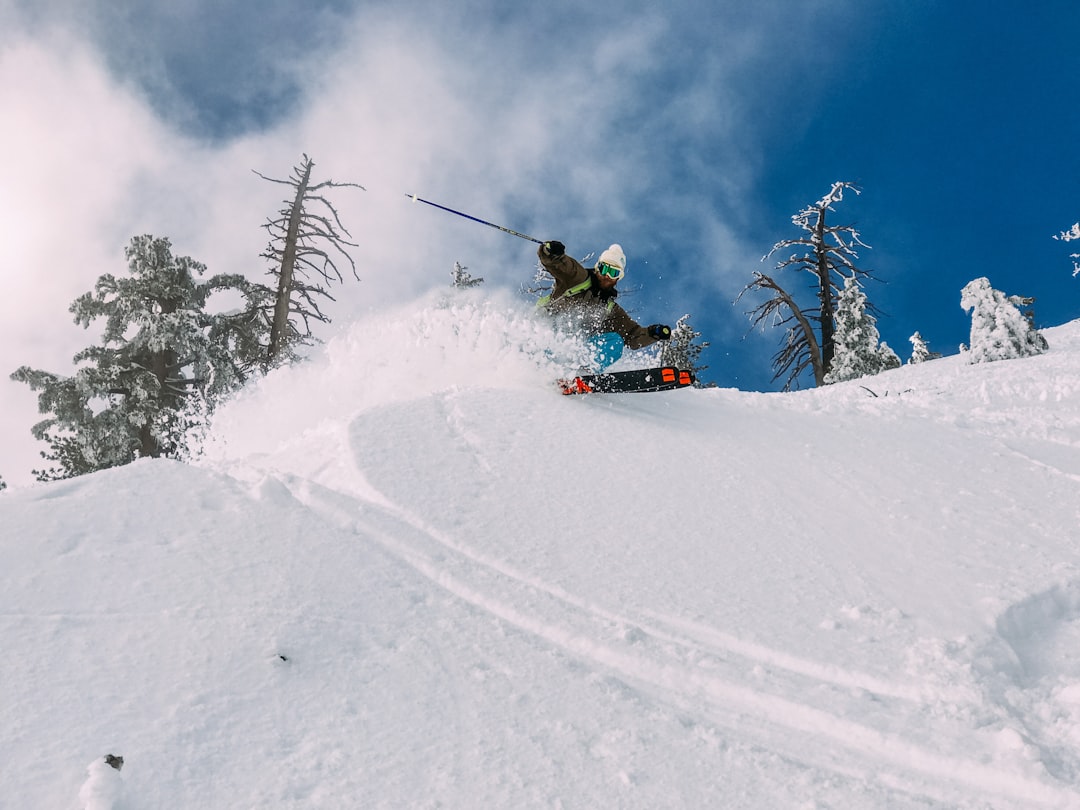
The region receives meaningful natural snowfall in January and February, and when a storm delivers 6 to 12 inches of fresh snow, the terrain transforms. The groomed corduroy is still there, but now there are off-piste pockets that snowmaking can't replicate — soft edges, powder-filled tree runs, conditions that remind experienced skiers why snow matters.
Guests who monitor the regional snowpack — not just the resort's social media feed, which optimizes for opening announcements rather than condition depth — and build a trip around a natural snow event get a different mountain than guests who arrive three weeks after the last storm. The window closes quickly; the Poconos doesn't hold powder the way western resorts do at altitude. But the 48 to 72 hours after a meaningful storm are worth planning around if you can.
Weather forecasting at 7 to 10 days is specific enough to justify booking a last-minute mid-week slot when a storm is tracking. Guests who've done this once tend to do it again.
The Poconos are a day-mountain culture. Guests who have skied Vermont or Colorado arrive expecting the après-ski infrastructure that exists at destination resort towns — a main street that activates after the lifts close, slope-side bars with live music running all evening, a village built around the ski experience.
That infrastructure exists here at smaller scale. There are bars and pubs near both resorts, and Camelback has on-site dining and a lounge option. But the density and energy of a New England ski village or a Colorado resort town isn't what the Poconos delivers. The region was built as a drive-to day destination, not a walkable resort community where the après is inseparable from the skiing.
What that means in practice: the cabin becomes a significant part of the après. Guests who provision well before they arrive — wine, ingredients for a cabin dinner, firewood if the property allows — find that the evening after skiing completes the day in a way that matches the mountain's character. The cabin infrastructure does what the slope-adjacent restaurant would do elsewhere. It just requires planning it that way intentionally, rather than assuming the resort town will catch you when you come down.
Camelback Mountain Tannersville, PA 18372 | camelbackresort.com | 570-629-1661 Terrain: Beginner through advanced, strong intermediate base | Best for mixed-ability groups Lift ticket purchasing: Online in advance recommended during holiday periods [NEEDS VERIFICATION: Current season hours, advance purchase window, parking lot opening time on peak days]
Jack Frost / Big Boulder Jack Frost: Blakeslee, PA 18610 | Big Boulder: Lake Harmony, PA 18624 | jfbb.com | 570-443-8425 Terrain: Big Boulder = beginner-focused; Jack Frost = intermediate-to-advanced | Know which mountain fits your group before you arrive [NEEDS VERIFICATION: Current season hours, whether combined ticket covers both mountains same day, parking details]
Timing guidance:
Peak-of-peak: MLK weekend (January) and Presidents' Day weekend (February) — highest crowds, longest lines, earliest sellouts
Best shoulder windows: Mid-week December, mid-week January, mid-week early February
Arrive early on any weekend: Parking and lift lines both front-load in the morning
Provisioning note: Stock the cabin before you head to the mountain. The grocery run is easier before ski day than after it.
Camelback and Jack Frost are what they are — two different terrain philosophies within the same regional ski destination, each right for a different kind of group. The mountain you'll ski on a Tuesday in January and the mountain you'll ski on Presidents' Day weekend are the same vertical drop, the same snowmaking, the same groomed trails. The difference is everything around it.
Guests who figure this out on their first Pocono ski trip tend to book mid-week on the second one. The terrain doesn't change. The decision of when to show up does.
Check the calendar before you book. Then provision the cabin like the evening matters — because out here, it does.
Want to feature your business on the DirectStay Blog?
Want to feature your business on the DirectStay Blog?

Connect with travelers, share your space, and join a community of hosts earning together.
Become a host