

 DirectStay

Every October, something predictable happens. A guest checks in on a Saturday morning, asks where to see the leaves, and I give them the same answer I've given dozens of times before. They nod, they leave, and by noon I get a text: "The lot was full."
That text is why I wrote this.
The Poconos foliage season looks like one thing from a booking calendar and behaves like something else entirely on the ground. The color is real. The experience—the uncrowded overlook, the table at the restaurant you wanted, the drive back that doesn't eat your Sunday—depends entirely on when inside that window you arrive. Most guests book the obvious weekend. A smaller number book the week that actually works.
This is what I tell guests before they leave for the trailhead.
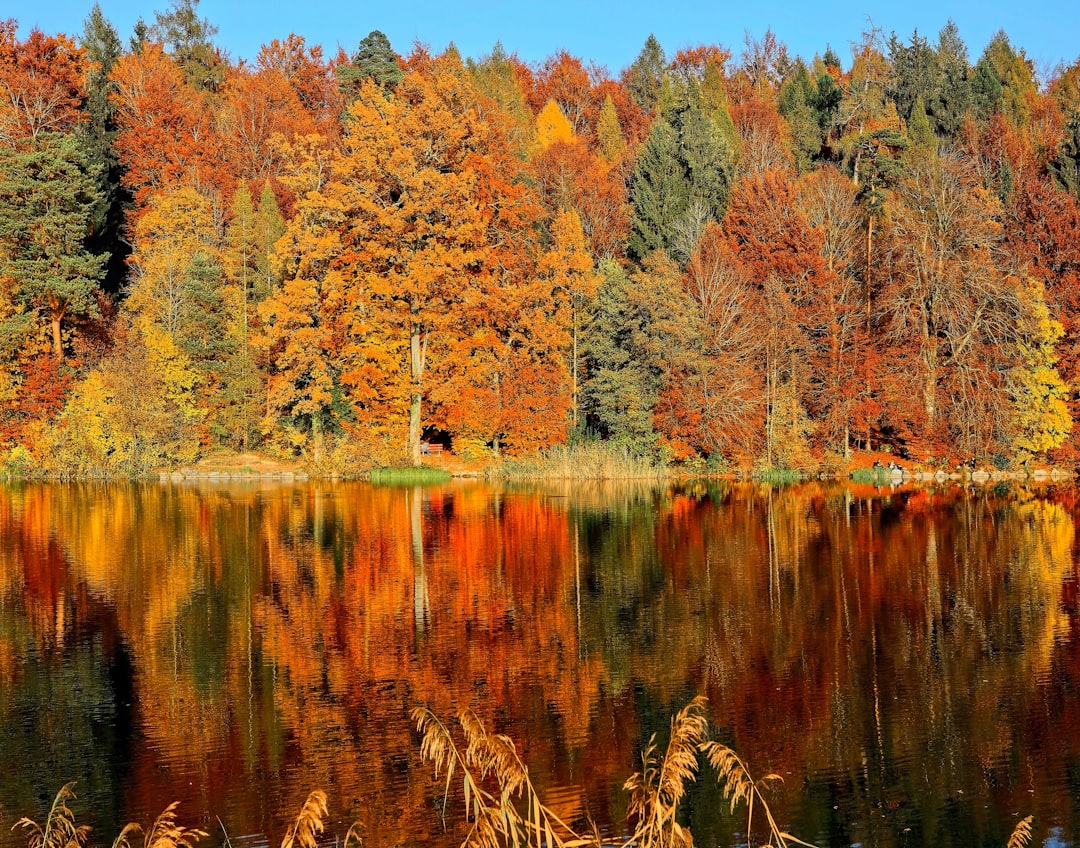
The Poconos fall foliage season runs across three distinct color zones — northern, central, and southern — with peak color arriving earliest in the north (roughly early October) and latest in the southern zone covering Carbon County and Jim Thorpe (late October). Taken together, the active foliage window spans roughly October 6 through October 25, but color doesn't move uniformly through it.
The ridgelines shift first. Valley floors follow by a week to ten days. A guest who arrives the first weekend of October often finds the color just starting and the crowds nonexistent. A guest who waits until the foliage looks good on Instagram arrives into the compression wall: full parking lots, restaurant waitlists, and an overlook that's more crowd than canopy.
The mistake is treating "peak foliage" as a single date rather than a moving band across elevation and geography. Guests with any schedule flexibility should think of the window as three distinct phases: early (color starting, crowds absent), peak (color saturated, logistics brutal), and shoulder-late (color holding in valleys, traffic already dispersed).
Bushkill Falls is among the most popular foliage destinations in the region, and its parking lot fills early on peak weekends. When it fills, it fills — there's no managed overflow that redirects guests. The advice from the park itself is to arrive early in the day or plan a weekday visit.
What that means in practice: guests who roll up on a Saturday or Sunday morning during peak foliage and find a full lot have no clear next step. They're not stuck in a long queue — the trailhead is simply unreachable by car. This isn't a "popular day" inconvenience. It's a capacity ceiling, and it applies regardless of how late you sleep in.
The solution is early departure or a deliberate shift to a weekday. Wednesday foliage visits during peak week look nearly identical to Saturday foliage in color and look nothing like Saturday in crowd density. That gap is the local's actual advantage.
Jim Thorpe is worth the trip during fall foliage season. The town is also worth knowing about before the trip, because its dining dynamic changes significantly in October.
During peak weekends, Jim Thorpe's most-booked restaurants—Moya on Race Street, Café Arielle at the Stabin Museum on West Broadway, and the mid-range options downtown—shift to waitlist-only service by early evening. Guests who assume a casual dinner stroll ends at a table are routinely wrong. Sixty to ninety-minute waits are common by 6 PM on a Saturday without a reservation.
The fix is simple and most guests don't do it: book before you leave home. Jim Thorpe restaurant reservations during peak foliage fill several days in advance, not the morning of. Guests who call from the cabin at 5:30 PM will hear the same thing I could have told them a week earlier.
Sunday afternoon departure during peak foliage season is its own planning variable. The I-80 eastbound corridor through the Delaware Water Gap backs up significantly by early afternoon on peak-season Sundays — a structural congestion point where volumes regularly reach 50,000+ vehicles per day and weekend leisure traffic compounds the baseline load. Guests who plan to leave at 3 or 4 PM regularly extend their trip by two hours without gaining anything from the extra time.
The two windows that work: leave by noon, before the compression builds, or stay through dinner and depart around 7 PM, after it clears. Both of those departure windows tend to produce a calm, reasonable drive. The window between 2 PM and 6 PM on a Sunday in October does not.
This isn't traffic as a nuisance—it's traffic as a genuine end-of-trip variable that shapes how guests feel about the whole weekend. A great Saturday and a brutal Sunday exit leaves people saying they "had a tough time." The timing decision prevents that.
If the goal is foliage without the logistics overhead, the weeks directly before and after peak are where locals actually go.
Late September—particularly the final week—brings the early ridge color with none of the crowd concentration. Early November, especially the first weekend, often still holds color in the valley floors while the parking lots, restaurants, and roads behave like a normal shoulder weekend.
Guests who have flexibility and treat "peak foliage weekend" as optional rather than mandatory consistently have better trips. The color isn't meaningfully different. The experience is.
Foliage window: Three color zones span the region, with northern areas peaking early October and the southern zone (Carbon County/Jim Thorpe) peaking late October. Exact dates shift year to year. The Pocono Mountains Visitors Bureau (poconomountains.com) publishes a weekly foliage forecast every Thursday through October — this is the primary Pocono-specific tracking resource.
Bushkill Falls: Open seasonally April–November. Arrive early on peak weekends; the parking lot fills and no managed overflow exists. Weekday visits during peak week are the most reliable alternative.
Jim Thorpe dining: Reservations at Moya (Race Street) and Café Arielle at the Stabin Museum (West Broadway), and comparable options, should be made several days in advance during October. Walk-in availability is limited on peak weekend evenings.
I-80 Sunday exit: Leave by noon or after 7 PM. The 2–6 PM Sunday window during foliage season consistently produces significant eastbound delays through the Delaware Water Gap corridor.
Where to stay: Cabin-based accommodation gives guests access to early-morning departure without a commute delay—a KNOW BEFORE YOU GO advantage that compounds when the difference between 7 AM and 10 AM arrival determines whether the trail is accessible.
The guests who have the best October trips aren't the ones who got lucky with timing. They're the ones who knew the parking capacity limit, booked the restaurant before they left home, and chose their departure window the way they choose anything else that matters.
That's the information. The trip is yours to plan.
Want to feature your business on the DirectStay Blog?
Want to feature your business on the DirectStay Blog?

Connect with travelers, share your space, and join a community of hosts earning together.
Become a host