

 DirectStay

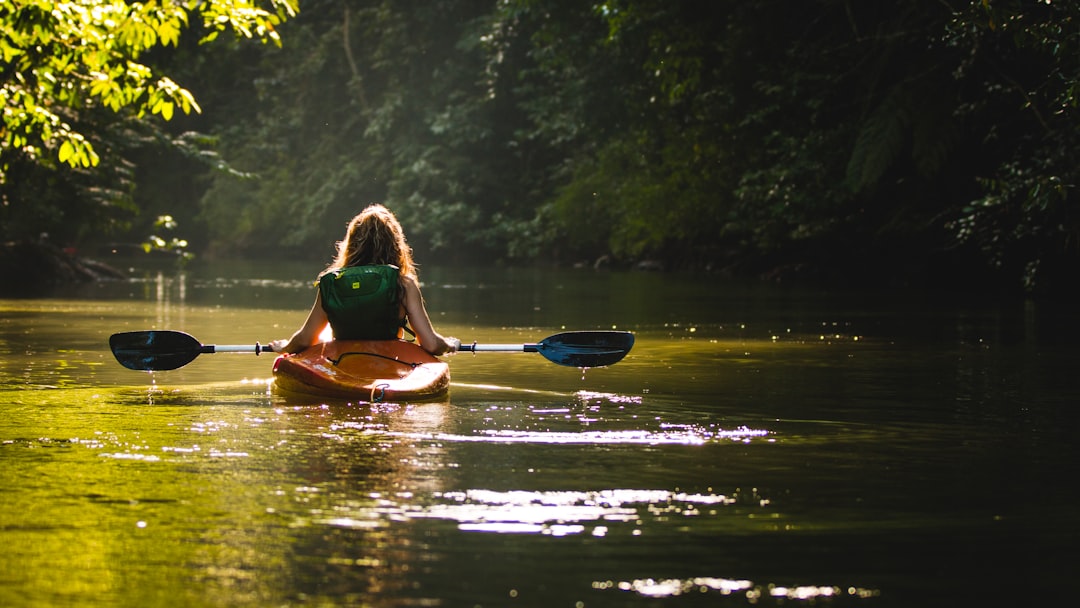
An Outer Banks eco-kayak trip comes down to one question most paddlers don't ask until they're already wet: did you come to find something, or did you come to be found by it? The guided Alligator River paddle answers that in daylight — your kayak slipping through tannin-black creeks inside a federal wildlife refuge covering more than 150,000 acres where black bears sun on the bank and red wolves still hold territory in the surrounding pocosin. Your guide is narrating what you're passing — cypress stumps, osprey nests, the remains of a logging road from a town that no longer exists — and you realize the paddle is secondary. You're moving through a living inventory, and the animals are deciding whether to show themselves. Then there's the other direction. A different launch point, a later hour, a paddle that doesn't begin until the sun is already gone. No animals watching from the tree line. No narration about what you're passing. Instead, every stroke ignites the water beneath you — dinoflagellates firing blue-green light in the wake of your blade — and the thing you came to see turns out to be the thing you're creating.
The Alligator River National Wildlife Refuge sits on the Dare County mainland, across the Croatan Sound from the barrier island beaches. The habitat here is pocosin — a Native American word meaning "swamp on a hill" — and the ecosystem it supports reads like a field guide come to life. Black bears move through the understory in numbers that make this one of the premier bear habitats on the Eastern Seaboard. River otters surface in the narrow creeks. Osprey hunt overhead. And somewhere deeper in the refuge, the world's only wild population of endangered red wolves still holds ground.
A guided kayak tour through the refuge typically runs about two hours. You launch from a dirt road boat ramp off Buffalo City Road — named for a logging town that became the moonshine capital of Dare County during Prohibition, and has since vanished into the swamp — and paddle tannin-stained blackwater creeks where bald cypress loom overhead and alligator paths wind through the marsh grass. The guides who run these trips know the waterways the way a librarian knows the stacks. They read animal sign, identify bird calls by ear, and position your group where sightings are most likely without crowding the wildlife.
What changes your understanding of this paddle is the scale. You're not visiting a park with a nature trail. You're paddling inside a refuge roughly twenty-eight miles long and fifteen miles wide, where the U.S. Fish and Wildlife Service manages land that includes hardwood swamps, brackish marshes, bogs, and Atlantic white cedar stands. The animals aren't penned or concentrated for viewing. They're living in the habitat they've always occupied, and your presence registers only as far as your paddle noise carries.
The bioluminescent night paddle is a different animal entirely — though the word "animal" barely applies. What you're encountering is microscopic: dinoflagellates, single-celled organisms that produce light when disturbed. On the right night, under the right conditions, every stroke of your paddle sets the water glowing blue-green beneath you. Drip water off your blade and it falls in luminous drops. Trail your fingers through the surface and light follows the current of your hand.
These tours launch from sound-side locations after dark, typically during the summer months when water temperatures support the bloom. The phenomenon is strongest on moonless nights — a full moon washes out the glow, which means the same outfitter may run a bioluminescence tour one week and a full-moon paddle the next, depending on the lunar cycle. This isn't a guaranteed performance. It's a biological event governed by temperature, salinity, wind, and darkness. When the conditions align, the effect is arresting. When they don't, you still get a night paddle under stars, which is its own kind of quiet.
The guides who lead these tours know how to read conditions and set expectations honestly. They'll tell you whether the night favors glow or moonlight before you launch. They'll position the group in calmer water where disturbance is more visible. And they'll remind you that phones and flashlights kill the effect — the darkness is the medium, and your eyes need time to adjust to it.
Most visitors frame this as a difficulty decision — the daytime trip is easier, the nighttime trip is harder. And there's some truth to the logistics: paddling in darkness requires more confidence, more group discipline, and a willingness to navigate without visual reference points. The Alligator River trip, by contrast, moves at the pace of observation. The water is flat. The guide does the wayfinding. You look.
But the thing most visitors don't realize is that these trips answer fundamentally different questions about what it means to be in a wild place. The Alligator River paddle puts you in the role of witness. You are moving through an ecosystem that predates your arrival and will outlast it. The bears, the wolves, the alligators — they were here before the logging roads, before the moonshine stills, before the refuge designation. Your job is to see without disrupting.
The bioluminescent paddle puts you in the role of participant. The light doesn't exist until you create it. The phenomenon is real — dinoflagellates have been doing this for millions of years — but the visible expression of it depends on your movement through the water. You are not watching nature perform. You are the catalyst.
Here's what changes the decision: the Alligator River trip is available year-round, with spring and fall offering the most active wildlife windows. The bioluminescent paddle runs only during the warmest months, and only when the lunar calendar cooperates. You can plan the first trip with confidence. The second requires flexibility, a willingness to book based on moon phase, and the understanding that conditions may not deliver what you imagined.
This means the KNOW BEFORE YOU GO question isn't which paddle you prefer. It's whether your trip timing gives you a choice at all. A late-September visit puts Alligator River at peak bear activity and the bioluminescence season likely behind you. A July visit opens both doors — but the bioluminescent paddle demands a moonless window that may or may not fall during your stay.
The travelers who do both — and plenty do — tend to describe them as complementary rather than competing. One fills the daylight hours with observation and narration. The other fills the darkness with silence and sensation. They don't answer the same question. But they both require the same thing from you: a willingness to sit in a kayak and let the Outer Banks show you something you didn't drive over a bridge to expect.
Alligator River access: The refuge sits on the Dare County mainland. Multiple outfitters launch guided tours from the Buffalo City Road boat ramp area off US-64 West. The drive from Nags Head is typically around twenty-five minutes. GPS can be unreliable on the dirt refuge roads — follow the brown U.S. Fish and Wildlife signs.
Bioluminescent paddle access: Tours launch from sound-side locations, with Nags Head and Kitty Hawk being common launch areas depending on the outfitter. Start times shift through the summer — expect departure after sunset, typically around 8:30 PM or later.
Booking window: Alligator River tours run year-round, though frequency drops in winter. Bioluminescent tours are summer-only, generally June through August, and fill quickly during moonless windows. Book well ahead for specific moon-phase dates.
What to know before the night paddle: No phones or flashlights during the bioluminescence portion — the darkness is the experience. Participants should be comfortable paddling without visual landmarks and staying with the group. These tours are typically not recommended for young children or inexperienced paddlers.
Gear and preparation: Outfitters supply kayaks, paddles, and life jackets for both trips. Wear water-appropriate clothing and shoes you don't mind getting wet. Bug spray is non-negotiable for the Alligator River trip, particularly in warmer months.
Both paddle experiences draw visitors to the mainland and sound-side areas. Planning your stay in the surrounding Outer Banks communities gives you proximity to both launch points and the flexibility to build a full day around the paddle — morning refuge trip or evening glow paddle — without rushing between the beach and the water.
Want to feature your business on the DirectStay Blog?
Want to feature your business on the DirectStay Blog?

Connect with travelers, share your space, and join a community of hosts earning together.
Become a host