

 DirectStay
Most people pick a month and book it. January for snow. July for sun. And those months will probably work — North Lake Tahoe has something going on almost year-round, and neither choice is wrong. That's the assumption, and it holds up more often than it doesn't. But the travelers who come back every year don't plan around months. They plan around windows. The gap between snowmelt and mosquito season. The week after Labor Day when the lake is at its warmest and the beaches are half-empty. The stretch in December when the snow hasn't arrived yet and the resorts are running on anticipation alone. Once you stop thinking in seasons and start thinking in windows, the calendar bends.
Tahoe has four seasons on paper. In practice, it has at least six, and the transitions between them matter more than the seasons themselves.
June is the month that misleads more visitors than any other. The calendar says summer. The reality at elevation says otherwise. Trails above the lake are often still buried under residual snowpack well into June, and the ones that have melted out can be muddy enough to close. Wildflowers haven't peaked. The water is cold enough to take your breath away — not the refreshing-dip kind, the gasping kind.
Meanwhile, December can look nothing like the postcard. Lake level may be brown and dry while the resorts wait for the first real storm cycle. Visitors who booked a ski trip based on the calendar sometimes arrive to find more dirt than powder. When the snow does come, it can come all at once — and suddenly chains are required, passes close, and the trip you planned as a relaxing getaway becomes a logistics puzzle.
The shoulder months — roughly late September through mid-November, and again from late April through early June — are where the calendar diverges most dramatically from the experience. These stretches are when many restaurants reduce hours, some seasonal operations shut down entirely, and the towns feel quieter than visitors expect. But they're also when lodging availability opens up, trails clear of crowds, and the light over the lake shifts into something photographers wait all year for.
Tahoe doesn't have a single opening day. It has a rolling sequence of operational windows that vary by elevation, category, and weather.
Ski resorts typically open when early-season storms produce enough base depth — sometimes as early as November, sometimes not until December. Each resort makes its own call. A resort on the north side of the lake may open weeks before one on the west shore, or vice versa, depending entirely on where the storms drop snow.
Beach access follows a different rhythm. State recreation areas along the North Shore and East Shore operate on managed schedules that vary year to year. [NEEDS VERIFICATION: Confirm 2026 day-use reservation windows for Sand Harbor and Kings Beach SRA — dates may shift from prior years.] Some public beaches are technically accessible year-round, but facilities like restrooms and concessions operate seasonally.
Restaurants shift too. The North Shore dining scene runs on a summer-peak, winter-peak cycle with reduced operations in between. A restaurant that's open seven nights a week in July may drop to Thursday through Sunday in October. Calling ahead or checking current hours online isn't optional during shoulder months — it's the difference between a meal and a locked door.
The phrase visitors need to internalize: check before you go. Not "check the forecast," though that matters too. Check whether the trail is actually passable. Check whether the restaurant kept its Monday hours. Check whether the beach has day-use availability. The information changes fast enough that a trip planned two weeks out may need adjustments by the time you arrive.
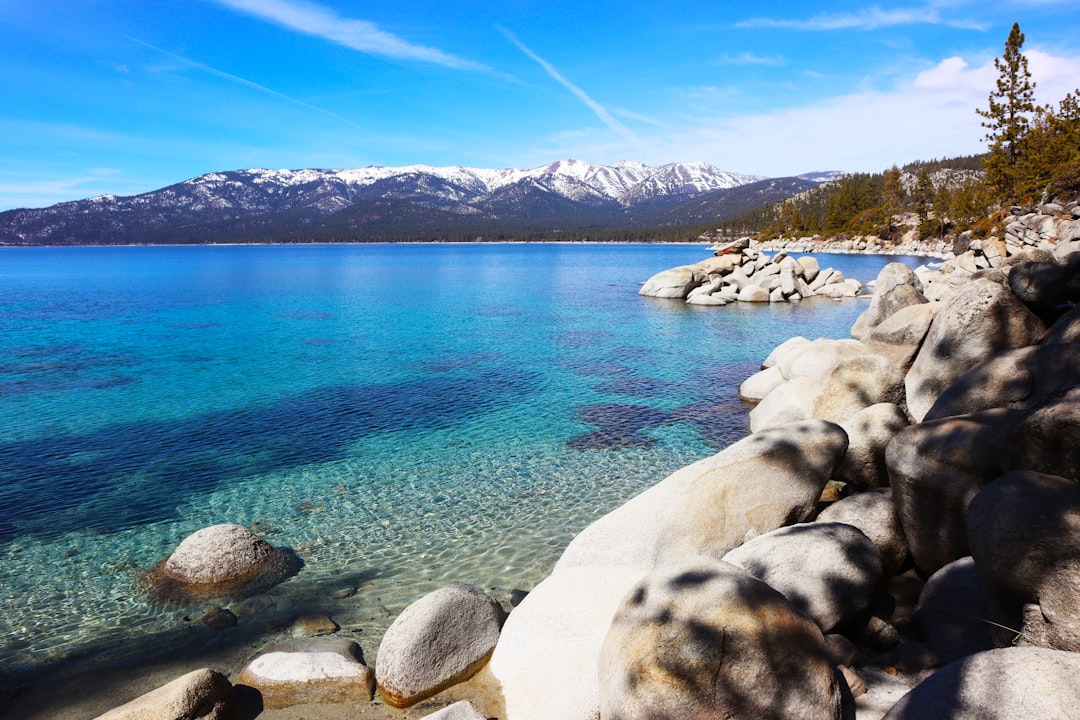
Late September through mid-October is the window many repeat visitors protect most carefully. Summer crowds have gone. Aspen groves at elevation are turning. The lake's surface temperature peaks in late summer and early fall — averaging in the low-to-mid sixties in September before dropping through October — and the air is dry and clear. Most restaurants are still operating, though hours may have started to contract. Hiking conditions are often the best of the year: stable weather, cool mornings, no mosquitoes, no snowpack.
Late April through late May is the other window. Ski resorts may still be running on whatever snow remains — some years that's a lot, some years it's a farewell weekend. At lake level, the wildflower cycle is beginning. Temperatures are pleasant during the day but drop sharply at night. The towns are quiet. Lodging rates tend to reflect that.
Mid-January through February, after the holiday rush, is the winter version of shoulder season. Resorts are fully operational if the snow has cooperated, lift lines are shorter than December or March, and midweek lodging opens up. The trade-off: storms can be intense, and flexibility with travel dates is essential.
Early June is the gamble window. It can be glorious — warm days, long light, uncrowded everything. Or it can be a shoulder-season holdover where half the trails are impassable and the mosquitoes have arrived before the hikers. The variance depends almost entirely on the prior winter's snowpack.
The visitors who have the best trips here tend to share one trait: they build slack into their plans. Not just "maybe we'll skip the hike" slack — structural flexibility that accounts for conditions changing.
That might mean booking a few days longer than strictly necessary, so a storm day doesn't wipe out the only day you had earmarked for a trail. It might mean arriving without a rigid itinerary and letting the weather, the trail conditions, and the restaurant hours you confirm that morning shape the day. It might mean keeping one backup indoor activity — a brewery in Truckee, a morning at the bookshop in Tahoe City — that doesn't depend on conditions at all.
This isn't a planning failure. It's how locals operate. They don't fight the weather. They adjust to it, sometimes mid-morning.
Caltrans QuickMap (quickmap.dot.ca.gov) — real-time road conditions, chain controls, pass closures
GoTahoeNorth.com — current events, seasonal hours, and North Shore–specific updates
Individual resort and restaurant websites — always confirm hours directly, especially during shoulder months; seasonal schedules shift annually
Trail conditions at your target elevation (AllTrails recent reports, USFS ranger district updates)
Restaurant hours for the specific days you'll be there
Day-use reservation requirements for state recreation areas
Weather forecast, including overnight lows — shoulder-month swings of thirty-plus degrees between day and night are normal
Layers. More than you think. A warm afternoon can become a cold evening in under an hour.
Sun protection regardless of month — UV intensity increases with altitude, and the lake reflects it
Traction devices or microspikes if hiking above lake level in spring or early summer
The question isn't when Tahoe is at its best. It's when Tahoe is at its best for what you want to do. A powder day in January and a September afternoon on an empty beach are answering different questions entirely — and neither month owns the calendar. The window that works is the one where conditions, crowds, and your own tolerance for uncertainty line up. And that window might be the one nobody else is booking.
Want to feature your business on the DirectStay Blog?
Want to feature your business on the DirectStay Blog?

Connect with travelers, share your space, and join a community of hosts earning together.
Become a host