

 DirectStay
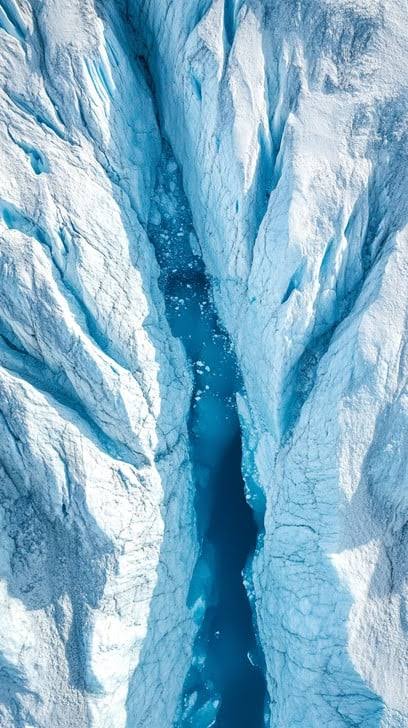
A glacier day on the Glenn Highway comes down to one question: stand above the ice or walk on it? The first answer lives at Matanuska Glacier State Recreation Site, where the Edge Nature Trail winds through boreal forest to wooden platforms overlooking a terminus so wide it fills the frame between the Chugach and Talkeetna ranges. You stand there, wind pulling at your jacket, and the scale settles into your chest before you've taken a single step onto anything frozen. Then there's the version where the glacier asks something of you. A mile farther east, a private road drops toward the terminus and your morning turns physical — crampons strapped tight, helmet clipped, boots finding grip on ancient ice that groans beneath you as a guide leads you past moulins that swallow meltwater into blue darkness.
The Matanuska Glacier State Recreation Site sits at the edge of the Glenn Highway National Scenic Byway. The Edge Nature Trail starts from the campground loop and threads through boreal forest on an interpretive path. Signs along the way cover glacier science and local ecology. The glacier itself tells the bigger story — this ice once reached fifty miles farther west to present-day Palmer.
The viewing platforms sit at the trail's end. No crampons. No guides. No access fee beyond parking. From here, the glacier looks like a frozen river pressed between two mountain ranges — the Chugach to the south, the Talkeetnas to the north. Binoculars pick up the blue tint of compressed ice in the icefall zone, and on clear days the terminus towers like a crumbling wall of dirty white and steel blue.
What happens here is subtler than what happens on the ice. The platforms create a natural pause — a place where the glacier teaches through stillness rather than exertion. Families with strollers, travelers breaking up the drive between Anchorage and Glennallen, photographers working the late-afternoon light — they all end up on these platforms, and the silence does the work.
If you're driving through, the trail adds forty minutes to your stop. If you're camping at the twelve-site campground behind you, the glacier becomes something you live alongside overnight — and waking to it changes how you understand the scale.
One mile east, South Glacier Park Road drops off the highway and crosses the Matanuska River on a private bridge. This is Glacier Park — privately owned land providing the only road access to the terminus. An access fee applies at the gate.
From the parking area, the terrain shifts fast. What looked blue-white from the viewing platforms turns gritty up close — terminal moraine, blackened ice, gravel aprons that crunch underfoot. The glacier is ancient, working, and loud. Meltwater runs through channels you can hear but not always see. Crevasses open where the ice bends over buried rock. Moulins — vertical shafts drilled by water — drop into blue emptiness.
Multiple guide operations work this glacier. MICA Guides has operated here since 1999, running Ice Fall Treks with groups of eight or fewer — crampons, helmets, and narration through the icefall zone where seracs and blue pools concentrate. NOVA Alaska Guides, family-owned since 1975, pioneered commercial glacier guiding here in 1990 — introductory walks and adventure treks that push deeper onto the ice with rope systems. Glacier Tours, operated by the family that owns the access road, runs year-round departures with the shortest walk to the terminus — the most direct contact at the lowest barrier to entry.
The differences matter. An Ice Fall Trek earns you deep blue pools and ice calving at close range. An adventure trek gets ropes and crevasse edges. An introductory walk puts your hand on ice that fell as snow before your country existed.
Summer brings the longest days and the most active melt — water running everywhere, ice features shifting week to week. The glacier is loudest between June and August. MICA operates mid-May through mid-September, NOVA from June through early-to-mid September.
Winter changes everything. The melt stops, the ice compresses and turns bluer. Glacier Tours operates year-round with daily departures even through winter, when the blue deepens into something photographers plan entire trips around. Fewer visitors. Colder temperatures. A different kind of silence.
🏠 HOST INSIGHT OPPORTUNITY:
"What do your guests usually get wrong about this glacier, or what do you always tell them before they go?"
✅ IF HOST PROVIDES WISDOM:
"But the thing most visitors don't realize is [HOST INPUT HERE]."
⬇️ ALTERNATE (if no host wisdom):
"But the pattern hosts notice: visitors underestimate the drive time back to Palmer after a full glacier day. The ice is absorbing, the Glenn Highway demands attention — build an extra hour of buffer into your return."
The drive east from Palmer on the Glenn Highway takes roughly seventy-five minutes, and it sets the tone. The Matanuska River braids and widens, the mountains close in, and the glacier appears in your windshield for miles before you reach it. Free pullouts at Mile 100 and Mile 103 offer roadside views with no fee and no commitment. Some visitors stop at these overlooks and feel satisfied. Others see the ice from the highway and decide they need to stand on it.
That impulse — witness or participate — is what this glacier surfaces. One costs nothing beyond the drive. The other costs time, money, and a willingness to trust crampons on a surface that moves.
Where: Matanuska Glacier, Glenn Highway Mile 101 (State Recreation Site) and Mile 102 (Glacier Park guided access), Glacier View, Alaska. Approximately 75 minutes east of Palmer, two and a half hours northeast of Anchorage.
Edge Nature Trail: Twenty-minute interpretive walk to glacier viewing platforms. No fee beyond day-use parking. No glacier access from the recreation site. Trail starts at campground loop.
Guided glacier treks: Multiple operators at Mile 102. MICA Guides, NOVA Alaska Guides, and Glacier Tours each run scheduled departures — durations range from introductory walks to full-day adventure treks. Equipment (crampons, helmets) provided. Check each operator's site for current pricing, age minimums, and seasonal availability: micaguides.com • novalaska.com • glacier-tours.com
Access fee: Glacier Park charges a per-person access fee at the gate. This is separate from guide tour pricing. Verify current rates at the gate or through your guide operator.
Conditions: Ice features change with weather and season. Always check conditions with your guide operator before booking. Guided access is the only safe way onto the glacier.
Parking: State Recreation Site has a day-use lot. Glacier Park (Mile 102) has terminus-area parking via the private road. Highway pullouts at Mile 100 and Mile 103 are free.
Camping: Twelve campsites at the State Recreation Site, first-come basis, managed by Long Rifle Lodge. Bring your own firewood.
Lodging note: Glacier View sits over an hour east of Palmer, with limited services and no grocery. Guests staying in surrounding communities should stock up before the drive, build a full glacier day into the trip, and treat the return drive as the decompression — the highway views hit differently heading west in evening light.
Want to feature your business on the DirectStay Blog?
Want to feature your business on the DirectStay Blog?

Connect with travelers, share your space, and join a community of hosts earning together.
Become a host