

 DirectStay
The Alaska that lives in your head — sled dogs pulling through white timber, glaciers glowing blue under low sun, northern lights folding across a sky that darkens before four in the afternoon — that version only shows up when the valley freezes. Summer draws the crowds to Mat-Su. Winter draws the people who came for the thing the brochures can't quite photograph. The Matanuska Glacier turns a deeper shade of blue in winter — less surface melt exposes the dense, compressed ice beneath, and the low sun angle makes it glow against fresh snow. The huskies at racing kennels in Willow trade their wheeled training carts for actual sleds. The aurora, invisible under twenty hours of June daylight, commands the sky from September through April. And the valley's event calendar shifts from agricultural celebration to something stranger and more communal — wilderness woman competitions, outhouse races, sled dogs launching toward Nome.
What changes between October and April isn't just the temperature. It's what the valley becomes available for.
Matanuska Glacier runs guided treks year-round. But winter visitors walk different ice. Centuries of compression have squeezed air from the deeper layers, creating ice so dense it absorbs every color except blue. In summer, surface melt and dust mute the effect. In winter, the glacier shows its age — exposed faces glow cobalt and cerulean against surrounding snow. Tour operators at Glacier View — MICA Guides has operated on the Matanuska since 1999 — adjust for the season: smaller groups, shorter daylight windows, and terrain that demands microspikes and layers rather than crampons and sunscreen. The glacier itself doesn't sleep. Crevasses shift. Meltwater channels refreeze into corridors. Ice caves take shapes they won't hold by May.
Winter treks carry an intensity summer versions don't. You're walking ice that formed when this valley was under a mile of glacier, and the light makes that age visible in ways warm weather softens.
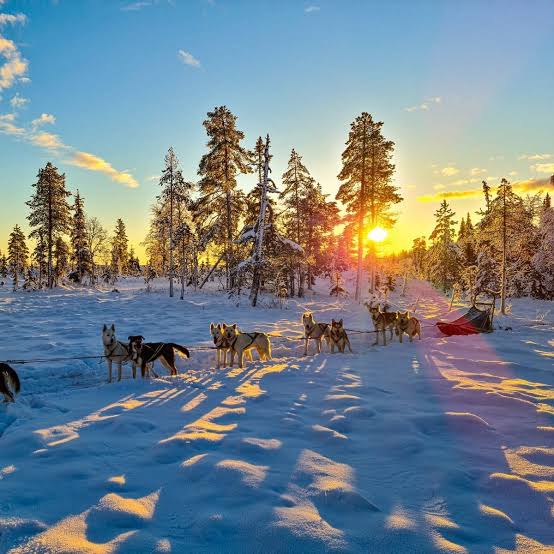
Summer visitors to Iditarod Trail Headquarters in Wasilla ride a wheeled cart pulled by huskies on a gravel loop. The energy is real — but when snow fills the trails, the valley's racing kennels shift into competition mode. At operations like Alaskan Husky Adventures in Willow, veteran mushers hook teams to actual sleds and run trails with Denali filling the northern horizon.
A wheeled cart on gravel is a demonstration. A sled on snow is transport — the oldest technology for crossing this landscape, still in active use by the people who race the Iditarod every March.
🏠 HOST INSIGHT OPPORTUNITY: "What changes during this event that visitors don't expect? What do you warn guests about?"
✅ IF HOST PROVIDES WISDOM: "But the part that catches winter visitors off guard is [HOST INPUT HERE]."
⬇️ ALTERNATE (if no host wisdom): "But the part that catches winter visitors off guard is how quickly the body adjusts. By the third morning, the cold stops registering as hostile and starts registering as sharp — a kind of clarity that explains why people choose to live here."
Northern lights viewing in Mat-Su runs from late August through mid-April, governed by solar activity and cloud cover. The UAF Geophysical Institute aurora forecast becomes a nightly ritual — check the Kp index after dinner, drive to a dark spot if the numbers climb above 3, and wait. Hatcher Pass, Knik River Valley, and Palmer Hay Flats all sit within thirty minutes of Palmer.
September and October deliver the combination aurora chasers prize: dark skies returning while temperatures stay mild. By January, the activity strengthens but so does the cold — camera batteries drain in half an hour at zero degrees, and long exposures require patience that tests exposed fingers.
Winter events in Mat-Su carry a quality summer festivals don't — they feel built for the people who stayed rather than the people who arrived. Colony Christmas, historically held the second weekend of December, transforms downtown Palmer with a Parade of Lights, horse-drawn sleigh rides, reindeer visits, and fireworks over the water tower. Talkeetna Winterfest, a December celebration that typically kicks off the first weekend of the month, opens with its Wilderness Woman Competition — women hauling five-gallon buckets of water up and down Main Street, chopping wood, driving snowmobiles — followed by the Bachelor Auction that draws visitors from Anchorage and Fairbanks.
The Willow Winter Carnival, historically covering two weekends bridging late January and early February, delivers outhouse races, sled dog races, skijoring, ax throwing, and a fireworks display that lights snow-covered birch for miles. And by the first Sunday in March, the Iditarod restart launches from Willow — dozens of teams heading toward Nome while the valley holds its breath.
Between them, the Iron Dog snowmachine race, the Jr. Iditarod for young mushers, and the Susitna 100 endurance race fill the gaps. These aren't events designed for spectators in heated grandstands. They're built for people willing to stand in the cold and feel something.
Winter driving in Mat-Su demands respect, not avoidance. The Glenn Highway and Parks Highway are maintained year-round and connect Palmer, Wasilla, Willow, and Talkeetna through every month. Hatcher Pass Road stays open from the Palmer side to the Independence Mine area and Government Peak Recreation Area — but the upper pass road, from roughly Mile 17 through to the Willow side, closes from approximately November through June. Black ice forms on the Glenn Highway east of Sutton. Moose on roads remain a genuine collision risk at dawn and dusk. Cell service drops past Sutton heading east and at elevation on Hatcher Pass.
What opens is as important as what closes. Skeetawk, the valley's first lift-served ski area — a grassroots nonprofit near Government Peak — runs roughly thirty skiable acres twenty-five minutes from Palmer. Hatcher Pass delivers backcountry skiing by skinning, not lifts. Nancy Lake shifts to ice fishing and snowshoeing with public use cabins accessible by snowmobile or ski.
The most common winter mistake isn't underpacking — it's underplanning for daylight. At the winter solstice, Palmer gets roughly five and a half hours of sunlight. Sunrise arrives after ten. Sunset comes mid-afternoon. The instinct to pack a summer day's worth of activity into a winter day breaks against the clock.
Experienced winter visitors build around the light: glacier treks and Hatcher Pass drives in the midday alpenglow window, long dark hours for aurora viewing and dinner. The other miscalculation is assuming winter means closed. It means different — fewer people on the glacier, actual sleds on snow, events built for community rather than tourism, and a version of this valley that only exists between freeze and thaw.
Season: October through April. Peak winter experiences (dog mushing on snow, bluer glacier ice, holiday events) concentrate November through March. Aurora viewing strongest September–October and February–March.
Daylight: Roughly 5.5 hours at the winter solstice (December 21). By February, the valley gains daylight rapidly — up to five minutes per day near the equinox.
Road conditions: Check 511.alaska.gov before every drive. Glenn Highway and Parks Highway maintained year-round. Hatcher Pass upper road (Mile 17+) closed approximately November–June.
Winter tires: Studded tires are permitted on Alaska roads from September 16 through April 30. Rental cars may or may not come equipped — confirm before pickup.
Glacier treks: Matanuska Glacier tours operate year-round. Winter treks run shorter daylight windows and smaller group sizes. Verify availability and book ahead at micaguides.com or glacier-tours.com.
Aurora forecast: UAF Geophysical Institute — gi.alaska.edu/monitors/aurora-forecast. Check nightly for Kp readings and cloud cover.
Winter events: Verify current-year dates before planning around any event. Colony Christmas: palmerchamber.org. Talkeetna Winterfest: talkeetnachamber.org. Willow Winter Carnival: waco-ak.org. Iditarod: iditarod.com.
Provisioning: Stock up in Wasilla or Palmer on arrival. Glacier View has no grocery. Talkeetna's options are limited. Fuel gap east of Sutton extends a hundred-plus miles.
Lodging note: Winter events draw visitors who plan months ahead. Iditarod week, Colony Christmas, and Willow Winter Carnival each compress lodging availability. Guests who book early and base in surrounding communities find more space, quieter nights, and the kind of evening drive where the aurora might stop you on the shoulder.
Want to feature your business on the DirectStay Blog?
Want to feature your business on the DirectStay Blog?

Connect with travelers, share your space, and join a community of hosts earning together.
Become a host