

 DirectStay
The musk ox at the farm in Palmer will look you in the eye from ten feet away while a guide explains how their undercoat kept them alive alongside woolly mammoths. They are calm because they were raised calm — eighty-some animals on a nonprofit farm that has been domesticating them since the 1960s. That composure does not extend past the fence line.
Everything else that moves through the Mat-Su Valley — the moose browsing the willows along Bodenburg Loop Road, the black bear turning over rocks along the Reed Lakes trail, the brown bear fishing salmon in the Susitna drainage — is wild, weighs more than you, and has no interest in closing the distance between you. The problem is that visitors, fresh from hand-feeding reindeer at the farm down the road, sometimes forget that the transition from domesticated to wild happens the moment they leave a parking lot.
This is what hosts learn to say before guests lace up their boots. Not to frighten. To calibrate.
Forget bears for a moment. The animal most likely to alter your trip is a moose, and the encounter most likely to happen is on a road, not a trail.
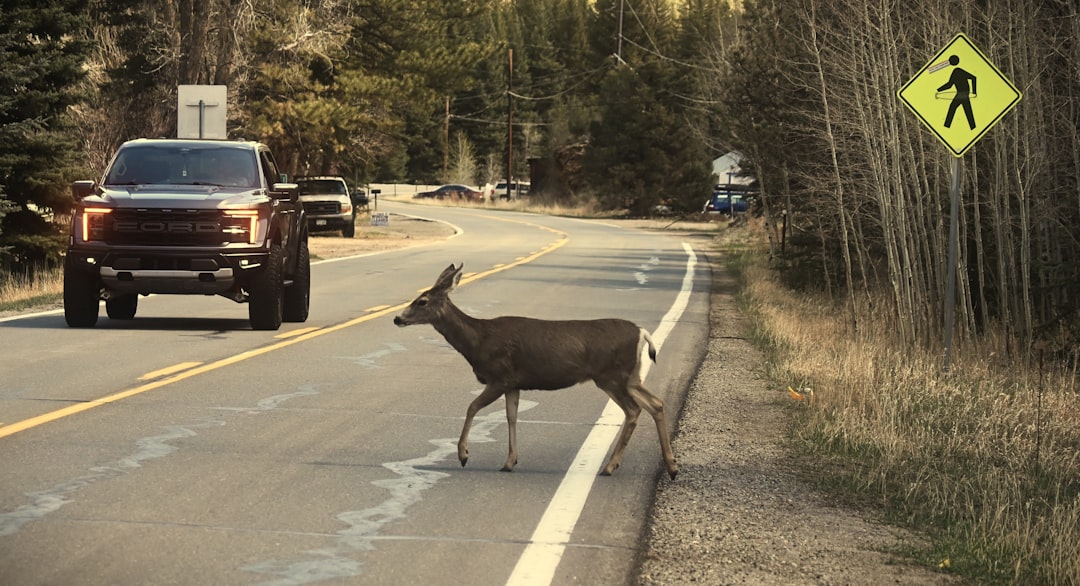
Roughly 280 moose are struck and killed on Mat-Su roadways every year, according to the Alaska Department of Fish and Game. During winters of deep snow, that number can double as moose congregate along highway corridors where plowed pavement becomes the path of least resistance. The borough's collision rate is among the highest in the state — and Alaska already leads North America in moose-vehicle collisions per mile driven.
The physics are simple and unforgiving. A mature moose stands up to six feet at the shoulder and weighs anywhere from 800 to over 1,600 pounds. At highway speed, the impact takes the legs out and sends the body through the windshield. This is not a deer strike.
Collisions peak at dusk and dawn — exactly when most visitors are driving to or from trailheads. They spike again in winter, when shorter daylight compresses driving hours into the same windows moose are moving.
What hosts do: scan both sides of the road, especially along corridors with dense roadside vegetation. The Glenn Highway between Palmer and Chickaloon, the Parks Highway from Houston to Willow, and Knik-Goose Bay Road are documented hot spots. If you see one moose, stop — calves and cows often travel together, and the second animal may be invisible until it steps from the brush.
Moose also walk through Palmer neighborhoods. Proximity does not mean tameness. A cow with a calf will charge a human, a dog, or a car without hesitation.
Brown bears and black bears share the Mat-Su Valley, and their active season runs roughly May through October — which overlaps entirely with tourist season. The chance of a bear encounter on a popular trail like Hatcher Pass, Bodenburg Butte, or the Reed Lakes corridor is real, though attacks remain statistically rare.
What turns a sighting into an incident is almost always the same sequence: surprise, proximity, and no deterrent.
Bear spray is the most effective non-lethal deterrent available. The Alaska Department of Fish and Game lists both bear spray and firearms as deterrents, but notes that inexperienced firearm users face greater risk — a wounded bear can become a greater threat. For most visitors, bear spray is the practical choice. It propels a capsaicin mist 15 to 30 feet, is designed for close-range encounters, and requires no marksmanship under stress. But it only works if you have it, know how to use it, and can reach it in seconds.
Buy it before your first hike. Three Bears Alaska in Palmer and Wasilla stocks it. Fred Meyer carries it. Airlines prohibit bear spray in checked or carry-on luggage, so purchasing locally is not optional — it is the only path.
Practice the safety release before you need it. Know the wind direction. Understand that bear spray is not repellent — spraying it on your tent or backpack will attract bears, not deter them.
Dogs change the math on every wildlife encounter. A dog off-leash that spots a moose may chase it — and the moose, rather than running indefinitely, may turn and kick. A dog that encounters a bear may provoke a charge and then run back to its owner, delivering the bear to the person who thought they were safe.
Keep dogs leashed on every trail. This is not just courtesy. In Mat-Su, it is the difference between a wildlife sighting and a wildlife incident.
Dog food at the rental carries its own risk. Bears can smell food from a mile or more away. Leaving a bag of kibble on the porch or in an unsecured garage invites investigation. Store food — all food, including pet food — inside. If your rental has a bear-proof container or instructions about food storage, follow them.
The Musk Ox Farm in Palmer and the Reindeer Farm on Bodenburg Loop Road are extraordinary places to encounter large animals safely. The animals have been raised in proximity to humans. Guides know them by name. Fences, feeding schedules, and decades of handling create the conditions for a close experience.
Wild musk ox — roughly 4,000 to 5,000 across Alaska — behave nothing like the farm herd. Threatened, they form a defensive circle, horns outward. Maintain at least 150 feet of distance, especially near females with calves.
The distinction matters because visitors sometimes apply farm logic to wild encounters. They approach a moose for a photograph. They let their child walk toward a calf. They assume stillness means permission.
Stillness in a wild animal means assessment, not acceptance.
Hosts reduce wildlife safety to three non-negotiable instructions. First: carry bear spray on your belt or chest strap, not buried in your pack, on every trail. Second: scan both sides of the road at dawn and dusk, flash your hazard lights when you see a moose near the highway, and never try to pass one standing in the road. Third: store all food — including pet food and cooler contents — inside the rental, and leash dogs on every trail without exception.
Available at Three Bears Alaska (Palmer, Wasilla), Fred Meyer, and other outdoor retailers. Cannot be carried on airlines — buy locally.
ADF&G maintains an interactive Moose-Vehicle Collision story map at adfg.alaska.gov showing documented collision locations across the Mat-Su Valley.
Check trailhead information boards for recent bear activity. Rangers post temporary closures when bears are actively feeding in an area.
Mile 50.1 Glenn Highway, Palmer. Guided tours. Current hours at muskoxfarm.org.
Bodenburg Loop Road, Palmer. Walk-in, year-round.
Rentals in Palmer, Wasilla, and surrounding communities sit in active wildlife corridors. Moose browse through residential areas year-round. Bears move through seasonally. Planning around these realities — storing food properly, leashing dogs, respecting the animals' space — is the standard approach for guests who stay where wildlife and human life share the same ground.
Want to feature your business on the DirectStay Blog?
Want to feature your business on the DirectStay Blog?

Connect with travelers, share your space, and join a community of hosts earning together.
Become a host