

 DirectStay

The math that governs a Mat-Su Valley trip changes the moment the Alaska State Fair closes its gates and the last funnel cake wrapper blows across the Palmer fairgrounds. By the second week of September, the equation that defined summer — highest prices, longest lines, most daylight, most visitors — inverts. Rates on lodging drop. Aurora season opens. Birch forests along the Glenn Highway catch fire in gold. And the glaciers, the farms, the trails, the breweries — most of them are still running, just quieter. The valley that spent June through August performing for three hundred thousand visitors starts behaving like a place where people actually live. Locals say September is a gamble, and they're not wrong — rain moves in faster, temperatures swing wider, and some seasonal operations start pulling their signs. But the thing about this particular gamble is that the house odds shifted in your favor the moment the calendar turned.
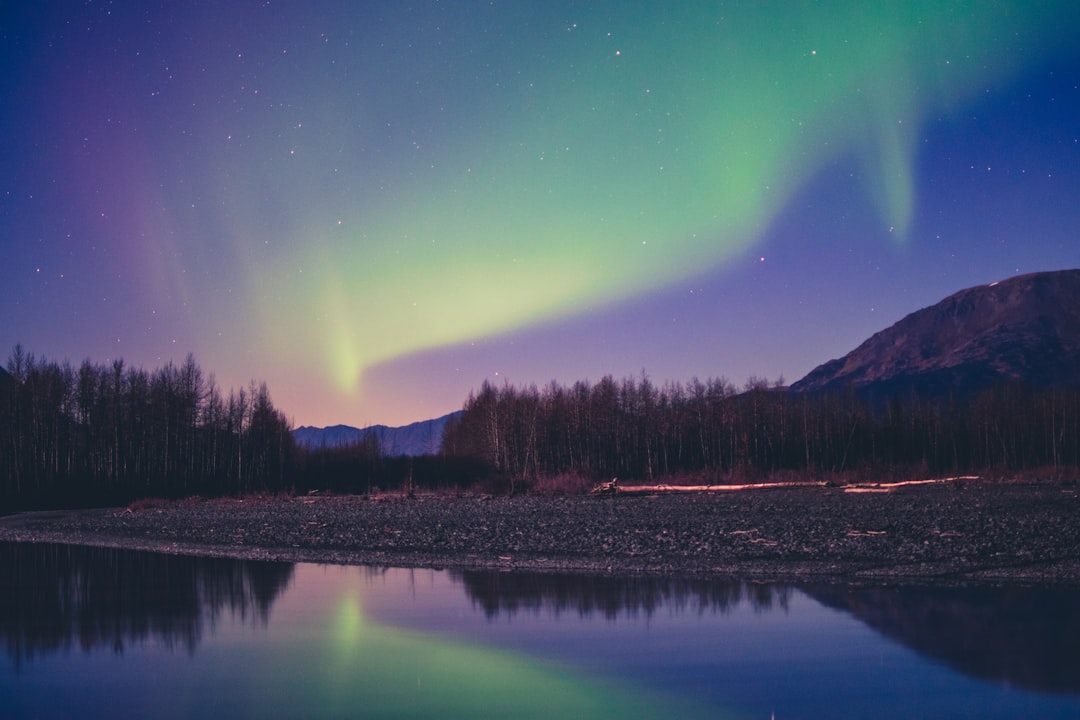
The single most dramatic shift is the sky. From June through early August, Mat-Su sits under near-constant daylight — nearly twenty hours of sun at solstice, and never truly dark even at midnight. That means no aurora. None. The northern lights need darkness, and summer refuses to provide it.
By mid-September, darkness returns. The aurora becomes visible across the valley, and Mat-Su's position at 61.5 degrees north puts it squarely in the auroral zone. Hatcher Pass Summit Lake sits at 3,500 feet — above the cloud layer on clear nights — and Knik River Valley offers mountain-backed darkness twenty minutes from Palmer. The UAF Geophysical Institute publishes a daily aurora forecast, and checking it becomes a nightly ritual.
The second shift is color. Birch and aspen trees begin turning in early September, with peak gold arriving mid-month along the Glenn Highway, through Hatcher Pass, and up the Parks Highway toward Denali State Park. The tundra at higher elevations goes first — reds, oranges, cranberry purples carpeting the alpine meadows around Independence Mine. Lower elevations follow within days. The window is narrow. First frost drops the leaves fast, and by early October the show is winding down.
The third shift is financial. Shoulder season pricing across Alaska typically runs 20 to 40 percent below peak summer rates on lodging, with flights from the Lower 48 dropping in a similar range. Mat-Su benefits more than most regions because its lodging supply is already distributed — rentals in Palmer, Wasilla, Talkeetna, and Glacier View aren't competing with cruise-ship-driven hotel blocks the way coastal towns are. The savings land directly in a traveler's budget.
Most of what defines a Mat-Su trip operates into mid-September and often beyond. Matanuska Glacier runs guided treks year-round — and winter ice is bluer than summer ice, so September sits in the sweet spot between crowds thinning and conditions improving. Musk Ox Farm's guided tours run through their season. Hatcher Pass road from Palmer to Independence Mine stays accessible (the upper pass to Willow closes in November, not September). Denali flightseeing out of Talkeetna operates weather-dependent, and September's clear mornings can rival summer's.
The Talkeetna Roadhouse, Denali Brewing Company, and Palmer's year-round restaurants keep serving. Turkey Red, Colony Kitchen, Matanuska Brewing — none of these are seasonal closures.
What narrows: some smaller seasonal operators reduce hours or close by late September. Talkeetna's food truck and ice cream operations may shorten their windows. The Alaska Railroad's scenic service winds down. Outdoor guided tours start trimming their schedules after Labor Day. And Denali National Park's bus tours into the backcountry end by mid-September, with private vehicle access extending to Mile 30 through mid-October.
The practical move: confirm hours and availability for any specific operator before building your day around them. The anchor experiences hold. The edges soften.
Locals call September a gamble because the valley's weather becomes less predictable, not worse. Daytime highs settle into the upper 40s to low 50s, with nights dropping into the mid-30s. Rain frequency increases. Wind picks up across the open flats between Palmer and Wasilla.
But this is Alaska — weather has always been the defining variable, not the disqualifying one. The same flexibility that hosts build into summer itineraries (flightseeing backup days, weather-dependent glacier treks) applies in September with slightly higher stakes. The reward for a clear September night at Hatcher Pass — aurora overhead, fall color below, nobody else at the pullout — is the kind of experience summer physically cannot produce.
Pack layers for 30-degree temperature swings within a single day. Rain gear is non-negotiable. And if you're planning aurora viewing, bring a headlamp with a red filter, a tripod, and patience. The aurora doesn't operate on your schedule.
The sharpest shoulder season value sits in a specific corridor: the week after the State Fair closes through the last week of September. The fair historically runs from mid-August through Labor Day weekend. Once it ends, Palmer exhales. Lodging availability opens. Restaurant wait times vanish. And the valley's attention shifts from hosting visitors to preparing for winter.
By October, the equation shifts again. Fall colors are fading. Some seasonal businesses are closed. Snow appears at higher elevations. The valley starts its transition into winter — which is its own season worth planning for, but a different trip entirely.
The September window gives you summer's infrastructure with autumn's sky, autumn's color, and autumn's pricing. That combination exists for roughly three weeks. Locals don't accidentally prefer it.
Shoulder season pricing typically begins after Labor Day. Verify current rates directly with property owners — discounts vary by operator and aren't universal.
The University of Alaska Fairbanks Geophysical Institute publishes daily aurora forecasts at gi.alaska.edu. Bookmark it before your trip. Solar activity and cloud cover both matter — high forecast plus clear sky is the combination you're watching for.
Historically mid-September in Mat-Su, but the window varies by a week or more depending on when the first hard frost arrives. Higher elevations (Hatcher Pass, alpine tundra) peak first.
September 1 has roughly 14 hours of daylight in Mat-Su. By September 30, that drops to about 11 and a half hours. Enough for full days of activity, and dark enough for aurora.
Seasonal operator hours (especially Talkeetna-based businesses), Hatcher Pass road conditions via Alaska State Parks, and Denali National Park access schedules for the current year.
September demand in Mat-Su runs well below summer peak. Properties that required weeks-ahead booking in July and August often have same-week availability. Booking a few weeks ahead still opens up the widest selection of locations and layouts — but the urgency that defines summer planning eases considerably.
Want to feature your business on the DirectStay Blog?
Want to feature your business on the DirectStay Blog?

Connect with travelers, share your space, and join a community of hosts earning together.
Become a host