

 DirectStay
At 61.5 degrees north, light doesn't behave the way your instincts expect. Bodenburg Butte catches the first morning glow on Pioneer Peak's face, turning the mountain pink before Palmer's streets see full sun — and in summer, that sequence plays out so slowly you could set up, compose, shoot, and recompose without ever losing the color. Then there's the winter side, where the same valley compresses into five and a half hours of daylight and the sky starts producing curtains of green and violet that your camera sensor registers before your eyes fully adjust. What this valley asks of a photographer isn't gear or access — it's understanding what the latitude does to your light, your timing, and your assumptions about when the best frame arrives.
Photographers accustomed to lower latitudes plan around golden hour — that window roughly thirty minutes before and after sunrise when light warms and softens. At 61.5°N, that window stretches into hours. In June, with sunrise around 4:30 AM and sunset past 11 PM, the sun arcs so low along the horizon that warm directional light can persist all evening. You can arrive at Bodenburg Butte, watch the light move across the valley floor, and reshoot the same composition as the angle shifts without losing the color.
Winter inverts everything. By December, sunrise arrives after 10 AM and sunset comes before 4 PM. But those compressed hours produce the deepest alpenglow the valley sees all year — Pioneer Peak lit in amber and rose against a sky already shading toward blue. The entire day becomes golden hour.
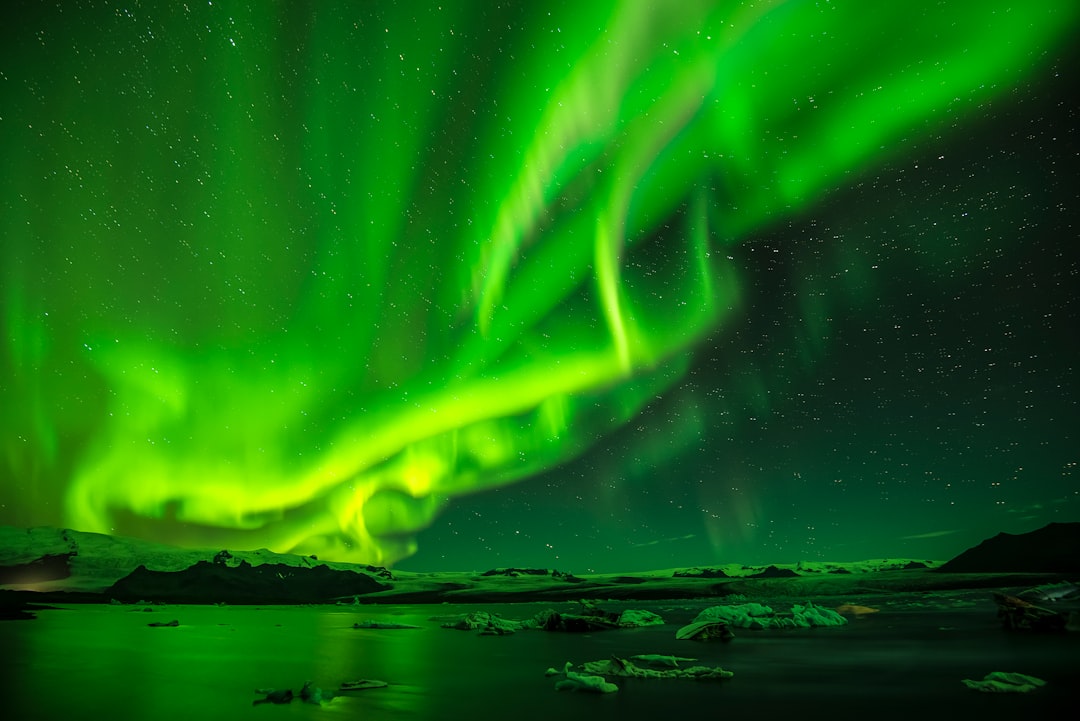
Northern lights photography from Mat-Su operates on different logic than landscape work. You're chasing the absence of sun, plus clear skies, plus geomagnetic activity — three variables that rarely align on command. The UAF Geophysical Institute aurora forecast is the tool. Check it as a daily habit from late August through mid-April, cross-referencing with satellite cloud cover imagery to find the gaps.
Mat-Su's geography gives you distinct shooting positions depending on what you want in the frame:
Hatcher Pass Summit Lake sits at roughly 3,500 feet. When valley fog or low clouds obscure the sky from Palmer, Summit Lake often sits above the cloud deck. Aurora over clouds is a composition most photographers never see without a mountaintop. No cell service at the summit. Plan accordingly — check the forecast before you drive up, bring everything you need, and allow 35 to 45 minutes from Palmer on a winding mountain road.
Knik River Valley offers wide, dark sky with mountain silhouettes for foreground. About twenty minutes south of Palmer, the valley opens with broad northern horizon exposure and the Chugach Range framing the scene. Moose activity on Knik River Road at night is real — drive cautiously.
Glenn Highway pullouts east of Palmer provide the simplest access: park, set up, shoot. Less dramatic foreground, but the wide sky and ease make them reliable fallback positions when conditions look marginal.
Start here and adjust to the display: wide-angle lens (14–24mm), aperture f/2.8 or faster, ISO around 1600, shutter speed between 3 and 20 seconds. Shorter exposures for fast-moving aurora preserve the curtain folds and column structure — a 20-second exposure on an active display produces a green smear. Tripod is non-negotiable. Manual focus set to infinity before the display begins.
Cold drains batteries faster than you expect. Carry spares in an inner pocket. Seal gear in a plastic bag before entering warm interiors — condensation fogs lenses and can damage electronics if you skip this step.
Glacier ice registers blue to cameras, but midday glare on the surface flattens everything. The blue in Matanuska Glacier's ice caves, crevasses, and moulins reveals itself most clearly under overcast skies or when the sun sits low enough that direct light doesn't bounce off the surface. Shade is where the blue lives.
Winter produces the most photogenic glacier conditions — ice caves stabilize for guided exploration from roughly December through March, and fresh snow against ancient blue ice creates contrast summer can't replicate. In summer, supraglacial melt pools form in June and glow an almost unnatural blue as snowmelt drains into the ice's internal channels. By July, many have burrowed down and vanished. Either season requires a guided tour for on-ice access.
Bodenburg Butte is the valley's most accessible panoramic position — roughly 900 feet of elevation gain, a 360-degree view of the Matanuska Valley, and Pioneer Peak rising to the south-southeast. For alpenglow, this is the spot. The butte sits close enough that a moderate telephoto lens can isolate the mountain's face as light moves across it.
Hatcher Pass beyond Summit Lake opens to alpine meadows and the ruins of Independence Mine — 1930s gold mining structures against the Talkeetna Mountains. Wildflower peak runs late June through July. The upper road beyond Mile 17 closes roughly October through late June — check with Alaska DNR before planning.
Reflections Lake, off the Glenn Highway between Palmer and Anchorage, delivers mountain reflections from a marked exit with parking. Morning calm produces the best mirror conditions before afternoon winds ripple the surface.
Bodenburg Butte trailhead, Bodenburg Loop Road, Palmer. Free. Parking fills on summer evenings — arrive early. Hatcher Pass, Hatcher Pass Road, 35–45 minutes from Palmer. $5 parking at Independence Mine. Summit Lake area has no services. Reflections Lake, Glenn Highway Mile 30.6 (Knik River Access exit), between Palmer and Anchorage. Parking area, no fee.
Late August through mid-April. Peak activity typically between 10 PM and 2 AM, with 2 AM often strongest. Check the UAF Geophysical Institute aurora forecast before committing to a drive: gi.alaska.edu/monitors/aurora-forecast. Allow 20 or more minutes for eyes to dark-adapt once you arrive.
Matanuska Glacier, Glenn Highway Mile 102, Glacier View. Guided tours required for on-ice access. Winter ice caves typically accessible December through March — verify with tour operators before planning. Summer melt pools peak in early to mid-June. Check MICA Guides or other operators for current availability: micaguides.com.
Temperature swings of 20 degrees or more between Palmer and Hatcher Pass summit. Layer for the drive up. Carry spare batteries in an inner pocket.
Upper Hatcher Pass road (Mile 17–32) closes seasonally. Verify current status at 511.alaska.gov. No cell service at Hatcher Pass summit or in parts of Knik River Valley.
Aurora photography requires multiple nights for best odds — clear skies and geomagnetic activity don't always align on a single evening. Guests staying in surrounding communities can build full days around viewpoints and treat the return drive as wind-down from a late-night shoot.
Want to feature your business on the DirectStay Blog?
Want to feature your business on the DirectStay Blog?

Connect with travelers, share your space, and join a community of hosts earning together.
Become a host