

 DirectStay
Palmer throws a party the second weekend of every June, and the whole thing hinges on a question most visitors don't think to ask: why does this town exist at all? Colony Days fills downtown with bed races, rhubarb cook-offs, and a parade loud enough to hear from the trailhead — but underneath the cornhole brackets and sidewalk chalk art sits a founding story unlike any other town in Alaska. In 1935, 203 families from Minnesota, Wisconsin, and Michigan boarded a government transport ship and sailed north under Franklin Roosevelt's New Deal, each promised forty acres in a valley they'd never seen. Palmer is what they built. Colony Days is how their descendants remember.
The festival isn't large by state fair standards, and that's the point. It occupies a few blocks of a town small enough that the parade route runs past the museum that tells the story the parade celebrates.
Colony Days stretches across three days — Friday through Sunday — and the rhythm follows Palmer's personality: community-built, volunteer-run, and heavy on participation over spectating.
Friday opens with the weekly Friday Flings market already in full swing — local vendors, food trucks, handmade Alaska goods — and layers Colony Days programming on top. The bed races on South Valley Way are exactly what they sound like: teams pushing decorated beds through an obstacle course while the crowd keeps time. A cornhole tournament and sidewalk art contest fill the afternoon, and live music carries the evening.
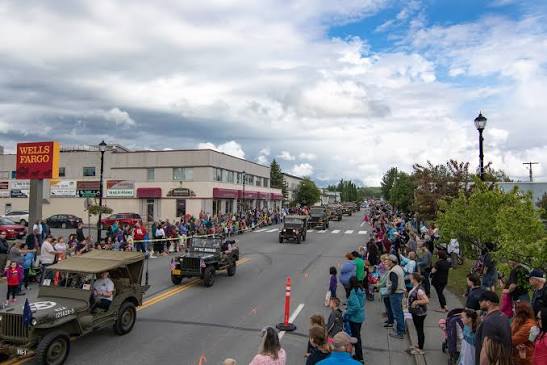
Saturday is the centerpiece. The Colony Days Parade begins at 11 AM and moves through downtown along Main Street. Floats reference colony history, fire trucks carry volunteers, and the whole thing unfolds on streets the colony's planners laid out ninety-one years ago. After the parade, the maker's market expands, antique farm tractors line up for display, and a tractor pull draws the mechanically curious. Kids' games scatter through the afternoon. Live music runs from the Friday Flings stage and from Palmer Alehouse.
Sunday closes the weekend with a vintage car rally on South Colony Way and the Rhubarb Revival — a cooking contest built around the one crop that every Valley garden still produces in absurd quantities. Rhubarb has been growing here since the colonists put it in the ground, and the contest takes it seriously.
Most festival-goers absorb the heritage passively — a parade theme, a placard, a name on a banner. But Colony Days becomes a different experience entirely if you step into the story before the first float rolls past.
The Colony House Museum sits at 316 East Elmwood Avenue, inside Palmer's Historic District. The house belonged to Oscar and Irene Beylund, original colonists who drew their forty-acre tract in the May 1935 land lottery and built a life from raw Alaskan wilderness. The Palmer Historical Society restored the house to its 1935–1945 appearance, and descendants of the original colonists still lead tours through rooms furnished with Sears and Roebuck pieces shipped north with the families.
Across the street from the museum stands a bell monument. The bell came from the St. Mihiel — the army transport ship that carried the colonists from the West Coast to Alaska. It's the kind of artifact that reframes the parade floats rolling past: those aren't just decorations. They're echoing a journey that started on a government troopship.
The Palmer Historical Society publishes a Historic District walking map that traces the colony-era buildings still standing downtown. Walking it before Colony Days turns the festival from a pleasant distraction into a recognition exercise — you start noticing which buildings carry the five government-designed house styles, which barns match the colony blueprint, and which streets follow the original grid.
Colony Days is free to attend and modest in scale — this is a community celebration, not a tourism event that annexed a town. But the weekend does shift Palmer's rhythms in ways worth knowing.
Downtown streets close for the parade Saturday morning, and parking near Main Street fills early. The parade draws enough of the town's attention that restaurants nearby add wait times around the lunch hour. Friday Flings vendors occupy their usual footprint but with Colony Days energy layered on — expect more foot traffic and fuller food lines than a standard Friday market.
The event doesn't create the kind of compression that the Alaska State Fair brings in August — no highway backups, no months-ahead lodging crunch. But it does concentrate Palmer's social energy into a few blocks for three days, and that concentration is the experience.
🏠 HOST INSIGHT OPPORTUNITY:
"What changes during this event that visitors don't expect? What do you warn guests about?"
✅ IF HOST PROVIDES WISDOM:
"But the thing most visitors don't realize is [HOST INPUT HERE]."
⬇️ ALTERNATE (if no host wisdom):
"But the thing most visitors don't anticipate is how walkable the whole weekend becomes — park once in the morning, and the parade, market, restaurants, and museum are all within a few blocks of each other. The best Colony Days are the ones where the car sits all day."
The festival rewards a visitor who arrives with context. A morning hour at the Colony House Museum before Saturday's parade changes how the floats land. A walk through the Historic District before the bed races starts gives the laughter a different texture — these streets were wilderness ninety-one years ago, and the people racing beds down them are often the grandchildren of the families who cleared the trees.
Combine Colony Days with Palmer's dining scene and the whole day fills itself. Turkey Red sits downtown. Vagabond Blues pours morning coffee on Main Street. Arkose Brewery and Bleeding Heart Brewery are both within Palmer's walkable core. The weekend becomes a full day without ever moving the car — which, if you've spent the rest of your Mat-Su trip driving sixty miles between glaciers and Talkeetna, is its own kind of relief.
Palmer is one of the only towns in Alaska that exists because the federal government decided to build it. Not a gold rush camp, not a railroad siding that grew, not a military installation that spawned a city — a planned agricultural colony, transported by ship, assigned by lottery, and left to figure out how to farm a subarctic valley with glacial soil and a growing season measured in weeks.
More than half the original 203 families left within five years. The ones who stayed built what's here now. Colony Days isn't nostalgia — it's the annual moment when the town looks at its own origin story and decides, again, that the story is worth telling.
The rhubarb is still growing. The parade still runs down the streets they platted. The museum is still staffed by their children.
Event: Colony Days. Annual, held the second weekend in June (Friday–Sunday). Verify this year's dates and schedule at palmerchamber.org/colony-days.
Where: Downtown Palmer. Events concentrate along Main Street, South Valley Way, and South Colony Way. Colony House Museum at 316 East Elmwood Avenue.
Parade: Saturday, typically 11 AM start, Main Street. Arrive early for viewing position. Big Cabbage Radio (bigcabbageradio.org) historically livestreams the parade for those who can't attend in person.
Admission: Free. No tickets required for any outdoor events.
Parking: Downtown street parking fills during parade hours Saturday. Plan to arrive before 10 AM or park outside the immediate downtown core and walk in.
Dining timing: Palmer restaurants near Main Street add wait times during the Saturday lunch window. Friday Flings food vendors offer faster alternatives.
Colony House Museum: Historically open Tuesday through Saturday during summer months. Verify current hours and availability at palmerhistoricalsociety.org. Tour admission has historically been $2 adults, $1 children.
Lodging note: Colony Days is a community-scale event — it doesn't create the months-ahead lodging compression that the Alaska State Fair produces. Guests staying in surrounding communities can arrive early Saturday, park once, and build a full day around the parade, market, and downtown Palmer dining without logistical friction.
Want to feature your business on the DirectStay Blog?
Want to feature your business on the DirectStay Blog?

Connect with travelers, share your space, and join a community of hosts earning together.
Become a host