

 DirectStay

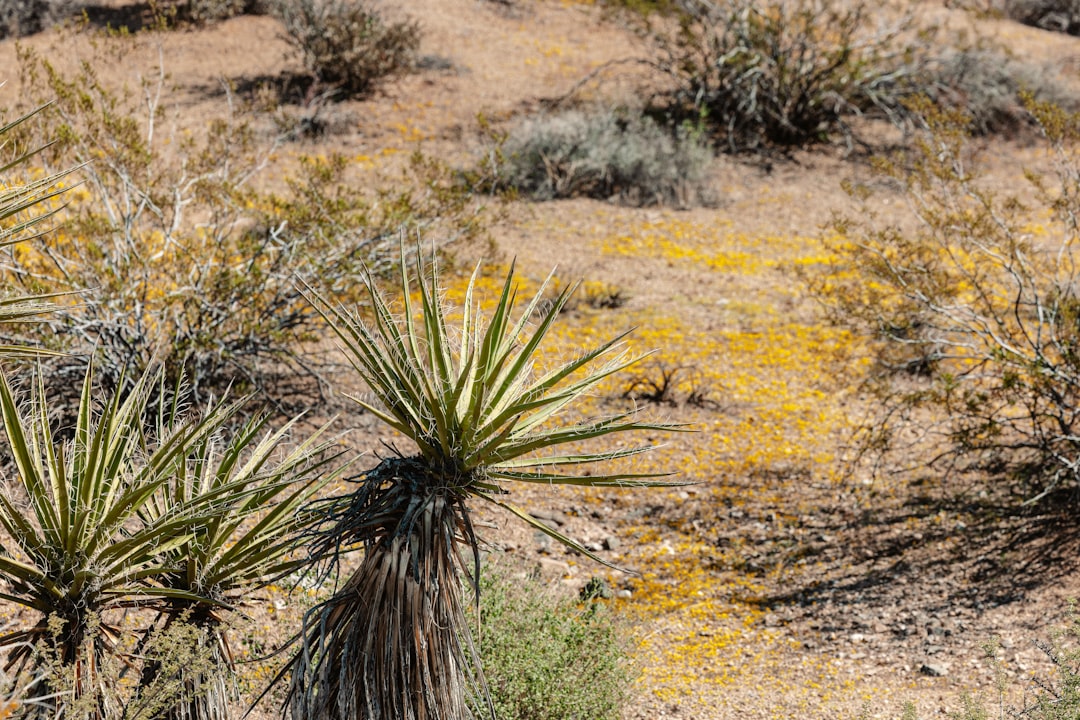
The desert keeps its color underground for years. Seeds sit beneath gravel and sand, coated in resin, waiting for a rain event generous enough to dissolve their armor — a half inch or more in a single soaking. When it arrives, and when cool temperatures follow before the heat pushes through, Joshua Tree's floor does something it refuses to do on command. Bajada Nature Trail near the South Entrance carpets itself in lupine and brittlebush while the granite corridor along Park Boulevard stays weeks behind, holding its display for March and April at elevations where the soil warms slower. The travelers who arrive expecting a guarantee leave frustrated. The ones who arrive expecting the desert leave changed — whether the bloom cooperates or not.
That expectation gap is the real story. The wildflower bloom at Joshua Tree is not an event you attend. It is a weather outcome you position yourself to witness. The difference between a strong bloom year and a quiet one begins months before any petal opens — fall and winter rainfall, storm spacing, soil temperature through January. The park's Lost Horse Valley weather station tells the story: average fall-and-winter precipitation sits around 3.61 inches. In 2019, when the park produced one of its most widespread displays in a decade, that gauge read 8.25 inches. The math matters more than the calendar.
The bloom moves uphill. It begins at the park's lowest elevations — the Colorado Desert floor near the South Entrance — and migrates north and upward across weeks, sometimes months, depending on temperature and wind.
Bajada Nature Trail sits just inside the southern boundary, a quarter-mile interpretive loop through Colorado Desert vegetation. It blooms first, typically January through mid-April, when winter rains are sufficient. This is where Arizona lupine, desert gold, Canterbury bells, and poppies appear earliest. The trail is flat, interpretive, and close to I-10 — the first stop for travelers entering from the south. It is also the only location inside Joshua Tree where ironwood trees grow, a Sonoran Desert species that finds just enough warmth and moisture on this particular slope to survive.
Cottonwood Spring, several miles north along Pinto Basin Road, adds ecological depth to the same window. Fan palms, a desert oasis, and birding habitat create a different kind of spring awakening — less about carpets of annuals and more about the water sources that sustain resident species year-round.
Cholla Cactus Garden occupies the transition zone between the Colorado and Mojave deserts along Pinto Basin Road. In spring, the cholla themselves produce waxy yellow-green blooms that glow when backlit at sunrise — one of the park's most reliable bloom events even in dry years. The surrounding area catches wildflower color when conditions cooperate. Note: the trail has been closed for improvements and is expected to reopen in late spring 2026. The parking lot view remains accessible. Verify current status at nps.gov/jotr before planning around this stop.
As temperatures warm through March and into May, the bloom shifts to middle and upper elevations — 3,000 to 5,000 feet — where the park's granite landscape and Joshua tree forest create the backdrop most visitors associate with the park.
Park Boulevard corridor — Hidden Valley, Indian Cove, Jumbo Rocks, Twin Tanks — catches this second wave. Desert dandelion, globemallow, brittlebush, Indian paintbrush, and pincushion species fill the gaps between boulders and line the roadsides. This is the bloom that photographs well against rock formations. It is also the bloom that draws the heaviest crowds, because Park Boulevard is where most visitors already are.
Above 5,000 feet — Juniper Flats, Black Rock Canyon, Covington Flat — the bloom stretches into April, May, and sometimes June. Desert mariposa lily, beavertail cactus flowers, and blackbush carry color into early summer at elevations most visitors skip entirely. The tradeoff: these areas require more driving, more route planning, and more willingness to leave the main corridor.
Three things end a wildflower season before it peaks. Insufficient rain is the obvious one — without sustained, well-spaced storms through winter, seeds either don't germinate or produce stunted displays that fade before reaching their potential. Early heat is subtler: seedlings need cool temperatures after germination to build root systems, and unseasonably warm January stretches can force abbreviated blooms. Wind is the third. Spring windstorms dehydrate exposed plants faster than they can recover, and a strong bloom can collapse in days if dry wind arrives without follow-up rain.
This is the blog's actual job. The travelers who plan around the wildflower bloom and arrive to a quiet desert floor need a different version of the same park — and Joshua Tree delivers one.
The granite landscape, the boulder formations, the dark sky — none of these depend on rainfall. A spring visit in a dry year still offers the best weather window the park provides: warm days, cool nights, manageable sun before summer compresses all outdoor activity into a dawn-to-10 AM window.
Cactus blooms are more reliable than annual wildflowers. Beavertail cactus, prickly pear, and cholla produce flowers on their own biological schedule, less tethered to a single season's rainfall. Their blooms carry color from April into June, especially at higher elevations. The traveler who misses the annuals often catches the cactus display instead.
The National Park Service posts wildflower updates during bloom season, and the iNaturalist app hosts the Joshua Tree National Park Wildflower Watch project — a community science tool where visitors contribute sightings. Downloading the app and checking recent observations before entering the park is the closest thing to a real-time bloom map.
Timing: Lower elevations bloom January through mid-April. Mid-elevations bloom early March through early May. Upper elevations bloom April through June. These windows shift based on annual rainfall and temperature.
Where to check: NPS wildflower viewing page at nps.gov/jotr covers conditions and bloom forecasts during season.
Trail conditions: Some bloom-viewing trails are short and flat (Bajada, Cholla). Others require standard hiking preparation. No reliable cell service inside the park — download offline maps and the NPS app before entering.
Crowds: Spring is Joshua Tree's peak season. Trailhead parking at popular stops like Hidden Valley can exceed 30–45 minutes on spring weekends. A dawn start changes everything about the day. Strong bloom years amplify this effect.
The honest framing: The bloom is not guaranteed. Superblooms — the carpet-of-color displays that circulate on social media — occur roughly once every five to ten years. Every version of spring in Joshua Tree is worth the visit. The desert just asks you to meet it where it is.
Spring bloom season concentrates the park's heaviest visitation into a narrow window. Nearby accommodations fill earlier than a standard weekend, especially during strong bloom years. Guests staying in surrounding communities should plan a full day in the park, arrive early, and treat the drive home as wind-down time. Booking lodging in advance opens up quieter, more spacious options outside the gateway corridor.
Want to feature your business on the DirectStay Blog?
Want to feature your business on the DirectStay Blog?

Connect with travelers, share your space, and join a community of hosts earning together.
Become a host