

 DirectStay

Most travelers plan Joshua Tree around spring wildflowers or fall cool-downs. The ones who've figured out January and February have discovered something else: the park empties, the hiking temperature softens into something comfortable, and south of the trailhead, Palm Springs fills with film premieres in January and midcentury architecture tours in February. The Palm Springs International Film Festival screens international cinema where Oscar campaigns begin, where Film Awards draw names you'd recognize from any screen. Then, a few weeks later, Modernism Week fills February with home tours, bus tours, cocktail parties, and design talks. Two cultural seasons, back to back, in the resort city that sits south of the park.
The pairing works because of timing, not proximity. January and February are Joshua Tree's quietest months. Trailhead parking that requires a dawn start in March sits half-empty on a Tuesday in January. Hidden Valley's one-mile loop, which draws thirty-minute parking waits during spring break, belongs to whoever shows up. The rock still glows at sunset. The stars still burn through a sky certified as an International Dark Sky Park. You just have more of it to yourself.
The Palm Springs International Film Festival typically runs in early January. The event is produced by the Palm Springs International Film Society, a nonprofit that has built the festival into a recognized early stop on the path toward the Academy Awards. The 2026 edition — the thirty-seventh — screened films from over seventy countries. Film Awards honor performers and directors whose names surface again at the Oscars weeks later.
For a Joshua Tree visitor, the festival creates a two-corridor day: mornings in the park, where sixty-degree highs make midday hiking comfortable instead of dangerous, and evenings in Palm Springs, where screenings, industry talks, and opening-night events fill the downtown cultural calendar. The festival runs at multiple venues across the city. Passes and individual tickets go through the Film Society's site.
The practical effect on the Hi-Desert corridor is minor. Lodging demand concentrates in Palm Springs proper. Gateway towns like Joshua Tree, Yucca Valley, and Twentynine Palms see little direct pressure from the festival itself — the spillover you'd feel during Coachella doesn't apply here. If anything, the overlap is a planning advantage: park-adjacent rentals remain available at winter rates while Palm Springs fills with festival energy.
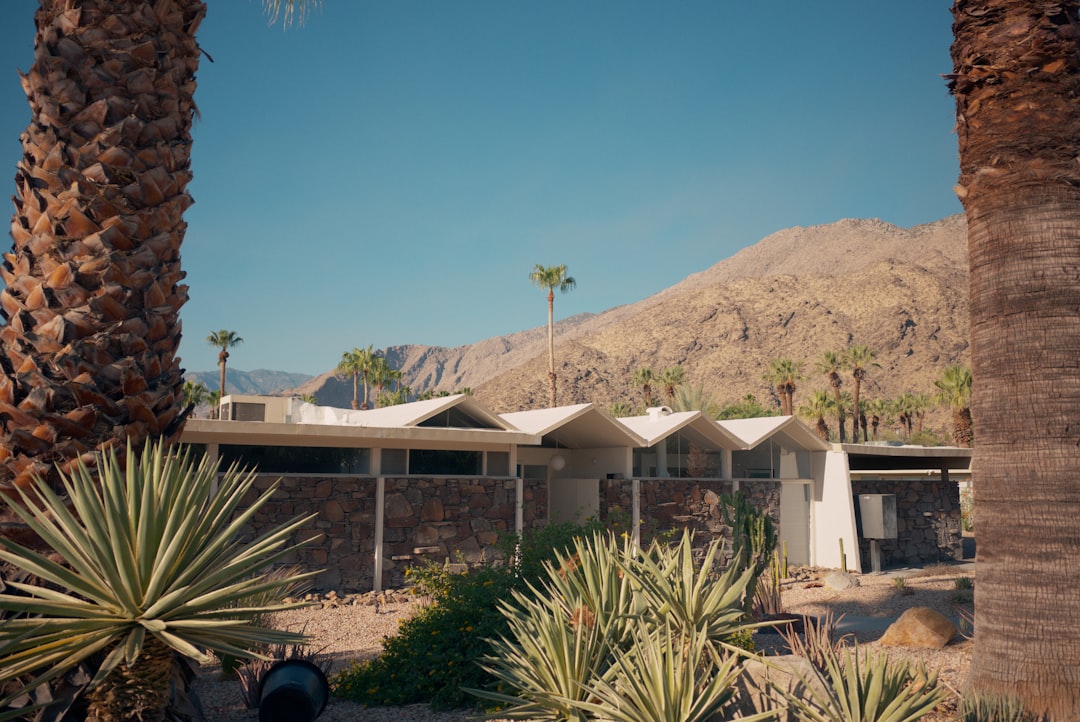
Modernism Week lands in February — the 2026 signature festival ran February 12 through 22. It is an eleven-day celebration of midcentury modern architecture, design, and culture centered in Palm Springs, produced by a nonprofit that has generated a cumulative economic impact exceeding half a billion dollars since its founding in 2006.
The programming is dense: bus tours through neighborhoods designed by architects whose names shaped the American midcentury, home tours of private residences that rarely open to the public, cocktail parties in estates that feel like stepping onto a film set, and talks by preservation experts and designers. A smaller four-day fall edition runs in October.
For the Joshua Tree traveler, Modernism Week extends the same pairing logic as the film festival. Park mornings. Architecture afternoons. Design talks and parties in the evening. The lodging effect is slightly stronger than the film festival — Modernism Week draws visitors who book Palm Springs properties months in advance — but the pressure still concentrates in Palm Springs, not the Hi-Desert.
The pairing only works because January and February deliver a version of Joshua Tree that spring visitors never see. Daytime highs hover in the low-to-mid sixties. Nights drop to the low forties — cold enough to need layers, warm enough to sit outside with a drink. The desert air is clean, the light is low and long, and the crowds that define spring and fall weekends are largely absent.
Rock climbers know this already. When summer destinations like Yosemite sit under snow, Joshua Tree's granite warms in the winter sun and the climbing community descends. Photographers favor the winter light for the same reason painters did — it rakes across the boulders at angles that flatten out by April.
The one concession: winter nights are genuinely cold. Ground temperatures drop faster than air temperatures in the desert, and a clear sky means no insulating cloud cover. A sleeping bag rated for the thirties is the minimum for camping. Rental guests trade that exposure for a warm kitchen and a hot shower — and a fifty-five-minute drive to a film screening.
Build your mornings around the park — Hidden Valley, Barker Dam, Keys View, Ryan Mountain if your legs are willing. Drive west on Highway 62 to Interstate 10, or take the South Entrance route through Cottonwood and connect to the I-10 corridor. Either way, you're in downtown Palm Springs within the hour.
From there, the evening belongs to whichever cultural calendar is running. A film screening. A midcentury home tour that closes with cocktails. A design talk at the convention center. The return drive is dark desert highway — light traffic, long stretches between headlights. The kind of drive that feels deliberate rather than tedious.
Film Festival: The Palm Springs International Film Festival typically runs in early January. Passes, individual screening tickets, and the full schedule are available through psfilmfest.org. Film Awards take place at the Palm Springs Convention Center. Verify this year's dates before planning.
Modernism Week: The signature festival typically runs for eleven days in February. A smaller fall edition runs in October. Tickets, bus tour schedules, and home tour availability are at modernismweek.com. Events sell out — purchase early.
Park access from Palm Springs: The West Entrance is approximately forty-three miles from downtown Palm Springs via I-10 and Highway 62 — roughly fifty minutes in normal conditions. The South Entrance via I-10 East and Cottonwood Spring Road accesses the Colorado Desert side of the park, including Cholla Cactus Garden and Cottonwood Spring.
Winter park conditions: January highs average around 62°F, February around 65°F. Nighttime lows drop to the low forties — occasionally near freezing. Layers are essential. Wind is possible. Check NPS.gov/jotr for current conditions before entering.
Both events concentrate lodging demand in Palm Springs, not the Hi-Desert gateway towns. Travelers staying in Joshua Tree, Yucca Valley, or Twentynine Palms during festival weeks typically find winter availability and pricing. Booking lodging in advance opens up quieter, more spacious options outside the resort corridor.
Two calendars. One corridor. The park gives you quiet mornings under granite and Joshua trees. Palm Springs gives you film premieres, midcentury architecture, and a city that comes alive when most desert destinations go dormant. The question isn't whether both are worth your time — it's whether you knew they ran on the same clock.
Want to feature your business on the DirectStay Blog?
Want to feature your business on the DirectStay Blog?

Connect with travelers, share your space, and join a community of hosts earning together.
Become a host