

 DirectStay

A Joshua Tree trip invites a decision most visitors never realize they're making. They type the park into their phone, follow the blue line to whichever gate appears first, and spend the day inside whichever version of the desert that entrance reveals. It works. They see beautiful things. But they also drive past the things they came for without knowing it, because the entrance they chose pointed them at a different park.
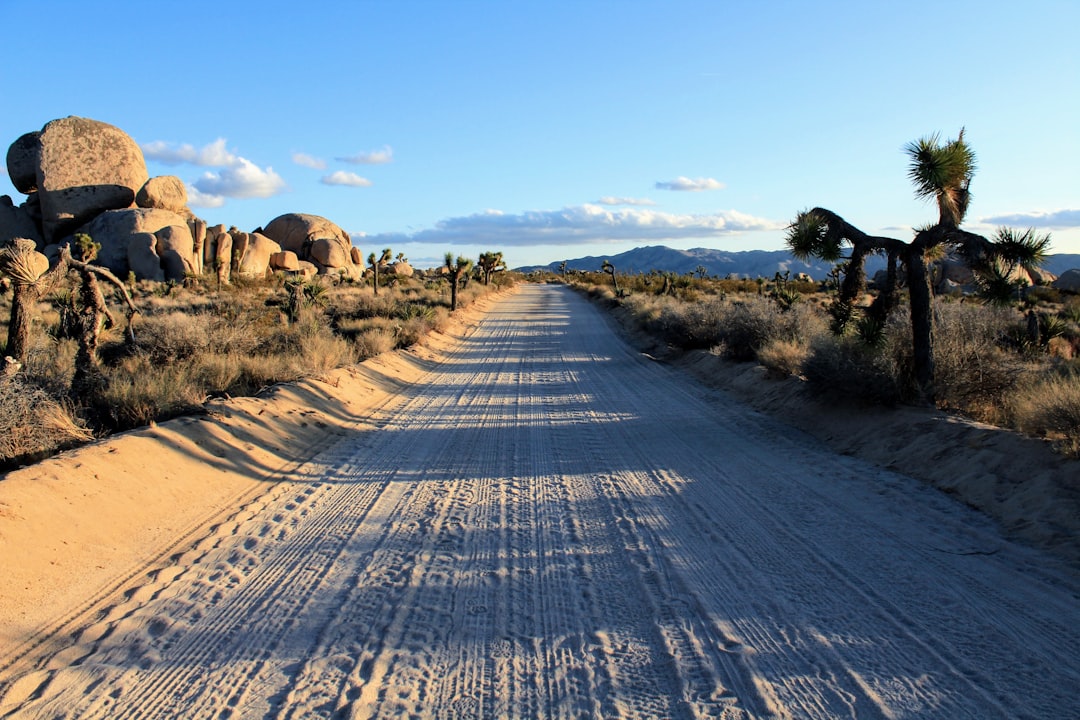
Joshua Tree has three entrance stations, and they don't lead to the same landscape. The West Entrance drops you into granite boulder fields and dense Joshua tree forest — the version of the park that fills camera rolls. The North Entrance puts you on the same main road but from the opposite end, reaching the east-side boulders and scrambling zones before the crowds spill over from the west. The South Entrance skips all of it. It leads into the Colorado Desert — a lower, hotter, flatter world of cholla cactus and desert oasis, where the iconic Joshua trees don't grow at all.
The difference isn't cosmetic. Where your rental sits — Joshua Tree town, Yucca Valley, Twentynine Palms, or the I-10 corridor — determines which entrance you'll use most mornings, which attractions sit within reach of a dawn start, and whether you'll fight for parking at Hidden Valley or have Cottonwood Spring nearly to yourself.
The West Entrance is the park's front door. It sits at the end of Park Boulevard, a short drive south from Highway 62 in the town of Joshua Tree. From here, Hidden Valley is fourteen miles in. Keys View — the highest paved overlook, perched above five thousand feet — is twenty-one miles in. Barker Dam and Cap Rock sit along the same corridor. This is where the park's most photographed landscapes cluster, and it's where the crowds concentrate.
During peak season — October through May — the West Entrance backs up. The National Park Service itself suggests considering the North Entrance to save time. On spring weekends, the line of cars waiting to enter can stretch well past the entrance sign. The delay isn't just at the gate. Once inside, Hidden Valley's parking lot fills early, and the slow procession of vehicles looking for spots creates its own friction. A dawn arrival changes the math entirely. By mid-morning, the window has closed.
The West Entrance is the right starting point for visitors staying in Joshua Tree town or Yucca Valley — it's the closest gate, and the corridor it serves holds the park's densest collection of landmarks. But visitors who assume it's the only entrance worth using miss everything east and south.
The North Entrance sits in Twentynine Palms, three miles south of Highway 62 on Utah Trail. It enters the park from the opposite end of the same main road, but the experience of arrival feels different. Fewer cars. Less congestion. The landscape unfolds in reverse — you hit the east-side boulder corridors first, where Skull Rock and Jumbo Rocks and Arch Rock wait with lighter traffic and wider parking.
The new Joshua Tree National Park Visitor Center opened in downtown Twentynine Palms in 2022, replacing the old Oasis Visitor Center that served the north side for six decades. It sits at Freedom Way, a few minutes from the entrance, and is worth a stop for maps and current trail conditions before heading in.
Climbers tend to prefer this entrance. Indian Cove — one of the park's premier climbing areas — is nine miles from the North Entrance and only thirteen minutes by car. The east-side boulders that define Joshua Tree's climbing identity are closer from here than from the west.
The practical advantage is timing. On a spring Saturday when the West Entrance line stretches for fifteen or twenty minutes, the North Entrance often has no wait at all. Visitors staying in Twentynine Palms or approaching from the Las Vegas corridor find this entrance both faster and closer to the park's less-trafficked landscapes.
The South Entrance is the one most visitors skip — and the one that leads to a fundamentally different park. It sits off Interstate 10, roughly twenty-five miles east of Indio, and it enters the Colorado Desert side of Joshua Tree. The Mojave Desert — with its granite boulders and namesake trees — is miles to the north. Down here, the ground flattens, the cholla cactus takes over, and the silence deepens.
Cottonwood Spring, a genuine desert oasis with fan palms and reliable birding, sits just three miles from this entrance. Cholla Cactus Garden — a dense field of teddy bear cholla that glows when backlit at sunrise — is about twenty miles further north along Pinto Basin Road. These are the park's ecological contrast zones, and they reward travelers who arrive with different expectations than the standard granite-and-Joshua-tree circuit.
The South Entrance is the closest gate from Palm Springs — roughly fifty-five minutes via I-10. Visitors flying into Palm Springs International and day-tripping to the park often find this the most logical starting point, especially if they want to pair a park morning with an afternoon back in the resort corridor.
What this entrance does not offer is quick access to Hidden Valley, Keys View, or the west-side landmarks. Cottonwood to Hidden Valley is over forty miles inside the park — more than an hour of driving. Visitors who enter south planning to reach the west-side icons will spend most of their morning on Pinto Basin Road watching the landscape shift but not stopping.
The most common planning mistake is assuming the park works as a loop. It doesn't. The main road connects the West and North entrances in a U-shape, and the drive takes roughly an hour without stops. Adding the South Entrance leg — from Cottonwood up through Pinto Basin to the junction at Pinto Wye, then west toward Hidden Valley — stretches the total to well over ninety minutes. With even a few short stops, a south-to-west through-drive consumes a full morning.
This isn't a scenic loop you knock out before lunch. The scale of the park — nearly eight hundred thousand acres, stretching sixty-five miles east to west — means every entrance decision is also a time-budget decision. Visitors who enter from the south expecting to reach Keys View by noon will arrive frustrated and behind schedule.
The entrance fee is valid for seven days. That single detail changes everything.
Travelers staying multiple nights can enter through a different gate each day, treating each entrance as a portal to a distinct experience. Day one through the West Entrance for the greatest-hits circuit. Day two through the North Entrance for the east-side boulders and lighter crowds. Day three through the South Entrance for the ecological contrast — Cholla Cactus Garden at sunrise, Cottonwood Spring by mid-morning, and the long Pinto Basin drive as a meditative transition.
This is how the park reveals its depth. Not by cramming every landmark into a single frantic loop, but by letting each entrance frame a different question.
Entrances: Three entrance stations — West (off Park Blvd, Joshua Tree town), North (Utah Trail, Twentynine Palms), South (off I-10, east of Indio). Verify current hours and any seasonal closures at nps.gov/jotr.
Visitor Centers: Joshua Tree Visitor Center (6554 Park Blvd, Joshua Tree town) serves the West Entrance. Joshua Tree National Park Visitor Center (6533 Freedom Way, Twentynine Palms) serves the North. Cottonwood Visitor Center serves the South. Check nps.gov/jotr for current hours.
Entrance fee: Valid for seven consecutive days across all entrances. Current pricing at nps.gov/jotr/planyourvisit/fees.htm.
GPS warning: The National Park Service warns against relying on GPS navigation to or within the park — vehicle navigation systems sometimes route onto backcountry roads with ruts or soft sand. Download the NPS app for offline maps before entering.
Cell service: Unreliable to nonexistent inside the park. Download offline maps, confirm your route, and tell someone your plan before you drive in.
Peak season congestion: October through May, the West Entrance experiences the heaviest traffic. The NPS recommends considering the North Entrance to avoid delays. On spring weekends, arriving before the entrance station opens is the most reliable way to beat the line.
Where your rental sits relative to the three entrances shapes every morning of your trip. Travelers who book lodging in advance can match their base to the entrance corridor that serves their priorities — granite icons from the west and north, ecological contrast from the south. The entrance fee's seven-day validity means a well-positioned rental turns multiple park days into multiple parks.
Want to feature your business on the DirectStay Blog?
Want to feature your business on the DirectStay Blog?

Connect with travelers, share your space, and join a community of hosts earning together.
Become a host