

 DirectStay

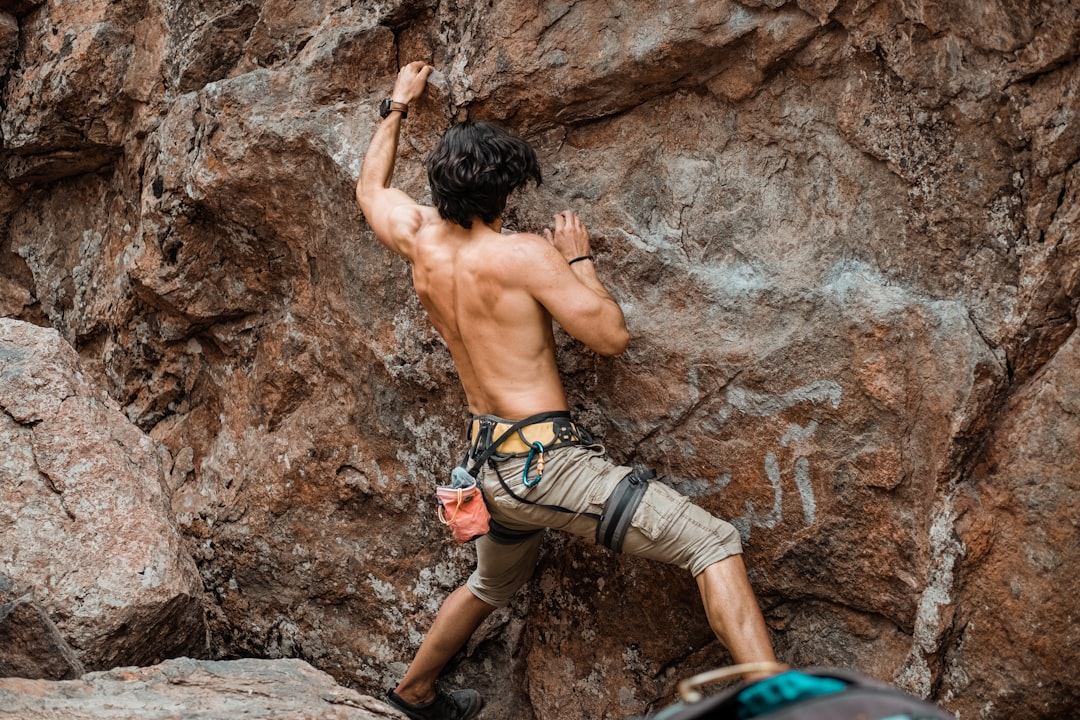
The indoor wall gave you everything in advance — color-coded holds, pre-set routes, bolted anchors, a padded floor. You learned to trust your grip, read sequences, manage fatigue, and clip quickdraws without looking down. Joshua Tree strips all of that scaffolding away. The holds are wherever the rock formed them. The routes follow cracks that close out, flare open, and change texture mid-pitch. The protection isn't bolted to the wall — the leader places it, piece by piece, into the rock as they climb. And the floor is the Mojave Desert. The movements you learned in the gym still work here. Your footwork transfers. Your body tension transfers. What doesn't transfer is the system around you — and that system is what keeps you on the rock.
Joshua Tree is predominantly a traditional climbing area. The majority of its thousands of routes are trad — meaning the lead climber places removable protection devices into cracks and features as they ascend, then builds an anchor at the top. The second climber follows, removing each piece. Nothing stays behind.
This is fundamentally different from the sport climbing most gym climbers know. In a gym, the protection is already there. On a sport route outdoors, at least the bolts are already there. On a JT trad route, the protection exists only because someone placed it — and that someone needs to know what they're doing.
Even routes labeled "sport" in Joshua Tree guidebooks require caution. Bolt spacing runs wider than modern standards, some lack bolted anchors at the top, and mixed routes blend bolts with trad placements. The assumption that a sport label means gym-like protection has caught more than a few transitioning climbers off guard.
The rock itself is monzogranite — grippy and textured, coated in desert varnish where weather has hardened the surface. The friction is generous compared to polished gym holds, but features are irregular. Cracks that look promising from below sometimes narrow to unusable widths. And the grades run stiff — a Joshua Tree 5.7 can feel like a 5.9 at your home gym, especially on routes established before modern grading standards settled.
The fastest way to cross the gym-to-outdoor divide is to hire someone who's already standing on the other side. Joshua Tree has a deep bench of guide services built specifically for this transition.
The Climbing Life Guides runs a program they call "from gym to crag" — designed explicitly for indoor climbers making their first outdoor move. Their director holds AMGA Rock Guide certification, the highest US guiding credential for rock. Uprising Adventure Guides has operated in the park since the late 1990s, with AMGA-trained guides who regularly work with first-timers. California Climbing School, led by AMGA-certified instructors and former NOLS and Outward Bound staff, offers structured multi-day course progressions from beginner through self-rescue. Stone Adventures and Mojave Guides round out the options with family-friendly custom trips and multi-activity combo bookings.
What a guide provides isn't just safety. It's translation. They read the rock the way you read a gym wall — spotting the line, identifying rest positions, knowing which crack takes a number two cam and which one wants a stopper. They set up top-rope anchors so you can climb trad-style routes without leading them. They carry the gear you don't own yet. And they pick routes that match your gym grade to your outdoor grade — which, on your first day outside, are not the same number.
Indoor climbing requires shoes, chalk, a harness, and a belay device. Outdoor trad climbing adds a full rack of protection — cams, nuts, stoppers, slings, cordelette — plus a helmet and approach shoes. Guide companies provide all of it. You show up with water, sun protection, and closed-toe shoes. They handle the rest.
The gap between "I climbed outdoors with a guide" and "I can set up my own anchor" is significant. Several JT services offer multi-day course progressions — beginner to anchor building to lead climbing to self-rescue — designed to build independence over multiple trips, not a single weekend.
Joshua Tree's climbing environment introduces variables that don't exist in a climate-controlled gym.
Sun exposure is relentless. The granite radiates heat. Routes that face south or west become untouchable by mid-morning in warm months. Guides choose route orientation based on the sun's position — morning shade on east-facing walls, afternoon shade on north-facing ones. Dawn starts are standard practice from March through October.
Water math is non-negotiable. One gallon per person per day is the baseline, and climbing days burn through it faster. There is no water inside the park. What you carry in is what you have.
The rock is abrasive. Monzogranite chews through skin faster than gym holds. Tape your hands before you need to. Bring extra tape.
Cell service disappears at the park boundary. If you're meeting a guide inside the park, confirm the exact meeting point before you lose signal. Download offline maps. Tell someone your plan.
Where: Joshua Tree National Park — climbing areas span the entire park, with concentrations along Park Boulevard between the West and North entrances. Most guide companies meet at their offices in Joshua Tree town or at designated trailheads inside the park.
Season: October through May is prime climbing season. Summer climbing compresses into the dawn-to-10 AM window due to extreme heat. Guides adjust start times seasonally.
Booking: Guide services in Joshua Tree typically book out during peak spring weekends (March–May). Advance booking is strongly recommended, especially for private sessions. Most companies offer half-day and full-day options.
Gear: All reputable guide services provide full gear — harness, helmet, shoes, and climbing hardware. Wear closed-toe shoes for approach hikes. Bring sun protection, water, and snacks.
Preparation: Download the NPS app for offline trail maps before entering the park. Confirm your meeting point with your guide while you still have cell service. Arrive hydrated and fed — there are no services inside the park.
Guide companies operating in Joshua Tree National Park: The Climbing Life Guides, Uprising Adventure Guides, California Climbing School, Stone Adventures, Mojave Guides, and others hold NPS commercial use permits. Verify current availability and credentials directly with each company.
Climbing days start early — often before sunrise in warm months. Guests staying in surrounding communities build their morning around the drive-in, arriving provisioned for the full session. Booking lodging in advance opens up quieter options across the gateway corridor.
Want to feature your business on the DirectStay Blog?
Want to feature your business on the DirectStay Blog?

Connect with travelers, share your space, and join a community of hosts earning together.
Become a host