

 DirectStay

Saltsburg says something about you before you say anything about it. Thirty minutes southwest of Indiana, at the confluence where the Conemaugh River meets Loyalhanna Creek and forms the Kiskiminetas, a borough of 780 people sits inside a National Register Historic District that looks the way it did when the canal ran through it. Canal Park traces the actual path of the Pennsylvania Main Line Canal in a concrete walkway that curves through the center of town, interpretive panels marking where boatyards loaded salt and Lock 8 moved barges through the elevation change. Then there’s the rest of Saltsburg — the unchanged storefronts along Point and Salt Streets, the 1830 stone house museum, the river views that reward anyone who brought a camera and no particular agenda. The question isn’t whether to visit. It’s whether you came for the history on the panels or the stillness between them.
The Western Division of the Pennsylvania Main Line Canal reached Saltsburg in 1829 and ran through it for thirty-five years. During that window, the borough became one of the leading salt producers in the nation — by 1830, at least twenty-one salt manufacturing operations worked within two miles of town. Canal barges carried the salt east toward Philadelphia and west toward Pittsburgh. Boatyards lined the waterfront. Lock 8 lifted vessels through the elevation change right where Canal Park sits today.
The canal closed in 1864. The Pennsylvania Railroad had purchased the Saltsburg section in 1857, and eventually filled the canal bed and laid tracks over the trace. What makes Saltsburg unusual is what happened next: not much. The town didn’t reinvent itself around tourism or industry. It held its shape. The commercial buildings along Washington Street, the residential structures climbing the hillside, the orientation of doorways toward a waterway that no longer exists — all of it stayed.
In the mid-1990s, the National Park Service’s America’s Industrial Heritage Project constructed Canal Park along the authentic canal route. The park includes interpretive panels explaining the canal’s function and design, the transition to rail, and the impact of both on the community. At the northern end, a representation of Lock 8 marks its actual location. The West Penn Trail parallels the park and continues seventeen miles toward Blairsville, passing over four stone-arch railroad bridges built in 1907.
The interpretive walk takes thirty to forty-five minutes if you read everything. But the panels are the introduction, not the experience. Saltsburg’s real texture lives in what surrounds them.
Walk south from Canal Park along Point Street and you reach the Rebecca B. Hadden Stone House Museum — an 1830 structure that the Saltsburg Area Historical Society has operated since 1969. The collection covers the canal era, salt drilling, glass making, and boat building, with artifacts donated by generations of residents. A Victorian herb garden maintained by the local Herbal Society fills the grounds. The museum keeps limited hours — typically Wednesdays, 10 AM to 2 PM — so check before planning around it.
Continue toward the rivers and the town’s geography becomes its own exhibit. Saltsburg sits precisely where the Conemaugh and Loyalhanna converge to form the Kiskiminetas. The confluence is visible from multiple vantage points along the borough’s edges, and in morning light or late afternoon, the merging currents create the kind of composition that makes photographers forget they were only passing through.
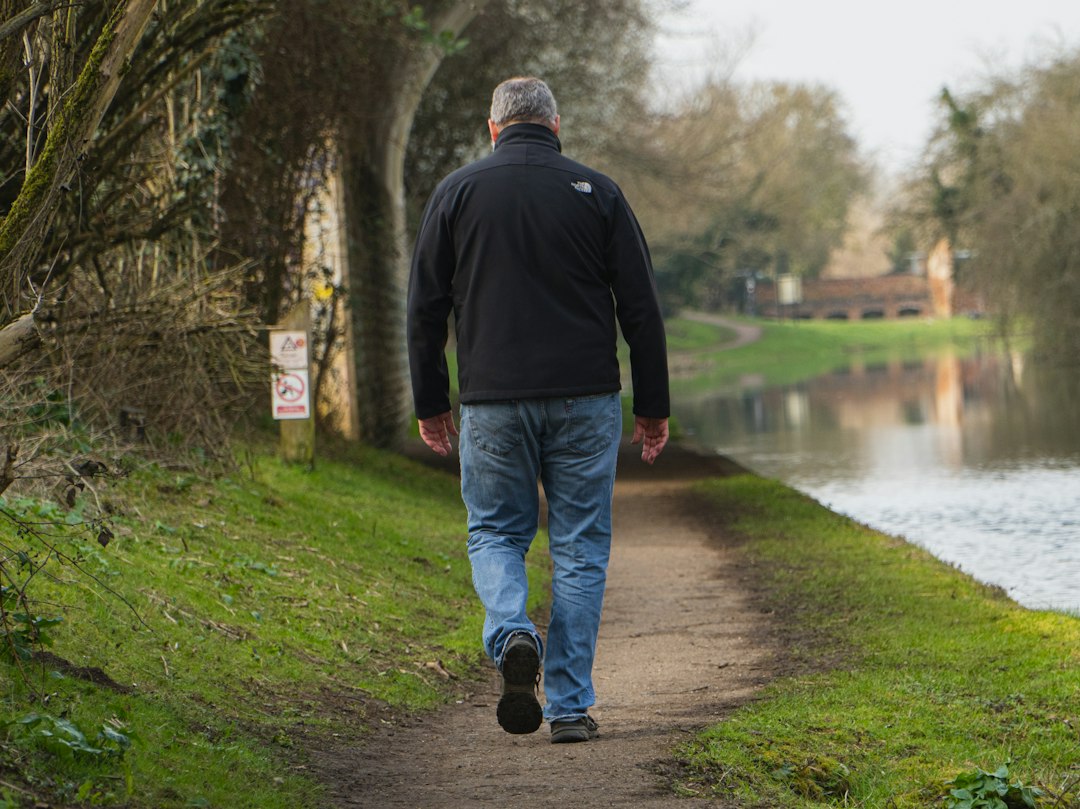
Saltsburg functions as a trail hub. The West Penn Trail enters town from the east, following the old Pennsylvania Railroad corridor along the Conemaugh River, and connects directly to the Westmoreland Heritage Trail heading west. Together they cover more than twenty-five miles of accessible riding and walking terrain.
The West Penn Trail itself is a different animal from the Hoodlebug or Ghost Town trails closer to Indiana. The first few miles from Saltsburg are flat and manageable, but the middle section introduces legitimate elevation changes and a surface that shifts from rail-grade to something closer to mountain trail. Experienced cyclists handle it fine. Casual riders should know what they’re getting into or stick to the Saltsburg-area sections.
For visitors staying in Indiana who want a half-day cycling option that doesn’t repeat the Hoodlebug, the drive to Saltsburg plus a flat out-and-back on the West Penn Trail’s first segment offers a different landscape entirely — river views, stone-arch bridges, and canal remnants visible from the trail itself.
Saltsburg’s National Register Historic District covers 480 acres and includes 118 contributing buildings. That number sounds like a museum complex, but it reads like a town that simply never tore anything down. Canal-era structures line Washington Street. The McIlwain Building — an 1870s post-and-beam warehouse that served as hotel, furniture store, and funeral home over the decades — anchors the commercial core. Altman’s Mill at 360 Point Street, built in 1912, still retains its original grain milling machinery.
None of this is curated for visitors in the way a restored historic village would be. There are no costumed interpreters, no admission fees to walk the streets, no gift shops trading on nostalgia. The buildings are simply there, doing what buildings do in a town where the economy shifted and the architecture didn’t follow.
The confluence of three waterways gives Saltsburg photographic conditions that most small towns can’t match. The Conemaugh arrives from the east, Loyalhanna Creek enters from the southeast, and the Kiskiminetas forms and continues southwest. Each carries different sediment, different light behavior, different current speed.
Morning light from the east illuminates the Conemaugh’s approach. Late afternoon pushes golden tones across the Kiskiminetas as it forms. The stone-arch railroad bridges visible from the trail and from town create foreground structures that anchor river compositions without requiring any particular expertise.
Photographers who visit once tend to come back when the season changes. Fall reflections along the Kiskiminetas, winter fog settling into the river valley, spring runoff pulling color from the surrounding forest — each version of Saltsburg photographs differently, and none of them require a permit or a plan.
Where: Saltsburg Borough, Indiana County, PA. Routes 286 and 981 intersect in town. Approximately 30 minutes southwest of Indiana via US-22 and PA-981.
Canal Park: Accessible year-round, no admission fee. Interpretive panels and Lock 8 representation along the canal trace. The West Penn Trail parallels the park.
Museum: Rebecca B. Hadden Stone House Museum, 105 Point Street. Typically open Wednesdays 10 AM–2 PM. Verify current hours and seasonal closures with the Saltsburg Area Historical Society before planning around it.
Trail access: West Penn Trail enters Saltsburg at Canal and Water Streets. The Westmoreland Heritage Trail connects here as well. Dawn to dusk. No fees. Trail conditions vary by season — check the Conemaugh Valley Conservancy’s site for current status: conemaughvalleyconservancy.com.
Parking: Limited street parking near Canal Park and along Point Street. During Canal Days (typically early June), parking compresses — arrive early.
Canal Days: Annual festival in Canal Park, typically early June. Crafts, food, live music, fireworks. Verify current year’s dates at saltsburg.org.
Saltsburg draws half-day visitors from surrounding communities. Travelers staying in the Indiana area can pair this with a stop along US-22 — Blairsville and Dean’s Diner sit on the return route — and build a full day without retracing steps. Booking lodging in advance opens up quieter, more spacious options outside the immediate area.
The canal closed. The railroad came and went. The salt wells played out more than a century ago. Saltsburg kept standing. That’s not preservation in the formal sense — nobody applied for grants to freeze the town in amber. The buildings simply outlasted the industries that built them, and the rivers kept converging whether anyone was watching or not. You come for the panels or the photographs or the trail. You stay because the pace asks nothing of you, and for a half-day, that turns out to be enough.
Want to feature your business on the DirectStay Blog?
Want to feature your business on the DirectStay Blog?

Connect with travelers, share your space, and join a community of hosts earning together.
Become a host