

 DirectStay

Fall in Indiana County centers on one question you didn’t know you were asking: do you want to move through the color or let it come to you? Ghost Town Trail puts you inside the canopy — thirty-two miles of crushed limestone threading creek corridors where the trees close overhead and the light filters through layers of maple, cherry, and oak still deciding what shade to become. You ride through it. The color isn’t a backdrop. It’s the tunnel. Then there’s the version where the color finds you — a shoreline at Yellow Creek where the lake holds still long enough to double every hillside, and a twelve-acre pond at Blue Spruce Park where the surface turns to glass before anyone else arrives. Same county. Same week. Four landscapes running on different clocks.
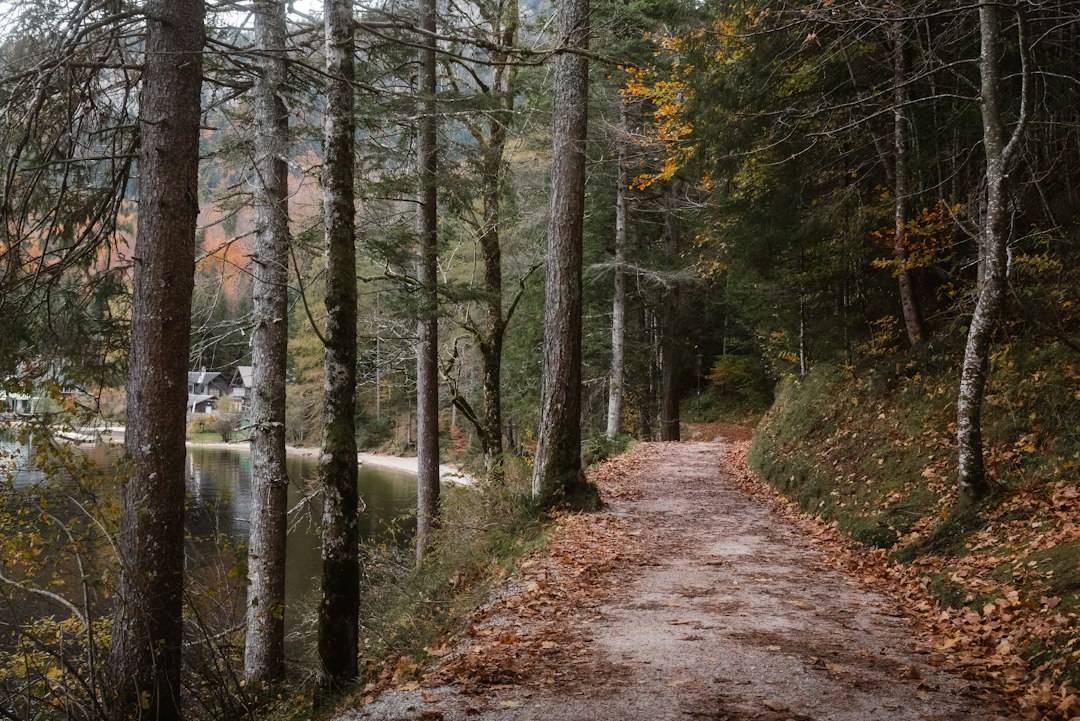
Ghost Town Trail runs east from Saylor Park in Black Lick through shaded forest and along creek corridors toward Ebensburg. The crushed limestone surface winds past iron bridges, remnants of abandoned coal towns — Wehrum, Bracken, Claghorn — and the stone stack of Eliza Furnace, a relic from the region’s iron-smelting era. In October, the corridor becomes something else entirely. The tree canopy arches over the trail in long stretches, and when the maples and cherries turn, you’re riding through a shifting ceiling of red, orange, and gold. The oaks hold longer — they bronze later, extending the season by a week or more after the early-changers drop.
This is active foliage. You earn it by moving through it. A cyclist covers the full corridor in a day. A walker picks a section and lets the pace slow to match the light. Either way, the color isn’t something you stop to admire — it’s something that surrounds you and changes as you move. No services exist on the trail for the full stretch. Pack water, snacks, and a repair kit if you’re riding.
The Hoodlebug Trail connects at Black Lick Junction, adding another ten miles of resurfaced trail closer to Indiana’s downtown. The Hoodlebug corridor runs flatter and more open — Two Lick Creek alongside, less overhead canopy, more sky. In fall, the contrast matters: Hoodlebug gives you long views of hillside color across open meadow stretches. Ghost Town Trail puts the color directly above you. Same trail network, two different relationships with the season.
Yellow Creek State Park holds 720 acres of lake surface surrounded by nearly 3,000 acres of forested hillside. In October, when the surrounding hardwoods turn, the lake acts as a mirror. The reflection doubles the display — hillside color above the waterline, its inverted twin below. Photographers who know this park tend to favor the western shoreline during late afternoon, when the low autumn sun crosses behind them and the eastern hillsides catch direct light. The reflection sharpens as wind drops toward evening.
This is contemplative foliage. You find a spot, you sit, and the color comes to you. No trail required. No mileage. The lake does the work. Dragonfly Pond, a smaller body of water within the park, offers a quieter version of the same effect — fall color framing a stillwater surface with fewer visitors and no boat traffic.
Five miles of trails wind through the park’s woods and along the shoreline, but during peak foliage the draw is the water itself. The canopy surrounding the lake includes oak, hickory, maple, and birch — species that change on different schedules, which means the color composition shifts across the span of a week.
Blue Spruce Park sits six miles north of Indiana — a 650-acre county park centered on a twelve-acre lake where no motorized boats are allowed. Before 8 AM on a weekday in mid-October, the surface holds perfectly still. The surrounding forest reflects so cleanly that photographs taken here are sometimes mistaken for double exposures.
This is the foliage experience that rewards early risers and people willing to sit in near-silence while the light shifts. The lake is stocked with trout, and the anglers who arrive at dawn become part of the scene — still figures in the foreground of a reflected hillside. The park’s trail system loops through the surrounding woods, but in fall the trailhead matters less than the shoreline. Walk to the water’s edge, find the angle where the trees double, and stay.
Blue Spruce peaks on roughly the same schedule as Yellow Creek — mid-to-late October for the maples and cherries, extending into late October for the oaks. The difference is scale. Yellow Creek’s 720 acres of open water create panoramic reflection. Blue Spruce’s twelve acres create intimacy. Both work. They ask different things of you.
White’s Woods Nature Center sits less than two miles from downtown Indiana — close enough to walk from Philadelphia Street. The 245-acre hardwood forest includes a 2.5-mile loop trail with moderate elevation changes and a network of side trails extending deeper into the canopy. In fall, the dense overhead cover transforms the walk. Light doesn’t flood in — it filters through layers of oak, maple, beech, and birch, shifting as leaves thin and drop.
This is immersive foliage. Not the panoramic kind. Not the reflective kind. The kind where you’re inside the color and the forest floor catches what falls. Midweek mornings, the trails are quiet enough to hear individual leaves land.
Important: An active conservation dispute between White Township and Friends of White’s Woods may affect trail access. Check current trail status before planning a visit.
Indiana County’s fall color doesn’t arrive on a single day. It moves through the landscape in overlapping waves, and each venue runs on its own schedule.
The maples and cherries turn first — typically mid-October, though dry conditions can push color earlier by a week or more. Sassafras and birch follow. The oaks are last, holding their bronze and russet into late October and sometimes early November. DCNR’s weekly fall foliage reports, published each Thursday during the season, cover Blair, Cambria, and Indiana counties specifically through their Gallitzin State Forest updates. Bookmark the reports and check before planning a trip around peak color.
The practical difference: a visitor who arrives in early October may find Ghost Town Trail’s canopy just beginning to turn, while the same visitor in late October may find the maples stripped and the oaks at their deepest bronze. Neither is wrong. They’re different versions of the same county.
Where: All four venues sit within a 20-minute drive of downtown Indiana, PA. Yellow Creek State Park is 15 minutes east on PA-422. Blue Spruce Park is 6 miles north on Blue Spruce Road. Ghost Town Trail’s nearest access is at Saylor Park in Black Lick, roughly 10 minutes south. White’s Woods is less than 2 miles from downtown.
When: Mid-to-late October historically produces peak color in Indiana County. Verify timing using DCNR’s weekly fall foliage reports:pa.gov/agencies/dcnr
Trail conditions: Ghost Town Trail is crushed limestone — rideable year-round but muddy after rain. White’s Woods is natural surface — slippery when wet. Check conditions before heading out.
Equipment: Ghost Town Trail requires a bike for the full corridor experience. Bring your own — local rental options are limited. Hoodlebug Trail connects at Black Lick Junction if you want to extend the ride back toward Indiana.
Parking: Yellow Creek has multiple lots throughout the park — no fee. Blue Spruce has a main lot near the lake. Ghost Town Trail parking at Saylor Park in Black Lick is small and fills on peak weekends.
Indiana County has four covered bridges, all within an easy drive of one another, and the county publishes a driving-tour map at indianacountyparks.org. Thomas (75 feet, Crooked Creek, near Yarnick’s Farm Market west of Indiana) is the only one still open to vehicles and the only one with real parking. Harmon (45 feet, 1910) and Trusal (41 feet, 1870, the county’s oldest) sit about half a mile apart off Five Points Road, and Kintersburg (68 feet, 1877) is off Route 119 near Home — all three are pedestrians-only with roadside pull-offs. In mid-October the back roads between them carry as much color as the trails do.
Peak foliage weekends draw photographers and trail users to Indiana County. Nearby accommodations fill earlier than a typical October weekend. Booking lodging in advance opens up quieter, more spacious options in the surrounding communities. Arrive early, park once at your first venue, and build a full day around the color — the drive home becomes the wind-down.
Want to feature your business on the DirectStay Blog?
Want to feature your business on the DirectStay Blog?

Connect with travelers, share your space, and join a community of hosts earning together.
Become a host