

 DirectStay
The Cherokee Indian Fair has been running every October for more than a century — community fairs on the Qualla Boundary date to 1912, and the fair was already decades old before the Great Smoky Mountains became a national park. It takes over the Old Acquoni Expo Center on the Qualla Boundary for five straight days — stickball games between township teams, a parade that shuts down the main roads through downtown, craft competitions where only enrolled members of the Eastern Band of Cherokee Indians can enter, and food booths run by Cherokee families cooking bean bread and wild greens from recipes that predate the fair itself. Visitors pay admission at the gate and walk in. But none of it was built for them. The schedule, the structure, the rhythm of the week — all of it serves the Cherokee community first. What that means for you as a guest is that you're not walking into a heritage festival designed to explain itself. You're walking into someone else's living tradition while the gates happen to be open.
The Cherokee Indian Fair is a tribal gathering organized by the Eastern Band of Cherokee Indians on the Qualla Boundary — sovereign land in western North Carolina that sits at the southern entrance to Great Smoky Mountains National Park. The fair runs from the first Tuesday of October through Saturday, five consecutive days with a different theme each day: Parade Day, Children's Day, Elder's Day, Veterans Day, and Community Day.
Each day follows its own logic. Tuesday opens with a parade that assembles in the Harrah's Cherokee Casino lower parking area, rolls south through downtown Cherokee on US-19, crosses the bridge onto US-441 North, and disbands near the Museum of the Cherokee People. Roads close hours before the parade steps off. Wednesday centers on children — baby crawling contests, bubble gum blowing, a kids' ride wristband giveaway, and youth stickball. Thursday honors elders with a fashion show and a cornhole tournament. Friday is Veterans Day, with a formal ceremony, presentation of colors, and a missing-man table. Saturday is Community Day — archery, blowgun competitions, axe throwing, wood chopping, a closing concert, and fireworks after dark.
The fair's structure tells you who it's for. Every day is built around the community, and visitors fill in around the edges.
Stickball — anetsa in Cherokee — runs throughout the week, and it's the event that reorients most visitors' understanding of the fair. The Cherokee call it the "little brother of war," and that name isn't decorative. The game historically served as a way to settle disputes between clans or towns without armed conflict. Two teams line up on a field, each player carrying two long hickory sticks with woven cups at the ends. No padding. No shirts. No time-outs. First team to twelve goals wins.
At the fair, games are organized by age group and township. Youth teams (ages six through nine, ten through twelve) play during the day. Teen and men's teams follow — Big Cove against Wolftown, Birdtown against Hummingbirds. These are real community teams with real rivalries that predate anything tourism-related. The games start when they start and end when someone reaches twelve. There's no halftime show. Traditionally, war calls before the game mark each team's presence on the field. If you're standing at Unity Field when a men's game kicks off, you'll understand within sixty seconds that this isn't a demonstration.
Plan your fair day around the stickball schedule, not the other way around. The games anchor the afternoon, and everything else moves around them.
The Exhibit Hall at the Expo Center is one of the fair's most important spaces, and it operates under rules that surprise visitors who walk in expecting a craft market. The competitions inside — canned foods, garden produce, traditional clothing, beadwork, woodcraft — are open only to enrolled members of the Eastern Band. Judging happens on Monday before the fair opens to the public. Ribbons are awarded for first, second, and third place, and they carry weight in the community that has nothing to do with tourist attention.
You can walk through the Exhibit Hall and look. You can appreciate the work. But you cannot buy the competition entries, and the hall exists to honor Cherokee makers within their own system — not to sell to visitors. If you want to purchase Cherokee-made art, the Qualla Arts and Crafts Mutual is across the street from the Museum of the Cherokee People on Tsali Boulevard. It's been operating since 1946 as the oldest Native American cooperative in the country.
Fair food vendors are run by Cherokee families, and the menu reflects what Cherokee people actually eat — not what a tourist board thinks visitors want to try. Bean bread, chestnut bread, wild greens, and fry bread are staples. The Indian Dinner is a full plate: chicken, fried potatoes, fatback, mustard greens, and bean bread. It's filling, it's inexpensive, and it's cooked by people who've been making this food their whole lives.
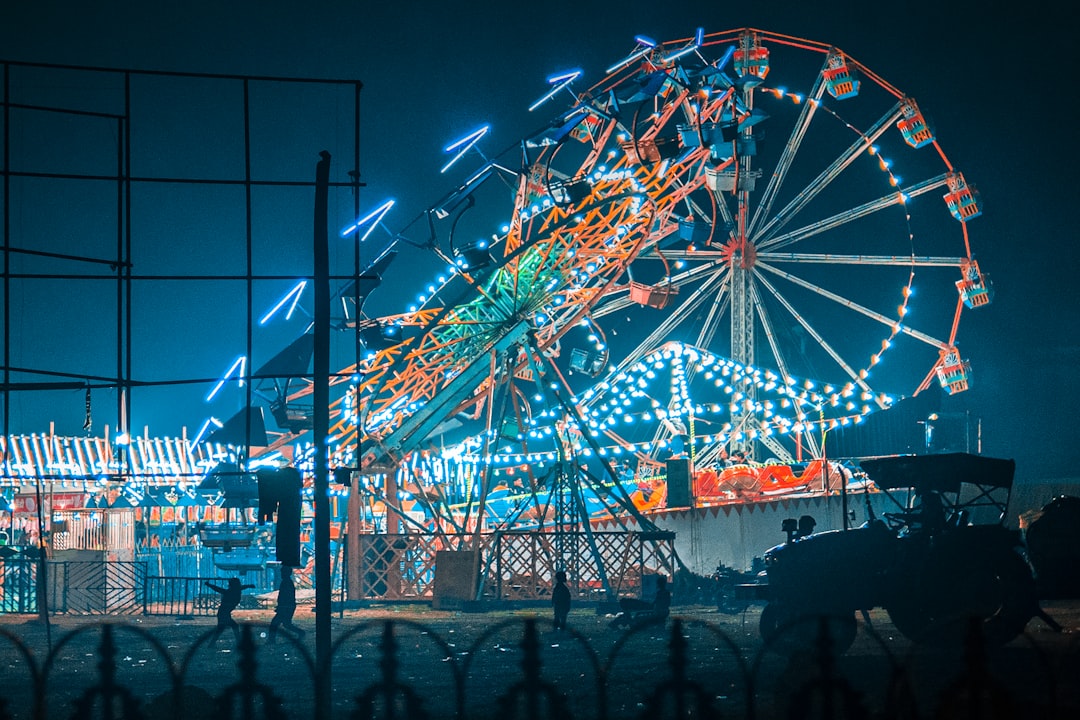
There are also standard carnival foods — roasted corn, cotton candy, candy apples — because the fair is a fair. Rides spin. Kids eat candy apples. But the traditional food booths are the ones with the longest lines, and they're the ones where you're eating something you can't replicate outside the Qualla Boundary.
Bring cash. Gate admission and most food vendors operate on cash only.
The fair reshapes how Cherokee operates for five days, and if you're visiting the area without knowing the fair is happening, you'll feel it immediately.
On parade day, US-19 and US-441 through downtown Cherokee close hours before the parade begins. These are the only through-roads in town. If you're trying to reach the Oconaluftee entrance to Great Smoky Mountains National Park, your route is blocked or severely delayed until the parade clears. Roads typically close by 10 AM.
The Expo Center at 1501 Acquoni Road absorbs most fair traffic, but overflow spills into downtown lots and side streets. Evening hours — when rides are running and the main stage is active — draw the heaviest crowds.
The Oconaluftee Visitor Center and trailhead sit just north of downtown Cherokee. On non-parade days, access is normal. On parade day, plan to be in the park before 10 AM or wait until late afternoon. The Oconaluftee River Trail, a mostly level 1.5-mile one-way walk along the river (three miles round-trip), is accessible from the visitor center and offers a buffer from the fair's density if you need it.
Cherokee has limited lodging relative to Gatlinburg or Pigeon Forge. Fair week fills quickly. Cabins and rentals in Bryson City or Maggie Valley are the typical overflow, each roughly thirty minutes away.
The fair runs until 11 PM most nights, with Saturday stretching to midnight. If your rental is near Acquoni Road or downtown, expect amplified music, carnival sounds, and fireworks on Saturday night.
The Cherokee Indian Fair is held on the Qualla Boundary — a federal land trust in western North Carolina that the Eastern Band of Cherokee Indians purchased and regained after removal, technically distinct from a reservation because tribal members hold title to most of the land. The tribal government sets the rules.
Photography protocols vary by event and year. Some stickball games and ceremonial moments may restrict photography. If you're unsure, ask before raising your phone. The Cherokee Welcome Center staff and fair volunteers can clarify what's permitted.
The exhibit hall, as noted, is for viewing — not purchasing. Craft competitions are internal to the tribe. Engage with what's offered to visitors, and recognize what isn't.
The fair's gate policy reflects this: enrolled members of any federally recognized tribe enter free with their enrollment card. Everyone else pays general admission. Children six and under are free.
Cherokee sits at the southern entrance to Great Smoky Mountains National Park, and October is one of the park's highest-traffic months for fall color. Fair week overlaps with peak leaf season at lower and mid elevations.
If you're planning both, sequence matters. Morning in the park, afternoon at the fair is the pattern that works. The Oconaluftee area — the visitor center, Mingus Mill, the Mountain Farm Museum, and the elk herd that grazes the fields at dusk — is the closest park experience to Cherokee and doesn't require driving the full Newfound Gap Road.
The elk are worth noting separately. The Cataloochee and Oconaluftee herds are most active at dawn and dusk during October's rut season. If you're staying in Cherokee for the fair, you're already positioned for early-morning elk viewing before the fair gates open at 8 AM.
Cherokee Indian Fair (annual, first Tuesday–Saturday of October)
Old Acquoni Expo Center, 1501 Acquoni Rd, Cherokee, NC 28719
Typically $10/day Tuesday–Friday; $20 Saturday. Cash only at the gate. Free for children 6 and under. Free for enrolled members of federally recognized tribes with enrollment card.
Gates typically open 5 PM on parade day (Tuesday); 8 AM remaining days. Fair runs until 11 PM most nights; Saturday until midnight. [Confirm current year schedule at visitcherokeenc.com or cherokeespecialevents.com]
Tuesday, typically steps off at 3 PM. Road closures begin by 10 AM along US-19 and US-441. 2026 dates: Not yet announced at time of drafting. Historically first full week of October. [Confirm at visitcherokeenc.com]
Games run daily, afternoon through early evening. Specific matchups announced closer to fair week.
Cherokee lodging fills early during fair week. Bryson City and Maggie Valley offer overflow options within thirty minutes. A cabin or rental with kitchen access is the most flexible base — fair food is plentiful, but breakfast before the gates open is on you.
Oconaluftee Visitor Center is approximately 2 miles north of downtown Cherokee on US-441. Open daily. No entrance fee, but a paid parking tag is required for vehicles stopped longer than 15 minutes. [Purchase at nps.gov/grsm or at the visitor center]
Cherokee Welcome Center — (828) 359-6490
The Cherokee Indian Fair has been running for more than a century — through removals, through federal policy, through the creation of a national park next door. It continues because it serves the community that built it. When you walk through the gates in October, you're not the audience. You're a guest in someone else's celebration, and the week is better for knowing that going in.
Want to feature your business on the DirectStay Blog?
Want to feature your business on the DirectStay Blog?

Connect with travelers, share your space, and join a community of hosts earning together.
Become a host