

 DirectStay

The Chattanooga Civil War day depends on a question most travelers don't realize they're answering until they're already in the car. The 1863 Campaign for Chattanooga didn't happen in one place — it happened across a landscape that spans a Georgia state line and a Tennessee ridgeline, and the two halves tell the story from opposite angles. One puts you inside the woods where the fighting started. The other puts you high above the valley, looking down at the city the armies were fighting over. Both are federally protected. Both are a short drive from a downtown rental. And both will take most of a morning or afternoon to do right. Which one is the right way to spend a battlefield day in Chattanooga comes down to whether you came here wanting to walk the ground — or wanting to read it.
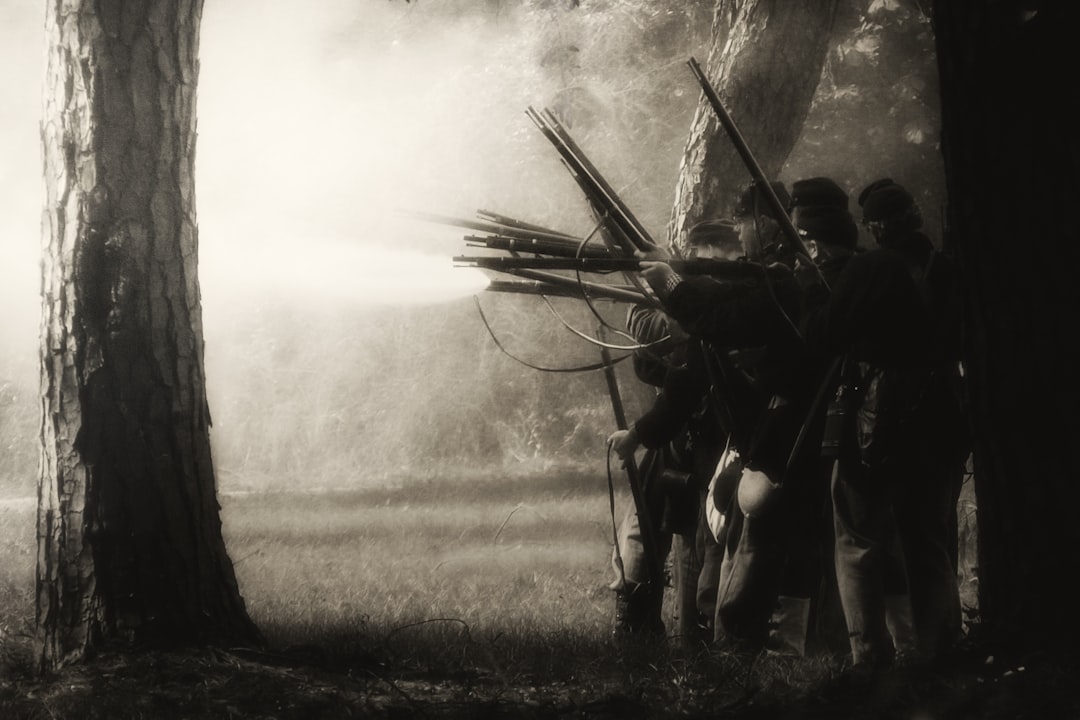
Chickamauga Battlefield sits about twenty minutes south of downtown Chattanooga, across the Georgia line in Fort Oglethorpe. It is the oldest and largest National Military Park in the system, and the first thing to register when you arrive is that the land itself is doing most of the work. The battlefield is wooded. It is uneven. It is quiet in a way that makes sense once you know that the fighting here across September 18–20, 1863 produced roughly thirty-four thousand combined casualties — second only to Gettysburg in the whole war.
The way most visitors move through it is the self-drive auto tour — a seven-mile loop with eight stops, each one keyed to a phase of the battle. You stay in your car between stops, get out to walk when a stop calls for it, and let the orientation film at the Visitor Center do the narrative heavy lift up front. The film runs every half hour and lasts about twenty-six minutes. It's worth sitting through before you drive.
What the auto tour gives you that the ridge cannot is scale at ground level. You stand where lines of men stood. You see the woods they moved through. You notice how close the positions actually were. Monuments rise out of the tree line at intervals — regimental markers, state memorials, artillery positions — and the cumulative effect is not spectacle. It is reckoning.
Admission: free
Visitor Center hours: 8:30 AM to 5 PM daily (closed December 25 and January 1); grounds open dawn to dusk
Time needed: budget three to four hours including the film, the museum, and the full auto loop
Mobility: the auto tour is car-based with short walks at each stop; terrain at stops is often uneven and grass-covered
Cell service: generally usable; the park also offers a self-guided cell phone tour at eight locations
On weekends Labor Day through Memorial Day, ranger-led car caravan tours run at 10 AM and 2 PM (minimum four adults; sign up at the Visitor Center) [NEEDS VERIFICATION — confirm current caravan schedule at arrival]
Point Park sits at the northernmost tip of Lookout Mountain, about fifteen minutes from downtown Chattanooga by car. It is sixteen acres of stone-walled overlook pinned to a bluff, and the moment you step through the castle-like gated entrance, the argument for ridge-level perspective makes itself. You are standing where Confederate artillery was positioned above the city. The Tennessee River curves below. Downtown Chattanooga is laid out in miniature. You can see where the armies were, where they moved, and why the topography mattered.
This is the "Battle Above the Clouds" site — the engagement of November 24, 1863, fought in mist and fog along the slopes below the summit. The park interprets it through monuments, cannon positions, paved overlook paths, the New York Peace Monument rising from the center of the park, and the Ochs Memorial Observatory at the northernmost tip. Across the street, the Lookout Mountain Battlefield Visitor Center houses the James Walker painting of the battle and exhibits that frame what you are looking at from above.
What the ridge gives you that the field cannot is geography as argument. From Point Park you understand the entire Chattanooga Campaign in one sightline — Missionary Ridge to the east, Moccasin Bend below, the river that made the city strategic, the valley the Union had to break out of. The field taught you what combat felt like at shoulder height. The ridge shows you what generals were looking at.
Admission: $10 per adult, ages 16 and over; free for 15 and under; America the Beautiful Pass honored (passholder plus three additional adults enter free)
Main entrance opens at 8:30 AM daily
Time needed: one to two hours for the paved overlook loop and monument reading; longer if combining with the Visitor Center exhibits across the street
Parking: the free lot fills quickly; metered street parking is enforced aggressively
Mobility: the main paved loop is wheelchair and stroller accessible; some lower trails are steep
On weekends Labor Day through Memorial Day, ranger-led walking tours run at 11 AM, 2 PM, and 4 PM (30–45 minutes) [NEEDS VERIFICATION — confirm current walking tour schedule at arrival]
Between the field and the ridge sits a third site most one-day itineraries skip, and the skipping is why some Chattanooga battlefield days feel incomplete. Cravens House is the oldest surviving structure on Lookout Mountain — a mid-slope farmhouse that became the Confederate defensive anchor during the Battle Above the Clouds. It sits on a shelf-like ledge on the mountain's eastern face, about halfway up, and you can reach it by car or by a three-mile round-trip hike from Point Park.
The house itself is not currently open to the public, but the grounds are free to walk. Monuments from New York and Ohio stand in and above the yard. The porch view out over Chattanooga is the view the Confederate line defended. Parking is free. A stop of thirty minutes is enough.
Adding Cravens to either day — field or ridge — is what turns a single-site visit into campaign comprehension. The September fighting at Chickamauga ended with Confederate occupation of the high ground. Cravens House is that high ground at human scale. Point Park is that high ground at panoramic scale. The three sites are the same campaign told three ways.
The obvious answer is: the ridge is the easier, quicker, more photogenic version, and most travelers default to it. That is not wrong. Point Park is the view that anchors the Chattanooga skyline for a reason, and if you have two hours and a family with mixed-interest levels, it is the higher-return stop.
But the quieter answer is that the field day rewards the traveler who came specifically for the history. Chickamauga's scale, its quiet, its ground-level closeness to where the lines actually stood — these are the qualities the ridge does not have and cannot produce. The auto tour format is also unusually well-suited to travelers who don't want to walk for three hours in summer heat. You drive. You stop. You read. You drive again. The pacing is humane.
The real decision, in other words, isn't quality-versus-quality. It's what you came for:
Came for the view, the panorama, the "I was there" photograph, the short-visit efficiency? The ridge. Point Park. Two hours, $10, and you leave with the geography of the campaign in your head.
Came for the history, the scale, the ground itself, the willingness to give the day over to it? The field. Chickamauga. Three to four hours, no admission, and you leave understanding what September 1863 actually was.
Came for both and have a full day? Chickamauga in the morning, Cravens House as a mid-afternoon pivot, Point Park at the late-afternoon overlook hour when the valley light turns gold. The campaign in chronological order: where it started, where the line held, where the line broke.
What the Chattanooga landscape doesn't force you to choose is meaning. Both sites are federally preserved. Both are rigorously interpreted. Both are quiet enough for the land to speak. The decision is only about what kind of quiet you want — the kind with trees around you, or the kind with a valley below you.
The rest of the trip keeps running whether you've spent the day on the field or the ridge. Downtown dinner is fifteen to twenty minutes away either direction. A base that makes both reachable is any Chattanooga rental with a car; a base that makes the field cheaper and the ridge slightly further is a Fort Oglethorpe rental across the Georgia line. The geography cooperates with either choice.
Pick the angle. The campaign will meet you there.
Want to feature your business on the DirectStay Blog?
Want to feature your business on the DirectStay Blog?

Connect with travelers, share your space, and join a community of hosts earning together.
Become a host