

 DirectStay
Elk viewing in Cataloochee Valley splits into two experiences that look nothing alike on the ground. There's the daytime version—windows down, gravel crunching beneath your tires, the valley opening around you as Palmer Chapel appears across a wide meadow with Cataloochee Creek running just beyond the front door. You're moving. You're reading the valley's settlement story in its wood and stone—the Caldwell House sitting quietly where the road bends, the Beech Grove School still standing where children recited lessons a century ago. Elk might appear at the meadow's edge, or they might not.
Then there's the version where you stop moving entirely. You pick a pull-off as the light turns amber, cut the engine, and let the valley go quiet around you. No itinerary. No next stop. Just the possibility that the herd walks into the open while the rest of the park has already gone home.
Cataloochee rewards the drive even if the elk never show. The road winds through one of the most remote sections of Great Smoky Mountains National Park, and the valley that opens at the end of it held a community of over a thousand people before the park was established. What remains tells the story without a single placard doing the heavy lifting.
Palmer Chapel sits back from the road across a long meadow, Cataloochee Creek a few yards from its front door. Step inside and the pews and pulpit are still there, the church bell still works. Families whose ancestors were pushed off this land still hold reunions here. The Beech Grove School stands nearby—one of three schools that once served the valley's children. Farther along the road, the Caldwell House anchors the lower valley, a two-story frame house built at the turn of the last century by the family that first settled this ground.
The drive gives you the full shape of the valley—its meadows, its creek corridors, its treeline. You scan for movement as you go. Some afternoons, elk graze near the road and the whole trip recalibrates around them. Other afternoons, you see deer, wild turkey, the occasional black bear at the forest edge, and the elk stay in the woods. Neither version is a failure. The drive is built to hold its own weight without wildlife as the centerpiece.
The patient version asks something different from you. Instead of covering ground, you give it up. You arrive before the last hour of daylight, find a pull-off along the valley road near one of the open meadows, and you wait.
What happens next is not guaranteed—and that's the entire point.
As the light changes, the valley shifts. The sounds that the drive's engine covered start registering: creek water, wind moving through the canopy, birdsong layering over itself as dusk settles. Your attention resets. The meadow grass catches the last angled light and turns the whole field gold-edged, and you start watching the treeline the way the regulars do—not scanning, but noticing.
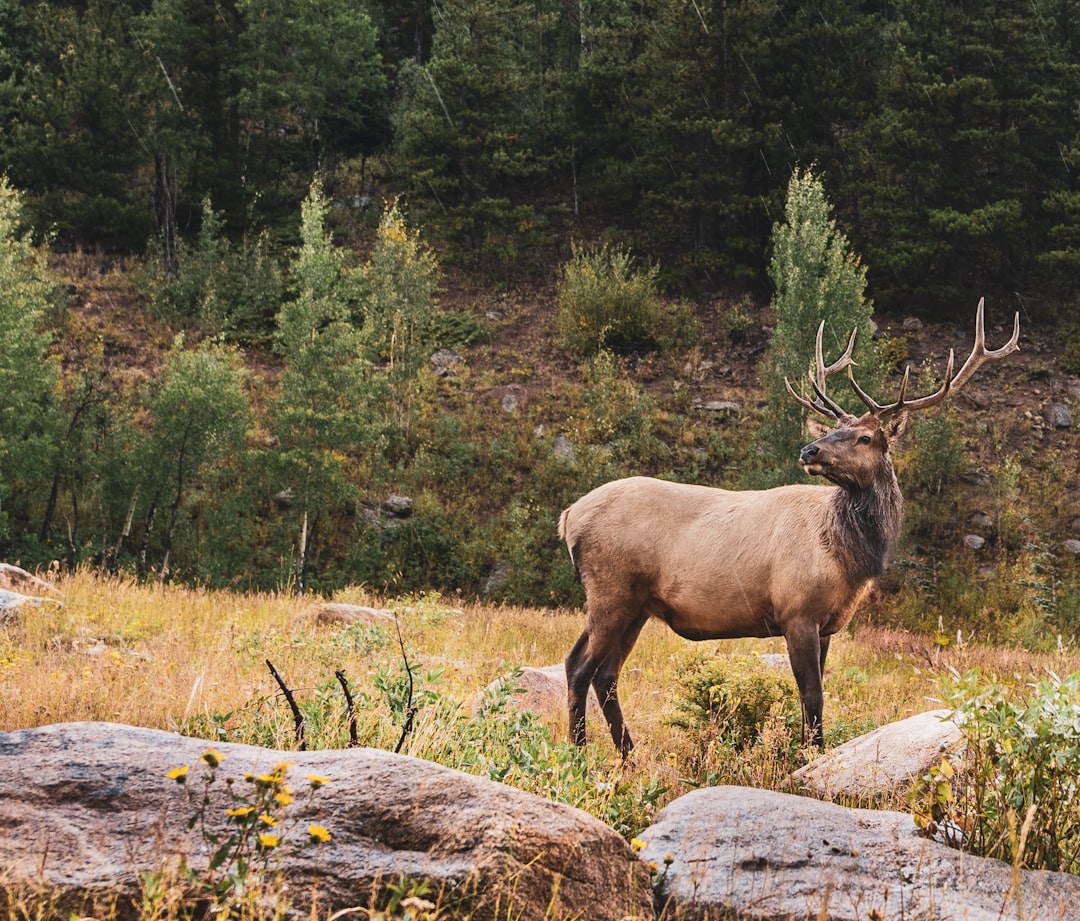
When elk appear, they tend to emerge from the woods unhurried. A cow steps into the open. Then another. A bull follows at his own pace. During the fall rut, the bulls bugle—a sound that carries across the valley floor and sounds nothing like what you'd expect from an animal that size. It's high-pitched, eerie, and it changes the meadow completely.
Dawn works the same way. The elk move into the fields as the sun comes up, and the mist that sits in the valley at first light turns the whole scene into something you couldn't have planned. The difference is you have to commit to the early alarm and the dark drive in.
But the thing most visitors don't account for is how quickly the light window closes. The elk don't build gradually toward some peak viewing moment. They're either out or they're not, and the visitors who stay fifteen minutes past their patience tend to be the ones standing in the right meadow when the herd finally moves.
Cataloochee's elk are wild animals in an active recovery program that started in 2001 when the first herd was reintroduced to these mountains. The population has grown, but the valley's ground rules exist because the program works only if the animals stay wild.
Federal regulations require a minimum distance of 50 yards—150 feet—from any elk. Walking into the meadow fields is prohibited when elk are present, and during calving season and the fall rut, the fields close entirely to foot traffic. These are not suggestions. Fines and arrests happen.
The safest and best viewing happens from the roadside or from your vehicle. During the rut—mid-September through the end of October—bull elk actively defend territory. They charge. They spar. They do not distinguish between a rival bull and a person who wandered too close for a photo. Stay near something you can put between yourself and a bull if one decides to walk your direction. Your vehicle is the best option.
Binoculars or a spotting scope change the experience entirely. From a respectful distance, you see detail you'd miss up close—how the herd communicates, how the calves stay close, how a bull's posture shifts when another male enters the meadow. The distance is not a limitation. It's where the real watching happens.
Two versions of the same valley. One moves through it, reads its history in the buildings and the creek bends and the meadow light, and accepts whatever wildlife appears along the way. The other sits still until the valley decides to show you what it holds. Neither version owes you elk. But both leave you understanding why a herd was brought back to this ground—and why the people who come here regularly keep choosing the same pull-off, the same hour, the same quiet hope that tonight is the night the meadow fills.
The valley doesn't perform on schedule. That's not a flaw in the plan. That's the plan.
Best viewing windows: Early morning (sunrise) and the last hour before dark. Elk may also be active on overcast summer days and before or after storms. Winter is the least reliable—the herd retreats to the woods for days or weeks at a time.
Peak season: Mid-September through late October (the rut). Bulls bugle, spar, and gather cows in the open meadows. This is when the valley is most dramatic—and most crowded.
Calving season: Late May through June. Cows hide calves in high grass. Stay out of the fields entirely. Cows defending young are aggressive and unpredictable.
Getting there: Cataloochee Valley sits in the southeastern corner of Great Smoky Mountains National Park. The entrance road from Cove Creek is narrow, winding, mostly gravel, with steep drop-offs and no guardrails. Allow extra time and drive slowly. You may need to stop or back up for oncoming vehicles.
Road conditions: As of April 2025, the road was partially reopened following Hurricane Helene damage. Vehicle access extended to the Beech Grove School area; the upper valley road past the bridge near the schoolhouse was closed to vehicles, requiring a hike to reach the Caldwell House. Campgrounds remained closed. Check nps.gov/grsm for current conditions before visiting.
Cell service: Extremely limited to nonexistent in the valley. Download maps and directions before you leave service range.
What to bring: Binoculars or a spotting scope, layers (the valley sits at elevation and temperatures drop fast at dusk), a headlamp or flashlight for the walk back to your vehicle after dark, and patience—this is not a zoo viewing platform.
Wildlife distance law: 50 yards (150 feet) minimum from elk. Do not enter fields. Do not approach, feed, or bait elk. Antler removal from the park is illegal.
Want to feature your business on the DirectStay Blog?
Want to feature your business on the DirectStay Blog?

Connect with travelers, share your space, and join a community of hosts earning together.