

 DirectStay
The Brandywine Valley's garden corridor filters by what you want a garden to do to you. At Longwood Gardens in Kennett Square, the landscape announces itself — choreographed fountains cycling through timed sequences, acres of conservatory under glass, and grounds that treat horticulture as performance. The scale alone changes your breathing. You walk paths engineered so every sightline resolves into something deliberate. But cross the state line into Delaware, and the ground shifts beneath your expectations. There's a version of this same landscape that doesn't perform at all — that asks you to notice instead of watch. And a third, quieter still, where the plants aren't arranged for your benefit but for something the region is trying to remember.
Three gardens. Three philosophies. All within a short drive of each other, all drawing from the same du Pont–era estate tradition, and all answering a question most visitors don't realize they're carrying until they arrive: do you want to be impressed, absorbed, or taught?
Longwood Gardens operates on a different premise than most public gardens. The grounds exist to astonish. That's not a criticism — it's the design intent, and the execution earns it.
The Main Fountain Garden runs programmed displays that turn water into choreography. The jets reach heights that make you recalibrate what a garden fountain means. The timing, the synchronized arcs, the way the whole composition resets and begins again — this is infrastructure-scale beauty, and it lands differently than a pretty border planting.
Inside the conservatory, the climate shifts. The West Conservatory, which opened in late 2024, houses a Mediterranean garden under glass — planted islands set on pools of water, connected by canals and low fountains, the whole structure appearing to float. The transition from outdoor mid-Atlantic woodland to arid-climate horticulture happens gradually enough that you don't notice you've crossed hemispheres until you're standing among bay laurels and coastal California succulents.
The outdoor gardens follow the same logic of designed revelation. Meadow gardens open suddenly after wooded stretches. The Italian Water Garden creates formal geometry that could pass for a villa outside Florence. Over eleven hundred acres means you can spend a full day and still turn a corner into something you haven't seen.
What Longwood asks of you is attention to craft at scale — what happens when horticultural ambition meets a century of institutional refinement.
Winterthur takes the opposite approach. The thousand-acre grounds surrounding the du Pont family home were designed to look as though no one designed them at all.
Henry Francis du Pont spent decades arranging the garden so it would feel discovered rather than presented. The Azalea Woods — one of the defining spring experiences in the Mid-Atlantic — bloom in layered color that feels accidental, as if the hillside simply decided to do this. It didn't. Every planting was chosen for how it would look from specific vantage points, how the colors would layer at different distances, and how the bloom sequence would carry from early April into May.
But the effect works precisely because you can't see the engineering. Walking the garden vistas at Winterthur feels like moving through a landscape that existed before you arrived and will continue after you leave. The scale is comparable to Longwood, but the experience compresses — where Longwood opens outward, Winterthur folds inward. You find yourself moving more slowly. The paths narrow. The canopy closes. A bench appears at exactly the moment your legs want one.
The museum inside the house holds one of the country's most significant collections of American decorative arts, and it's worth seeing. But the garden is the argument. If Longwood proves what human ambition can build, Winterthur proves what human restraint can reveal.
Mt. Cuba Center sits in Hockessin, Delaware, and it operates on a premise that neither Longwood nor Winterthur shares: the plants are the point, and the point is what they can teach.
This is a native plant research garden. The trial gardens test which native species perform in Mid-Atlantic conditions — which tolerate drought, which attract pollinators, which survive clay soil. The results inform regional planting recommendations that home gardeners and conservation projects actually use. When you walk the trial beds, you're not looking at decoration. You're looking at data that happens to bloom.
The scale is more intimate than either Longwood or Winterthur. The scenic ponds reflect the surrounding woodland. The paths move through a curated landscape, but the curation serves ecology, not spectacle. The trial garden results — published in detailed research reports covering dozens of species and cultivars — inform what home gardeners and land managers plant across the region.
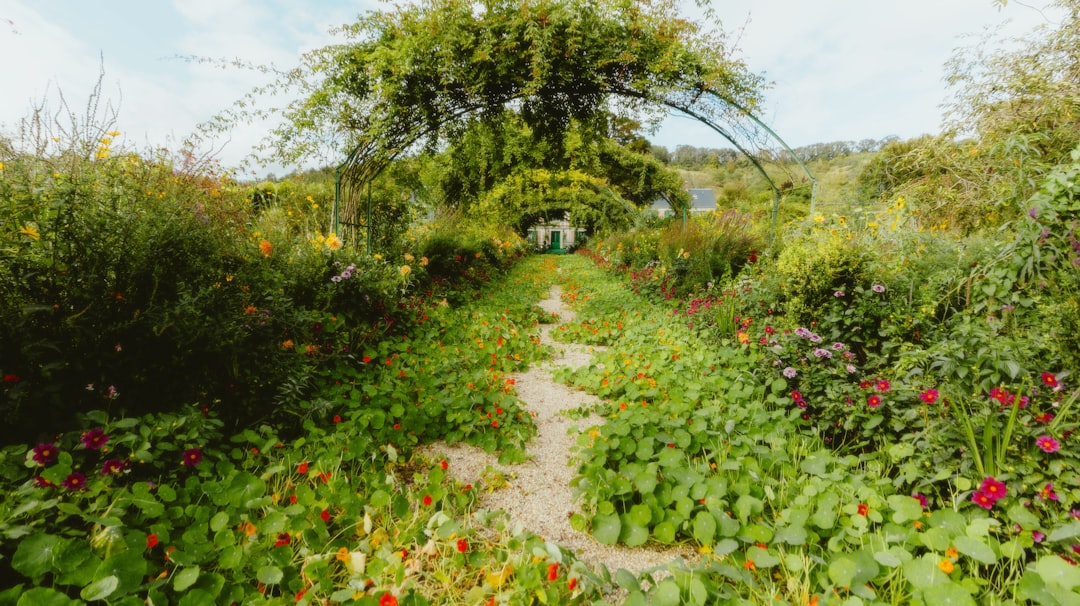
Seasonal tours run at Mt. Cuba, and the spring wildflower display draws visitors who know what they're looking at. The native azaleas, trilliums, and Virginia bluebells don't compete with Longwood's fountain show, and they aren't trying to. They're making a different case entirely — that the Brandywine Valley's most interesting garden might be the one growing what was already here before the estates arrived.
This is the question the corridor forces. All three require advance planning. But they serve different cognitive needs.
If you want to be overwhelmed — in the best sense, the way a cathedral overwhelms — Longwood is the answer. The spectacle earns its scale. You leave having seen things that gardens in other regions simply can't do.
If you want to disappear into a landscape and emerge slower than you entered, Winterthur does something no amount of choreography can replicate. The designed naturalism works on a part of your brain that doesn't care about fountain timing.
If you want to learn something — about native ecosystems, about what grows here without intervention, about the difference between a garden that performs and a garden that functions — Mt. Cuba Center is the visit that changes how you look at your own yard afterward.
Most visitors to the Brandywine Valley pick one. The corridor rewards people who pick at least two, because the contrast is where the insight lives.
Longwood Gardens: 1001 Longwood Rd, Kennett Square, PA. Timed tickets required — book in advance, especially during spring bloom season (April–May) and A Longwood Christmas (November–January). Fountain show evenings historically sell out fastest. Check current ticket availability and pricing at longwoodgardens.org.
Winterthur Museum, Garden & Library: 5105 Kennett Pike (Route 52), Winterthur, DE. Timed entry during peak seasons. The spring bloom calendar — particularly the Azalea Woods from April into May — draws the highest visitation. The museum and garden are typically open Tuesday through Sunday; the estate closes for part of winter. Check current hours, admission, and seasonal programming at winterthur.org.
Mt. Cuba Center: 3120 Barley Mill Rd, Hockessin, DE. Open for general admission Wednesday through Sunday, typically April through November — the gardens close for winter. Spring wildflower season sees the highest demand; Wildflower Weekend draws concentrated visitation. Verify current visiting dates and tour availability at mtcubacenter.org.
Planning sequence: All three require advance tickets or timed entry during peak seasons. If visiting multiple gardens in one trip, book days — not weeks — ahead for shoulder season, but weeks ahead for peak bloom windows. Fountain show evenings at Longwood and spring weekends at all three sites fill earliest.
Parking: Each garden has on-site parking. No shared shuttle or transit connects the three — plan for separate drives between each.
Lodging note: The garden corridor draws visitors across a long spring season, and weekends during peak bloom compress nearby availability. Planning accommodations in advance opens up quieter, more spacious options in the surrounding communities — arrive early, build a full day around one or two gardens, and treat the drive home as the decompression.
Want to feature your business on the DirectStay Blog?
Want to feature your business on the DirectStay Blog?

Connect with travelers, share your space, and join a community of hosts earning together.
Become a host