

 DirectStay
What kind of history you reach for in the Brandywine Valley reveals your priorities before you realize it. At Brandywine Battlefield State Park in Chadds Ford, the grass still rolls over the terrain where Washington headquartered before the largest single-day engagement of the Revolution — and you walk that ground at your own pace, reading the slope and the creek crossing that shaped his defense. Then there's the version where the land never stopped working. At Hagley Museum, du Pont-era powder mill ruins line the Brandywine Creek like the skeleton of an industry that built a dynasty. And at First State National Historical Park, colonial-era fields settled by Quaker immigrants still hold their agricultural shape centuries later — the landscape functioning as a living archive rather than a preserved monument. Three sites, same valley, and each one asks you to read the ground differently.
Brandywine Battlefield State Park sits along Route 1 in Chadds Ford, Pennsylvania, on fifty-two acres where the Continental Army encamped before the clash with British forces on September 11, 1777. What catches most visitors off guard is how little the terrain has changed. The ridgeline where Washington positioned his defense, the creek crossing at Chadds Ford that he chose to hold, the ground where Knox placed artillery on both sides of the water — all readable in the landscape if you know what you're standing on.
The park holds two historic structures — Washington's headquarters (the Benjamin Ring House) and the Gideon Gilpin House — with guided interpretation during operating hours. But the self-guided walk across the field is where the site earns its weight. There's no velvet rope between you and the ground. You stand where artillery positioned. You trace the sightlines that commanders used. Any morning you show up, the battlefield is yours to walk without spectacle, without performance, and without anyone telling you what to feel about it.
Hagley Museum and Library occupies 235 acres along the Brandywine Creek in Wilmington, Delaware — the original site of the du Pont gunpowder works that launched one of the most consequential industrial dynasties in American history. The ruins do the narrating here.
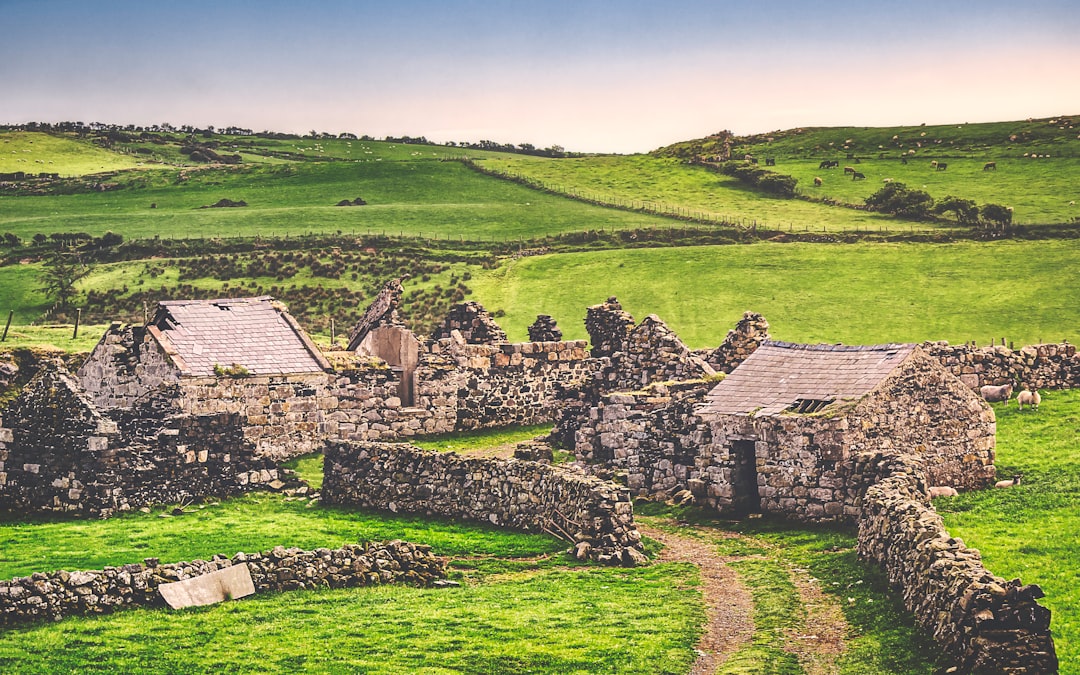
Stone mill buildings line the creek bank in various states of preservation — some restored to demonstrate the powder-making process, others left open to weather and root systems. The workers' community sits uphill from the mills, arranged in the spatial hierarchy that defined early American industrial labor. You walk the same path workers walked from homes to the mill floor, and the grade change tells you something about who lived where and why.
Eleutherian Mills, the du Pont ancestral home, sits at the top of the property. The view from the house down to the water captures the entire arc — residence above, production below, the creek powering all of it. What makes Hagley distinct from the battlefield is the texture of the ruin. At Brandywine Battlefield, the landscape is intact because nothing was built on it. At Hagley, the landscape is layered — nature reclaiming industry, stone walls holding shape against decades of creek weather, mill ruins standing open beside restored nineteenth-century machinery that still runs for demonstrations.
First State National Historical Park operates across multiple units in Delaware and Pennsylvania, but the Brandywine Valley unit — more than 1,300 acres adjacent to Brandywine Creek State Park — is the piece that belongs in this conversation. Quaker settlers who followed William Penn established farms here in the early 1700s, and the agricultural character of the land never fully disappeared. What you walk through today are rolling fields, pastures, forested hills, and stone walls that still trace colonial-era property boundaries.
There's no battlefield marker. No industrial ruin. No ancestral mansion. The historical significance lives in the continuity of the landscape itself. When industrialist William Poole Bancroft began purchasing this land from farmers in 1906, his goal was preservation — holding the valley's green space in reserve for public use. That purchase, and the eventual donation to the National Park Service in 2013, means the field patterns and stone farmhouses that Quaker immigrants built in the eighteenth century are still legible in the terrain.
Walking these acres feels different from the other two sites because there's less to interpret and more to observe. The land doesn't perform its history. It holds it quietly — in the grade of the pastures, the placement of the walls, the way the creek corridor organizes everything around it. That's not a monument. That's a landscape that outlasted every institution built on top of it.
The axis connecting these three sites isn't chronology — it's how history survives in the landscape. At Brandywine Battlefield, through absence: the encampment ground was never developed, so the terrain itself is the primary document. At Hagley, through ruin: industrial infrastructure decayed but held its shape. At First State, through continuity: the land was never abandoned, never monumentalized, never allowed to become anything other than what it started as.
Each site asks something different. The battlefield asks you to imagine what happened. Hagley asks you to read what remains. First State asks you to notice what never changed. All three reward preparation — knowing what the Battle of Brandywine actually decided, understanding the du Pont powder trade's reach, or grasping what Penn-era land tenure meant for colonial governance.
Families with children will find the battlefield and Hagley the most immediately engaging — the open field invites running, and the mill ruins hold younger attention. First State rewards patience and suits visitors who find meaning in subtlety.
Brandywine Battlefield State Park: 1491 Baltimore Pike (Route 1), Chadds Ford, PA 19317. Self-guided grounds access during park hours; historic structures have separate tour schedules. Admission applies. Confirm current hours and tour availability at brandywinebattlefield.org.
Hagley Museum and Library: 298 Buck Road, Wilmington, DE 19807. The 235-acre grounds include outdoor walking paths, mill ruins, garden areas, and the Eleutherian Mills residence. Admission applies. Confirm current hours at hagley.org.
First State National Historical Park: Multiple units across Delaware and Pennsylvania. The Brandywine Valley unit (more than 1,300 acres) is accessible year-round with no admission fee. More than 23 miles of recreational trails. Confirm current access and trailhead parking at nps.gov/frst.
Planning the three together: The battlefield and Hagley are each half-day visits if you walk the full grounds. First State's Brandywine Valley unit is shorter — an hour or two on foot. All three in one day is possible but compresses the experience.
Parking: Each site has its own parking. The battlefield and Hagley have dedicated lots. First State trailhead locations vary — check the NPS site map.
Lodging note: The Chadds Ford and Wilmington corridor sees elevated demand during fall reenactment weekends and peak garden season. Planning accommodations in advance — particularly in surrounding communities — gives the trip a pace that matches what these sites ask of you.
The Brandywine Valley doesn't separate its scenery from its history because it never could. The battlefield is a landscape. The mill grounds are a creek walk. The farm fields are a nature trail that happens to predate the nation. What shifts between the three isn't the valley — it's what you're willing to notice about the ground under your feet. That's the choice these sites surface. Not where to go first, but how to look when you get there.
Want to feature your business on the DirectStay Blog?
Want to feature your business on the DirectStay Blog?

Connect with travelers, share your space, and join a community of hosts earning together.
Become a host