

 DirectStay
Spring at Biltmore Estate in Asheville pivots on a question most visitors answer too early: when, exactly, is the right week? The Walled Garden draws people from across the country every April, and the pull is real — tens of thousands of tulips arranged in geometric beds against a backdrop Frederick Law Olmsted spent years shaping. That mid-April window, when the tulips peak, is what fills the estate parking lots and backs up the Approach Road by late morning. But Biltmore Blooms runs late March through May, and the gardens don't hold still. Before the tulips open, orchids fill the Conservatory and daffodils take the Walled Garden in waves. After them, wisteria drapes the pergola, and the Azalea Garden — fifteen acres of color that most visitors never reach — hits its stride in early May. The estate is never between blooms. It's always in the middle of a different one.
Biltmore Blooms is not a standalone festival with stages and fences. It's a seasonal designation — the estate's way of naming what the gardens do every spring on their own. From late March through late May, the grounds move through a bloom progression that Olmsted and generations of horticulturists have cultivated across more than seventy-five acres of designed landscape. The gardens were his final project, and the seasonal sequencing was part of the design from the beginning.
What changes is less about the estate adding things and more about visitors arriving in higher concentrations, with narrower expectations about what they'll see and when.
The house tour doesn't change. The Winery doesn't change. Antler Hill Village doesn't change. But the gardens — the Walled Garden, the Conservatory, the Azalea Garden, the Rose Garden, the Spring Garden — each move through their own cycle, and the week you visit determines which version of Biltmore you walk through.
Asheville's spring tourism accelerates during Biltmore Blooms. Lodging pressure builds, especially around peak tulip weeks in mid-April and Easter weekends. The estate itself absorbs thousands of visitors daily during peak windows, and that traffic ripples outward — into downtown restaurant wait times, into I-26 and I-40 congestion, into the availability of the rental you had your eye on.
The effect is real but not uniform. Weekdays during Biltmore Blooms feel measurably different from weekends. Early-season weeks in late March feel different from the mid-April crush. And by early May, when the tulips are gone and the azaleas take over, the crowds thin noticeably — even though the gardens are arguably at their most expansive.
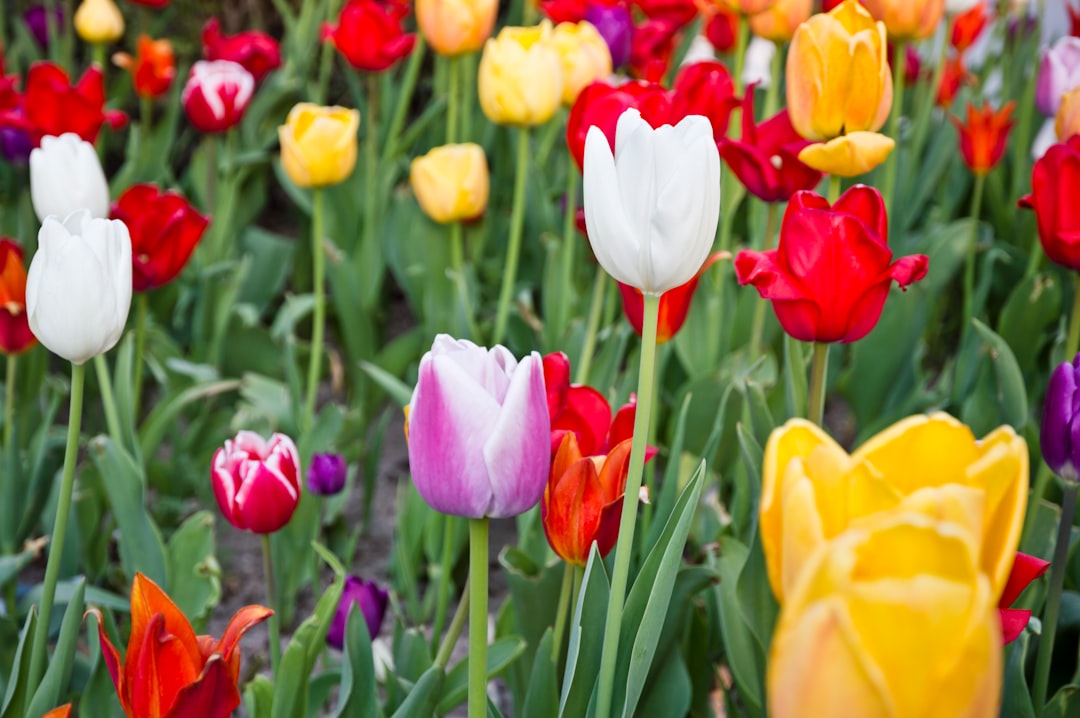
If you're coming specifically for tulip color, mid-April is the window. The Walled Garden holds tens of thousands of tulips in patterned beds — purples, pinks, whites, oranges, yellows — and when they peak, the garden earns every photograph taken of it. Dogwoods and redbuds fill the surrounding tree line. The Approach Road is lined with flowering cherries. The whole estate leans into a single, concentrated statement of spring.
This is the Biltmore Blooms that most people picture, and it delivers.
What it also delivers: the highest visitor density of the season. The Walled Garden draws crowds by mid-morning. The Conservatory pathway backs up. Parking lots fill and the shuttle system works harder. If you're photographing the garden beds without other visitors in the frame, you're arriving at opening or you're waiting.
None of this means the peak window isn't worth it. It means the peak window requires a different kind of planning — and a different tolerance for sharing the experience.
But the pattern that regulars follow is simpler than it looks: arrive early in the day, start in the gardens before the house tour, and let the crowds flow toward the Walled Garden while you walk the opposite direction — through the Spring Garden, toward the Azalea Garden, where the pace drops and the canopy closes in.
The weeks on either side of peak tulips hold a different kind of Biltmore — one most visitors don't plan for because they don't know it exists.
Late March and Early April: The Conservatory opens the season with orchids and tropical displays inside the glass-roofed structure designed by Richard Morris Hunt. Outside, kobus magnolias bloom near the house. Daffodils — around fifteen thousand of them — arrive in the Walled Garden ahead of the tulips, along with hyacinths and early bulbs. The forsythia lights up the Spring Garden. The estate is waking up, and you can feel the acceleration without the congestion.
This early window tends to draw fewer visitors. The garden beds aren't at their most photogenic — the tulips haven't opened yet, and the beds are still filling in. But the trade is space. You walk the Walled Garden at your own pace. The Conservatory feels like a private visit. The horticulture team is often visible, working the beds, and the behind-the-scenes energy of a garden in motion is something peak week never shows you.
Late April and Early May: After the tulips finish, the estate doesn't pause — it shifts. Wisteria drapes the pergola near the Winery. The Azalea Garden, fifteen acres of winding paths through native azaleas and dawn redwoods, builds toward a peak that rivals the tulips in scale but draws a fraction of the visitors. By early May, the azaleas are at full color across the garden that Chauncey Beadle built starting in 1930, and the paths are quiet enough that you hear the birds before you hear other people.
The Rose Garden follows. Peonies and irises fill the Walled Garden beds where the tulips stood weeks earlier. By late May, the estate is lush and full, the summer annuals are being planted, and the season feels like it's exhaling rather than performing.
"Peak bloom" is not one week. The estate cycles through multiple peak moments — tulips in mid-April, azaleas in early May, roses in late May. Visitors who plan around a single peak often miss the fact that the garden is always peaking at something. Biltmore publishes a weekly Bloom Report from their Director of Horticulture starting each March — it's the single most useful planning tool available, and most visitors never check it.
The Walled Garden is not the only garden. It's the most photographed, the most accessible, and the most crowded. But the estate holds more than thirty acres of designed gardens, and visitors who stay in the Walled Garden area miss the Azalea Garden, the Bass Pond, the Spring Garden, and the Italian Garden — all of which are part of the same Olmsted design and hold their own seasonal rhythms.
Weekdays and weekends are different experiences. Weekend visitor counts during peak Blooms weeks can be significantly higher than weekday counts. A Tuesday in mid-April and a Saturday in mid-April are the same garden at different volumes. For visitors with scheduling flexibility, a weekday visit during the peak window can deliver peak color at shoulder-week pace.
The estate is large enough to absorb crowds — if you move through it. Congestion concentrates in the Walled Garden and the house tour. Visitors who walk beyond the Conservatory toward the Azalea Garden, or who explore the Bass Pond trail, or who drive to Antler Hill Village first and work backward — those visitors experience a different density than the ones who follow the default path.
Biltmore debuts Luminere in 2026, an outdoor evening experience that illuminates the estate grounds with light and sound after dark. It launches March 26 and runs on select nights into fall. Some ticket types combine daytime garden access with evening Luminere admission, which means a spring visit can now hold two distinct experiences — the gardens by daylight and the grounds transformed after sunset.
2026 Dates: Spring at Biltmore runs March 26 through May 21, 2026. Biltmore Blooms is included with standard daytime admission — there's no separate event ticket for the spring gardens.
Bloom Progression (typical year): Late March → Orchids (Conservatory), magnolias, early bulbs Early April → Daffodils, first tulips, forsythia, flowering cherries Mid-April → Peak tulip season in Walled Garden, dogwoods, redbuds Late April → Late tulips, wisteria under pergola, early azaleas Early May → Peak azalea bloom (Azalea Garden, fifteen acres) Late May → Rose Garden peaks, summer perennials, poppies
Bloom Report: Biltmore publishes regular bloom updates from their Director of Horticulture beginning each March. Check biltmore.com/bloom-report before finalizing your visit dates.
Parking: Included with admission. Lots A and B are closest to the house and gardens (eight- to ten-minute walk). Lot E has shuttle service directly to the front of Biltmore House. Separate parking is available near the Conservatory for visitors focused on the Walled Garden. Weekend lots fill earlier during peak Blooms weeks — arrive before mid-morning or plan to shuttle.
Getting Around the Estate: The estate covers thousands of acres. A Garden Shuttle runs from Biltmore House to the Conservatory area (April through December). Biltmore Connect shuttle service is available for an additional fee and connects the ticketing center, house, Antler Hill Village, and other estate stops. Walking between the Walled Garden and the Azalea Garden takes roughly fifteen to twenty minutes downhill — and uphill coming back.
Lodging Pressure: Spring is Asheville's tightest lodging season. Peak tulip weeks and Easter weekends book earliest. Visitors planning around Biltmore Blooms should book lodging well ahead — particularly if visiting mid-April. Shoulder weeks (late March, early May) offer more availability and often lower rates.
Time Needed: A garden-focused visit during Blooms takes a minimum of three to four hours. Visitors who also tour the house, visit Antler Hill Village and the Winery, and explore the farther gardens can fill a full day. A second-day return — available with some ticket types — lets you split the house tour and the garden walk across two mornings.
The gardens at Biltmore don't wait for you to arrive at the right moment. They're already moving — one bloom handing off to the next, one garden peaking while another is just starting. Whether you come for the tulips at their loudest or for the azaleas in the quiet weeks after, the question isn't whether you'll see the estate at its finest. The question is which version of finest you came for. Olmsted designed these grounds to reward any week of spring. The garden doesn't have a wrong time. It just has yours.
Want to feature your business on the DirectStay Blog?
Want to feature your business on the DirectStay Blog?

Connect with travelers, share your space, and join a community of hosts earning together.