

 DirectStay
A work trip to Asheville hits a fork the moment you open your laptop. One path drops you into the hum of South Slope, where Switchyards sits inside a converted warehouse with barrel ceilings and the kind of ambient energy that makes a video call feel like you're somewhere worth being. You finish a meeting and walk straight into a conversation you didn't plan with someone building something you hadn't heard of.
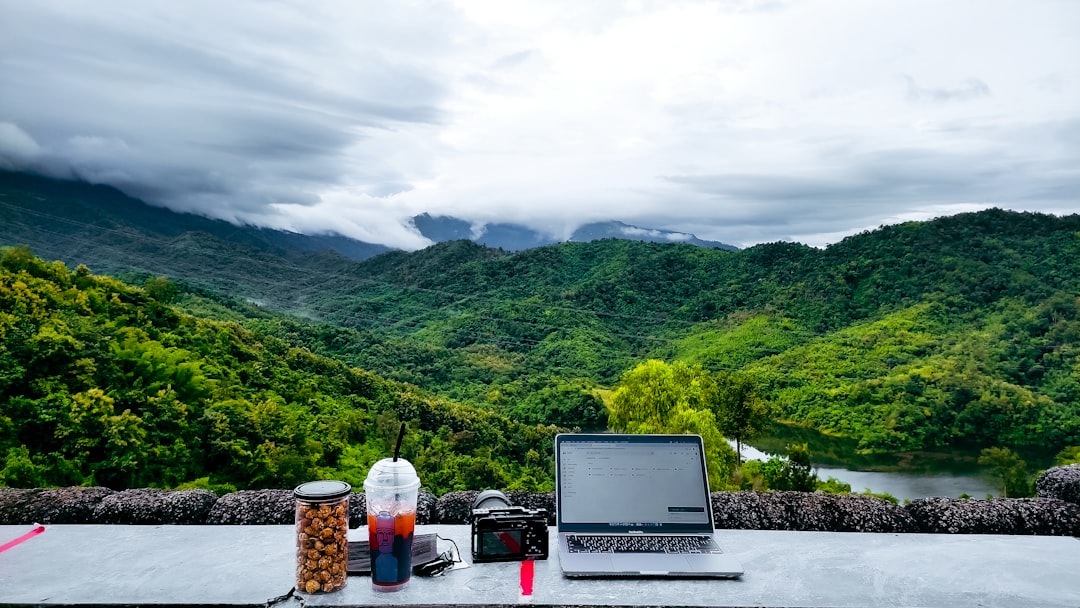
The other path pulls you toward the edge — somewhere the morning belongs to you before anyone else claims it. No brewery crowd building outside the window. No foot traffic pulling your attention every eight minutes. Just the screen, the quiet, and a coffee shop where nobody's performing their workday for an audience. Most business travelers in Asheville pick one of these without realizing they've already decided what kind of work they're here to do.
Asheville runs on a rhythm most visitors never notice — until it changes. Several times a year, events compress downtown in ways that rewrite the logistics of a normal workday. Parking tightens. Foot traffic doubles. The coffee shop that was half-empty on Tuesday is standing-room by Wednesday because eleven thousand people arrived overnight for a craft fair that takes over the convention center twice a year.
If your work trip overlaps with one of these windows, knowing ahead of time isn't optional — it's the difference between a productive week and a frustrating one. Road closures reroute your morning commute to the coworking space. The restaurant you planned for a client dinner fills three days earlier than usual. The ambient energy downtown, which normally fuels a good work session, tips into the kind of density that makes a focused afternoon impossible.
None of this is a reason to avoid Asheville during event weeks. But it changes which side of the fork serves you better. The surrounding towns — the same ones that give you quiet on a normal week — become genuinely strategic when downtown is running hot. Arriving early, parking once, and building the downtown portion of your day into a tighter window isn't a workaround during event weeks. It's the only version that works.
Here's what to watch for:
The Asheville Marathon reshapes downtown road access for an entire morning and compresses parking into a smaller footprint than most visitors expect. If your work trip lands on race weekend, the peripheral towns aren't just quieter — they're faster. → [PASTE URL HERE]
The Craft Fair of the Southern Highlands brings roughly 11,000 visitors to the US Cellular Center area twice a year — once in July, once in October. Downtown foot traffic, restaurant wait times, and parking all shift noticeably for several days. Plan coworking and client meetings around it, not through it. → [PASTE URL HERE]
[ADDITIONAL EVENT ARTICLE — paste title and URL here] → [PASTE URL HERE]
[ADDITIONAL EVENT ARTICLE — paste title and URL here] → [PASTE URL HERE]
[ADDITIONAL EVENT ARTICLE — paste title and URL here] → [PASTE URL HERE]
Checking the event calendar before booking your work trip takes two minutes. Not checking it costs you a day.
Downtown Asheville has built real infrastructure for people who need to be productive away from home. Switchyards, on Coxe Avenue in the South Slope district, runs around the clock — the doors never close, the Wi-Fi never hesitates, and the coffee stays free. The space was designed to feel like a coffee shop, a college library, and a boutique hotel lobby folded into one, which means you can shift from a focused morning at a quiet desk to an afternoon in a communal zone without leaving the building.
A few blocks away, Hatchworks sits in the French Broad corridor, sharing a building with tech companies, restaurants, and a movie house. Phone booths and five conference rooms solve the one problem every remote worker dreads: the mid-afternoon client call with no walls. Hatchworks includes free parking — a genuine rarity in downtown Asheville that changes the math on the whole day.
THRIVE lives on the second floor of the Grove Arcade, a 1929 building that still carries the weight of its own architecture. The ceilings do something to the way you sit up in your chair.
If your work trip runs on spontaneous meetings, walkable lunches, and the kind of energy that comes from being surrounded by people doing things, downtown earns its pull. The density is real. The coffee is within reach. The calendar fills itself.
For most business travelers, downtown is the reflex. It puts everything within walking distance: coworking, restaurants, the client dinner, the morning coffee that sets the tone. The logic is sound. If your trip is built around face-to-face meetings, networking, or the kind of work that breathes better in shared air, downtown Asheville delivers without friction.
And the Wi-Fi concern that haunts mountain towns barely applies here. Downtown coworking spaces run fiber. The coffee shops that attract remote workers — Rowan Coffee downtown, Odd's Cafe in West Asheville — have invested in speeds that hold up through video calls because their regulars depend on it.
Nobody defaults downtown by accident. It's a reasonable instinct.
Here's what most work-trip visitors don't account for: Asheville's downtown is a leisure engine. It was built — and continues to evolve — to pull people out of their routines. Breweries open at noon. Restaurant patios fill by five. The foot traffic on a Tuesday afternoon carries the same energy some cities reserve for weekends.
That pull is the whole point if you're on vacation. But if you're trying to hold a thought for ninety minutes, the environment works against you. The ambient stimulation that makes downtown Asheville feel alive is the same force that fragments a deep-work afternoon into a series of interruptions you invited by sitting near a window.
The pattern that productive remote working regulars tend to follow is a split: downtown for the meetings and the meals, somewhere quieter for the hours that actually need your full attention.
East of Asheville, Black Mountain sits at the base of the range that gave it its name. The town runs on a different clock. The sidewalks are walkable, the coffee shops are real — The Dripolator has been roasting and serving since 1999, long enough that nobody's performing an aesthetic — and the Wi-Fi works because some of the people who live here work remotely too.
What changes is the ambient demand on your attention. A morning in Black Mountain doesn't compete with itself. You sit down, you open the laptop, and two hours pass before you look up. That's not poetry. That's the absence of the twelve micro-decisions downtown forces on you before lunch: which coffee shop, which route, which brewery patio is pulling a crowd already.
North of Asheville, Weaverville moves at a similar tempo. A few blocks of local shops, a handful of places to eat, and a quiet that doesn't feel isolated — it feels intentional. The kind of town where you finish a full workday and still have an evening left.
For the traveler whose trip depends on output — the proposal that needs unbroken hours, the strategy document that falls apart when you keep switching tabs — these towns aren't a fallback. They're the choice that matches the work.
The Asheville area is compact enough that a work trip can use both modes without a complicated commute. The pattern that tends to emerge: mornings and deep-work blocks from a quieter base, then a drive into downtown for the afternoon meeting, the coworking session that benefits from energy, or the dinner that doubles as business development.
Arriving downtown early, parking once, and building the face-to-face portion of the day into a single block keeps the logistics clean. The drive back becomes the decompression — the part of the day where the mountains do what they do without you having to schedule it.
This isn't a compromise. It's what happens when a work trip matches its environment to its task list instead of defaulting to the address with the most restaurants.
The fork is the same one every work trip eventually hits: do you need the room to buzz, or do you need the room to disappear? Downtown Asheville gives you the people, the pace, and the patio. The surrounding towns give you the hours back. The mountains don't care which one you pick — they just want you to know you had the choice before the week decided for you.
Coworking — Downtown: Switchyards (217 Coxe Ave, South Slope) runs 24/7 with free coffee and phone booths. Hatchworks (45 S French Broad Ave, Suite 170) includes free parking and day-pass access. THRIVE operates from the Grove Arcade. Check each space's site for current day-pass and membership rates — pricing structures vary and update periodically.
Coworking — West Asheville: Odd's Cafe (800 Haywood Rd) runs a small coworking space behind the cafe with private offices, dedicated desks, and 24/7 access for members. Worth knowing if your work trip lands you on the west side of town.
Coworking — Remote-Work Coffee Shops: Rowan Coffee (66 Broadway, downtown; also 785 Haywood Rd, West Asheville) and Odd's Cafe are known among remote workers for reliable Wi-Fi and seating that accommodates extended sessions. In Black Mountain, The Dripolator Coffeehouse has operated on the same stretch since 1999 — confirm payment methods before visiting. In Weaverville, Yellow Mug Coffee Lounge (113 N Main St) opens early and runs through early evening with Wi-Fi. Allgood Coffee (10 S Main St) closes at 2 PM — viable for morning work sessions only. Confirm hours before planning your day — seasonal adjustments are common.
Wi-Fi: Downtown coworking spaces and established coffee shops typically run fiber connections strong enough for video calls. In surrounding towns, speeds vary by specific location. If your work depends on uninterrupted bandwidth, test the connection before committing to a full workday at any coffee shop.
Parking — Downtown: Limited and metered in most of downtown Asheville. Hatchworks' free parking (98 spots) is a notable exception. Street meters and city garages are the norm elsewhere. Check the City of Asheville's parking page for current rates and garage locations.
Parking — Surrounding Towns: Black Mountain and Weaverville both have free street parking that rarely fills on weekdays. One less variable to manage.
Timing: Downtown Asheville's energy ramps up around midday and builds through the evening. If deep-focus work is the priority, the morning hours — before the lunch crowd — are the most productive window downtown. After noon, the ambient energy shifts toward leisure.
Lodging note: Work trips that extend beyond a few days tend to benefit from advance planning. Surrounding communities carry more space, quieter settings, and room to spread out — qualities that compound over a multi-day trip. Booking ahead opens up those options before peak-season availability tightens.
Want to feature your business on the DirectStay Blog?
Want to feature your business on the DirectStay Blog?

Connect with travelers, share your space, and join a community of hosts earning together.