

 DirectStay

Anchorage residents don't think of moose as wildlife. They think of them as infrastructure — the way people in other cities think of traffic, or weather, or the particular corner where the bus takes forever. Moose walk down sidewalks. They browse landscaping in cul-de-sacs. They block the Coastal Trail on a Tuesday morning in April and nobody honks because nobody honks at a moose. What catches first-time visitors off guard isn't the moose itself — it's the gap between how casual locals look while coexisting with one and how quickly that same moose can decide you are the problem. The rules for coexisting are simple, mostly unwritten, and the guests who learn them by Day 2 handle the encounter correctly on Day 3. The guests who don't learn them have a story to tell at dinner, which is sometimes the better version and sometimes not.
Anchorage's wildlife portfolio is deeper than most cities in the U.S., but three species shape how hosts prep guests before a trail day, a drive, or even a walk to dinner: moose, bears, and — at a different register — beluga whales.
Moose are the ones you'll see. Alaska Department of Fish & Game estimates 200 to 300 moose live in the Anchorage Bowl year-round, with the winter count rising to between 700 and 1,000 as deep mountain snow pushes animals down from the Chugach into the city. Counting the full Municipality (including Chugach State Park and JBER), the number runs closer to 1,600. More than 100 moose are killed in vehicle collisions in the Anchorage area each year. More people are injured by moose in Alaska than by bears — ADF&G documents fewer than 10 human injuries from moose charges per year statewide, but that's still more than bear injuries combined, a fact that surprises every first-time visitor and changes none of the photos they try to take anyway.
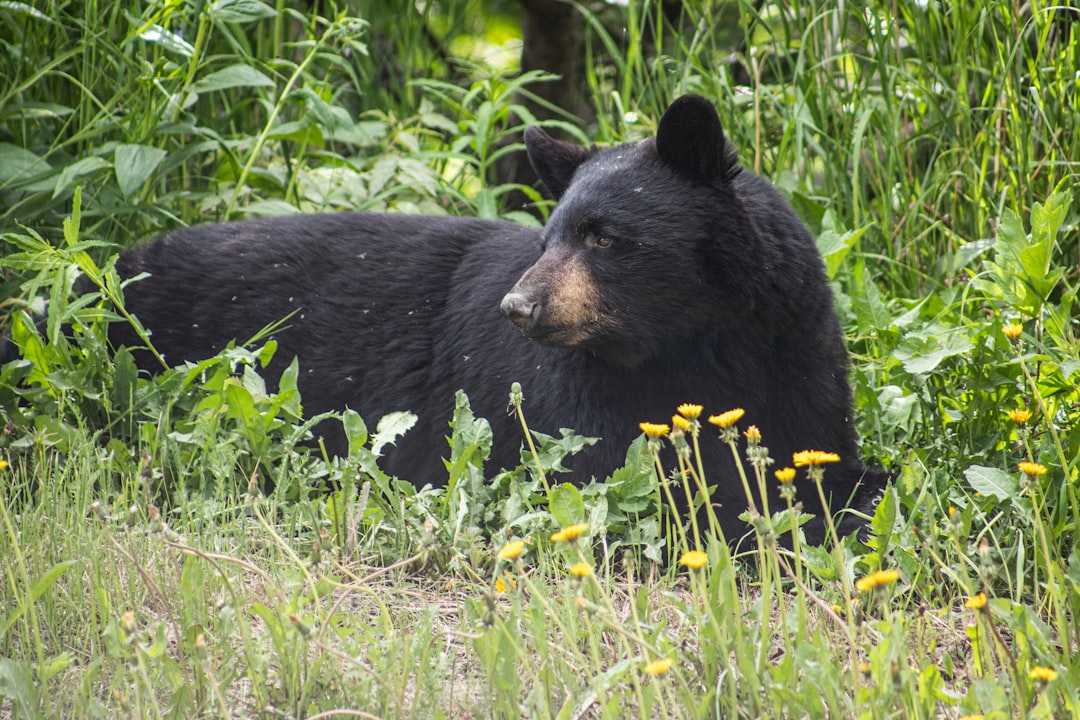
Bears are the ones you probably won't see in the city proper, but will absolutely be in the same landscape as on any hike above downtown. Both black bears (roughly 350 in the Anchorage area) and brown/grizzly bears (roughly 65) live in the Chugach and in parks and greenbelts across the Municipality. Fatal bear maulings near Anchorage are rare but not unheard-of — a 16-year-old was killed during a Bird Ridge mountain race in 2017, a hiker and a search-party member were attacked in the South Fork Eagle River Valley in 2018, and a soldier was killed in a remote JBER training exercise in 2022. Non-fatal maulings happen most summers, including two in a single week near Eagle River in July 2025. Both July 2025 incidents involved unleashed dogs.
Beluga whales are the third category — and the only one in this list that isn't a safety issue. Cook Inlet's endangered beluga population sits at roughly 350 animals. They surface along Turnagain Arm at Beluga Point (see Blog #21) and sometimes in the upper inlet off Ship Creek downtown. Nothing to do but watch.
This is the section hosts brief on most, because it's the encounter guests are most likely to have and most likely to get wrong.
Give moose space. The conservative rule from multiple agencies: stay at least 25 yards (75 feet) away. For a cow with a calf, or any moose showing agitation signs, double or triple that. The National Park Service standard at Kenai Fjords is 25 yards; Alaska Department of Fish & Game recommends more around cows with calves.
Know the two dangerous windows. Spring and early summer (May–June), when cows have newborn calves they will defend without hesitation. And fall (September–October), when bulls are in rut and territorial. Both windows produce the bulk of moose-related injuries in Anchorage each year. Winter is safer from an encounter standpoint but riskier on roads.
Read the signs. If a moose stops eating to watch you, you're too close. Laid-back ears, raised hackles, and a lowered head are escalation signs. Most charges are "bluff" charges — the moose is warning you to get back — but the warning should be taken seriously because the follow-through can kill you. A 71-year-old man was killed by a moose on the UAA campus in January 1995; more recent fatal incidents include a 2024 photographer in Homer.
If a moose charges, run. Unlike with bears, running from a moose is the correct response. They don't chase far. Get behind something solid — a tree, a parked car, a large rock. If it knocks you down, curl into a ball, protect your head with your arms, and stay still until the moose moves off. Moving while it's still close can trigger renewed stomping.
Never get between a moose and its escape route. If a moose is in a narrow space — a trail, a parking area, a yard — don't push it toward a fence or a wall. Let it have the exit.
If there's a single piece of Anchorage wildlife safety guidance that gets ignored the most and matters the most, it's this one: leash your dog.
Unleashed dogs escalate wildlife encounters in a specific, predictable way. For moose: the dog notices the moose, runs toward or barks at the moose, the moose charges the dog, the dog runs back toward the owner for protection, and the moose follows the dog straight at the human. For bears: an off-leash dog can surprise a sow with cubs and bring the attack back to the owner — the July 2025 Eagle River maulings followed exactly this pattern in both incidents. ADF&G has documented both patterns for decades.
Leashes are legally required on most Anchorage trails. This is not a dog-park standard being applied to a wilderness — it's a specific risk-management measure designed for a city where moose, bears, and dogs share the same corridors.
The thing that surprises people most about bear safety is how thoroughly it contradicts moose safety. Everything you just learned about moose — run, get behind something, curl up — is wrong for bears.
Carry bear spray on any hike beyond the downtown grid. Flattop. The Coastal Trail's wooded stretches. Eagle River Nature Center. Any trail in Chugach State Park. Bear spray is the primary non-lethal deterrent recommended by wildlife agencies and is consistently rated as one of the most effective tools for close-range encounters — a 2008 Alaska study by BYU biologist Tom Smith found bear spray stopped aggressive bear behavior in 92% of documented incidents. Mist range is typically 15 to 30 feet. When you see a bear and feel an attack may be imminent, pop the safety off; wait until the bear is within about 20 to 30 feet before spraying for 1 to 2 seconds, aimed slightly below the bear's head. Know how to deploy it before you need to.
Don't run from a bear. Running triggers pursuit behavior. Stand your ground, make yourself look large (raise arms, spread jacket), speak firmly but calmly, and back away slowly if the bear gives ground. If a brown bear charges and makes contact, and the attack is defensive (surprised bear, sow with cubs), play dead — lie on your stomach with your hands over your neck and legs spread to make it harder to flip you. If a black bear charges and makes contact, fight back — black bear attacks are rarer, but when they happen they're more often predatory. If any bear's attack becomes prolonged or predatory rather than defensive, fight back regardless of species.
Make noise in bear country. Most bear encounters are surprise encounters. Talking, singing, clapping, or using bear bells reduces the chance of startling a bear at close range. Don't use headphones on Chugach trails. The July 2025 Eagle River mauling happened in part because the ambient noise from the salmon-running river made it hard for the bear to hear the approaching hiker.
Food and garbage handling matters even in day-use. A bear that gets a food reward from a human source becomes a problem bear. Anchorage has working infrastructure for this (bear-resistant dumpsters in most campgrounds and trailheads); using it correctly keeps the system working. The Anchorage Bear Committee — a multi-agency coordination body established in 2001 — publishes current guidance and maintains reporting channels for aggressive or food-conditioned bear activity.
Moose encounter basics:
Minimum 25 yards (75 feet) from any moose; more for cows with calves or visibly agitated animals
Most dangerous windows: spring/early summer (calves) and fall rut (September–October)
If charged: run, get behind something solid; if knocked down, curl up and protect head
Never walk past a moose on a narrow trail — wait it out or turn back
Dogs always leashed; unleashed dogs are the single biggest escalator of Anchorage moose incidents
Bear encounter basics:
Carry bear spray on any hike off downtown pavement
Make noise, travel in groups, avoid headphones
Surprise encounters are the dangerous category — reduce surprise with sound
Do not run. Stand ground, look large, back away slowly
Brown bear defensive contact: play dead. Black bear contact: fight back. Any bear that becomes predatory: fight back regardless of species.
Bear spray deployment: safety off when bear is spotted; 1-2 second blast at 20-30 feet aimed slightly below head
Report aggressive or food-conditioned bear behavior to the Alaska Department of Fish & Game
Beluga whale viewing:
Cook Inlet belugas are endangered; current population around 350
Best viewing: Beluga Point on Turnagain Arm (see Blog #21), mid-July through August during salmon runs
Watch from pullouts or the bluff; do not enter the mudflats — tidal silt compacts around anything that sinks into it and has killed people (documented fatalities in 1978, 1988, 2013, and 2023)
Bring binoculars; belugas stay offshore
Official resources:
Alaska Department of Fish & Game wildlife safety pages: adfg.alaska.gov
Chugach State Park trail conditions and bear activity: dnr.alaska.gov/parks/aspunits/chugach
Report aggressive or injured wildlife to ADF&G at (907) 267-2257 (Anchorage office)
Kids and dogs:
Do not let children run ahead on Chugach trails; a running child looks like prey to a startled bear and like a threat to a startled moose
Dogs on leash on all trails and greenbelts — legally required, and the single most reliable encounter-prevention measure
Small dogs are particularly vulnerable to lynx and coyote on greenbelt trails; the leash rule protects them too
Seasonal patterns:
Spring (April–June): cow moose with newborn calves; high-risk moose window
Summer (June–August): peak hiking season; bears on all trails; make noise; salmon runs draw bears to streams
Fall (September–October): moose rut, bulls aggressive; bears are actively feeding pre-hibernation
Winter (November–March): high moose density in city neighborhoods; vehicle collisions peak
Hosts consistently brief wildlife protocol at check-in because the one-paragraph version of what you just read is the kind of thing that needs to land before the first trail day, not after. Guests staying in surrounding communities — Eagle River, Girdwood, the Hillside — are more likely to see moose on the property itself, which means the protocol starts at the driveway rather than at the trailhead. Booking ahead opens up properties in wildlife corridors where the experience is part of the stay, and the briefing is part of what distinguishes a good host.
The moose on the sidewalk isn't the story. The story is the moose you didn't see — the one in the willows around the corner from the trail, the one bedded down beside the neighbor's garage, the one the dog noticed two seconds before the human did.
Anchorage residents have made peace with living inside that reality. The guests who learn to read it fast enjoy the city more. The ones who don't, learn it anyway, just on the animal's schedule instead of their own.
Give them the space. Watch the cues. Leash the dog.
The rest takes care of itself.
Want to feature your business on the DirectStay Blog?
Want to feature your business on the DirectStay Blog?

Connect with travelers, share your space, and join a community of hosts earning together.
Become a host