

 DirectStay

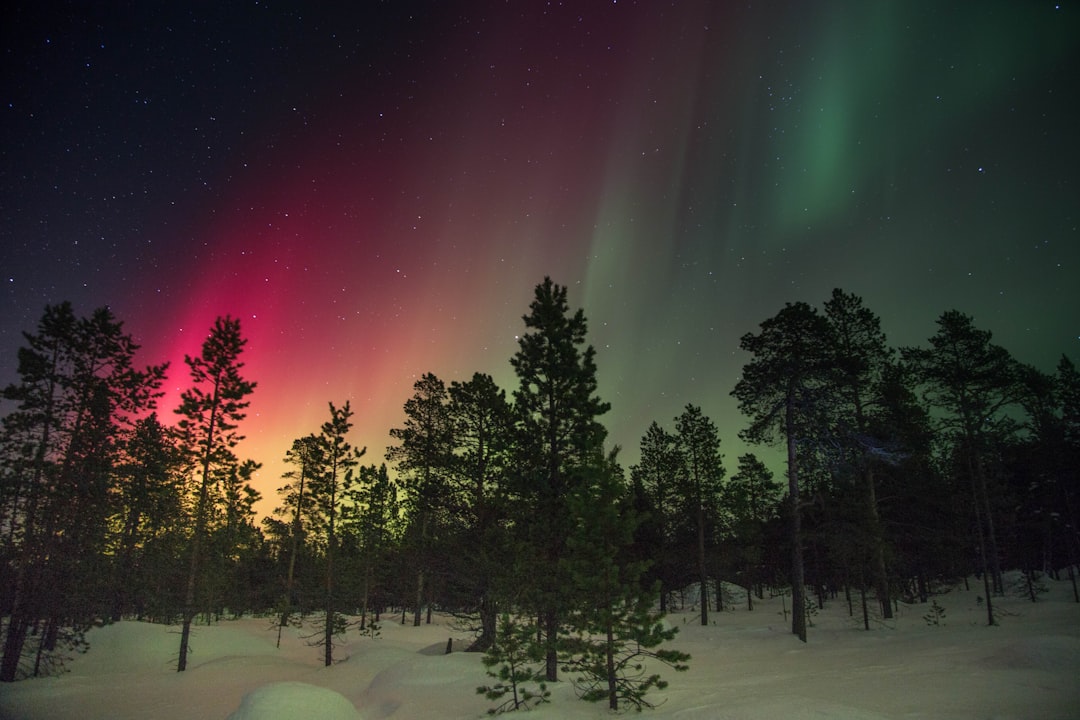
The difference between seeing the aurora over Anchorage and missing it is rarely luck — it's a decision you made three days earlier, and a second one you made after dinner. Most visitors arrive believing the lights will find them. Some nights that's true: the sky above Glen Alps opens into ribbons of green that fold and re-fold until your hands stop working in the cold. Then there are the other nights — the clear ones, the ones with a strong geomagnetic forecast, the ones where guests still see nothing because they stayed downtown, where the city glow washes out anything short of a major storm. Both nights started the same way. What separated them wasn't the sky. It was whether somebody checked the forecast before the second glass of wine, whether somebody had a car pointed north by ten, and whether this was night one of three or the only night scheduled.
The UAF Geophysical Institute runs an aurora forecast that's been the reference tool for Alaska sky-watchers since the mid-1990s — the model was developed by Syun-Ichi Akasofu and collaborators at UAF starting in the late 1970s, and the publicly available forecast launched in 1994. The daily Kp index — a number between 0 and 9 measuring geomagnetic activity — is the single most useful piece of information for planning a night. From Anchorage, Kp 4 or higher brings aurora to the northern horizon on a reliable basis; Kp 5 or higher puts it overhead; Kp 7+ produces displays strong enough to register from within city limits. Below Kp 4, Anchorage is working against geography — the main auroral oval sits too far north to deliver.
The second source hosts check is the NOAA Space Weather Prediction Center's 30-minute aurora forecast, which shows the predicted position of the auroral oval over the next half hour. The UAF forecast tells you whether tonight is worth staying up for. The NOAA short-range map tells you whether the next thirty minutes are worth driving for.
Neither tool predicts clouds. For that, the standard Anchorage weather forecast runs in a separate browser tab. Three things have to align: active aurora, clear sky, dark location. Miss any one and the night doesn't produce.
Aurora season in Anchorage runs late August through mid-April, bracketed by the dark sky returning after August and the late-April sunsets erasing it again. The shoulder months — September and March — carry an underrated advantage: dark enough for sightings, mild enough that standing still for two hours doesn't end the night early. See Blog #29 for the full month-by-month aurora calendar.
Downtown Anchorage produces enough light pollution that only a major storm registers overhead. Twenty minutes of driving changes the game.
The standard ladder, closest to farthest:
Glen Alps overlook (Chugach State Park) — 20 minutes from downtown, 2,200 feet of elevation above the city glow. The parking lot fills on high-forecast nights. Bring a headlamp with a red setting.
Kincaid Park — 15 minutes from downtown, lower elevation but oriented away from the city's worst glow. Closer, less dramatic.
Eagle River Nature Center — 40–45 minutes northeast. Darker than Glen Alps, quieter, and the short walk from the parking lot gets you away from headlights.
Eklutna Lake — 45 minutes northeast. Close to excellent. If the forecast is strong and the night is long, this is the drive worth making.
Palmer-direction pullouts along the Glenn Highway — 45 minutes. Excellent darkness, open northern sky, pullouts large enough to park safely.
The question is never "where's the best spot?" It's "how far am I willing to drive at 11 PM in February?" Hosts who host aurora-chasers know the honest answer shapes everything else. Full tactical pullout-by-pullout guidance lives in Blog #23.
The thing that surprises guests most isn't the cold — it's how differently cold works when you stop moving. A ten-degree night feels manageable on a walk from the car to the restaurant. The same ten degrees feels different after ninety minutes of standing in a parking lot with a camera on a tripod.
Base layer. Insulated mid-layer. Wind-blocking shell. Insulated pants over the bottom of the same stack. Boots rated colder than the forecast. Mittens, not gloves, with a thin liner underneath so the camera still works. A thermos of something hot in the car is not optional — it's what lets you stay for the display that starts forty minutes after you'd otherwise have given up.
The guests who succeed aren't the ones who got lucky. They're the ones who dressed like the aurora was going to take three hours to arrive. Sometimes it does.
A full moon in a clear sky can wash out all but the strongest displays the same way a cloud bank can. Checking the moon phase when planning aurora dates is the detail that separates first-time chasers from repeat ones. A new moon window during aurora season is the condition hosts quietly book their own photography trips around.
Aurora season: Late August through mid-April. Peak darkness late November through late February. Shoulder months (September, March, early April) offer milder temperatures with reliable darkness.
Primary forecast source: UAF Geophysical Institute Aurora Forecast — gi.alaska.edu/monitors/aurora-forecast. Check the Kp index and the 3-day outlook after dinner each night of your trip.
Short-range tool: NOAA Space Weather Prediction Center 30-minute aurora forecast — swpc.noaa.gov. Useful once you're already outside and deciding whether to stay or reposition.
Kp thresholds for Anchorage visibility:
Kp 3–4: faint arc on the northern horizon, often too faint to see from city-edge spots
Kp 4–5: reliable northern-horizon display from Glen Alps or similar
Kp 5–6: overhead activity possible; deeper-tier spots pay off with brighter color and motion
Kp 7+: visible even within city limits
Cloud cover: Check the standard Anchorage weather forecast through your preferred weather service. Clear skies trump high Kp every time.
Moon phase: Check a standard moon phase calendar when scheduling the trip. New moon windows during aurora season produce the best visibility.
Where to stand: Glen Alps overlook (20 min from downtown, 2,200 ft elevation) is the default. Eagle River Nature Center (40–45 min), Eklutna Lake (45 min), and Palmer-direction Glenn Highway pullouts (45 min) offer progressively darker skies for guests willing to drive. See Blog #23 for full site-by-site detail including parking fees, road access, and accessibility notes.
Minimum nights: Three or more nights in aurora season is the planning floor hosts suggest for anyone treating the lights as a trip priority rather than a trip bonus.
Gear to pack or stock: Base/mid/shell layering system rated for stillness below freezing. Mittens with thin liners. Insulated boots. Headlamp with red-light setting. Thermos. Tripod and a camera with manual controls if photography matters — phone cameras capture aurora better than they used to but still trail dedicated cameras by a wide margin.
Aurora-chasing guests do better when their base has unobstructed northern sky access, a driveway or parking spot where you can watch without leaving, and enough insulation in the windows that you can sleep through a sunrise at 10 AM. Rentals in the hillside neighborhoods above Anchorage, along Eagle River, or toward Palmer open up options the city center can't match — booking ahead in aurora season opens up quieter, darker-sky properties that go early.
Two kinds of aurora trips come through Anchorage every year: the ones built around the lights and the ones hoping for them. The first kind checks the UAF forecast at 9 PM, watches the cloud radar at 10, and has a car pointed at Glen Alps by 11. The second kind stays downtown and checks Instagram the next morning.
The sky doesn't care which trip you're on. It just rewards the one that prepared.
Three nights, one forecast, twenty minutes of driving. The rest is patience — and the willingness to be outside at midnight in a coat heavier than you thought you'd need.
Want to feature your business on the DirectStay Blog?
Want to feature your business on the DirectStay Blog?

Connect with travelers, share your space, and join a community of hosts earning together.
Become a host