

 DirectStay

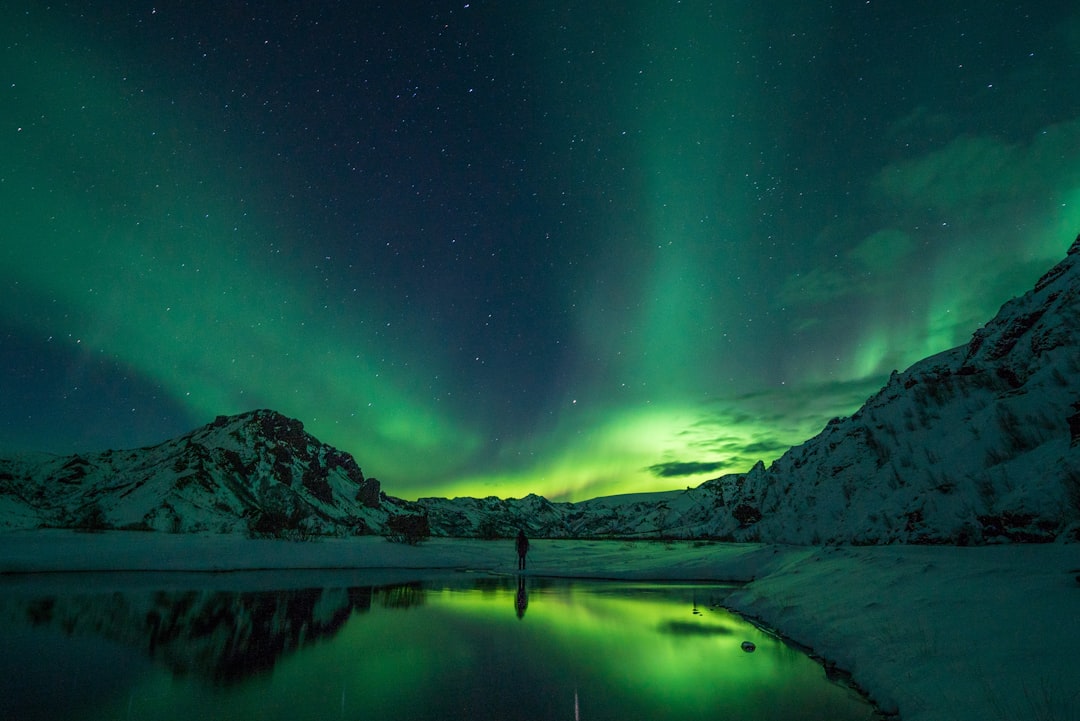
Aurora chasing near Anchorage comes down to one question you'll face somewhere on a clear March night: how far are you willing to drive when the forecast lights up? The Glen Alps trailhead sits on the Anchorage Hillside, above most of the city's sodium glow, with a paved overlook that faces the northern sky and a lot big enough to hold the crowd that shows up on high-Kp nights. You park, you walk out, you look up. Then there's the other posture — the one where you get in the car after dinner and keep driving, past the last stoplight in Eagle River, up toward the Knik River corridor or the turnoff at Eklutna, where the sky goes properly black and the lights don't have to fight anything to show themselves. Same aurora. Different amount of night between you and it.
Before any of these spots matters, the sky has to cooperate. Two inputs govern a night: geomagnetic activity and cloud cover. The University of Alaska Fairbanks Geophysical Institute publishes the aurora forecast locals actually check — a one-hour short-term outlook and a 28-day rolling view — at gi.alaska.edu/monitors/aurora-forecast. Pair it with a weather radar for cloud cover.
Two things are worth understanding about Anchorage specifically. First, it sits at about 61.2°N geomagnetic latitude, south of the main auroral oval that runs over Fairbanks at roughly 64.8°N. Fairbanks sees aurora on quiet nights with a Kp index as low as 2 or 3. Anchorage typically needs Kp 4 or higher for a modest display on the northern horizon, and Kp 5 or higher for reliably strong overhead activity — though strong local darkness and a clear northern horizon can pull visible aurora down on the right night. Second, Anchorage has a coastal, maritime climate — which means cloud cover is a more consistent obstacle here than in Interior Alaska. The KNOW BEFORE YOU GO implication: plan more nights than you think you'll need.
The viewing season runs roughly late August through mid-April. Between late April and late August, the sky doesn't get dark enough — the midnight sun is doing its other job.
The most-used aurora viewpoint in the Anchorage area, and for real reasons. The trailhead sits at about 2,200 feet on the Anchorage Hillside, above the thickest of the city's light dome. A paved accessible overlook is about 250 yards from the parking lot. Drive time is 20–25 minutes from downtown; the last stretch is Toilsome Hill Road, which has a switchback steep enough that in icy conditions you'll want all-wheel drive or studded tires. Standard Chugach State Park day-use fee applies (or use an Alaska State Parks annual pass). The city's glow is still there to the northwest, but the northern horizon — where the aurora tends to form first — is wide open.
The western edge of the city, on bluffs above Cook Inlet. Kincaid is about 10 miles from downtown at the end of Raspberry Road. Point Woronzof is closer. Both face north and west over the water. Note: Point Woronzof sits directly north of the Ted Stevens International Airport runway complex, and the airport apron lighting spills across the southern sky, so long exposures pick up light pollution your eye won't notice. Good for a quick after-dinner check when the forecast spikes and you don't want to commit to the hillside drive.
About 40–45 minutes northeast of downtown, at the end of Eagle River Road (12 miles past the Eagle River Loop exit off the Glenn Highway). The parking lot sits in a glacial valley surrounded by mountain ridgelines that block residual light from the north side of town. The nature center building keeps shorter winter hours and is closed Mondays and Tuesdays, but per the Friends of Eagle River Nature Center, the trails and trailhead remain accessible 24/7. $5 daily parking fee per vehicle.
The stretch of the Glenn Highway between Mile 26 (Eklutna exit) and Mile 30.6 (Knik River Access) runs through some of the darkest sky within an hour of downtown. Eklutna Lake Road itself is paved and stays open year-round, though it's narrow and winding and plowing after a storm can lag — crews can take 30+ hours to clear after a big snowfall. The Eklutna Lake campground closes for services in winter, but the day-use area and trailhead remain reachable. Roughly 40–45 minutes from downtown.
The Knik River valley at Mile 30.6 opens wide to the north with no terrain in the way. The Palmer Hay Flats State Game Refuge maintains a steel viewing tower on the northwest side of Reflections Lake, built primarily for waterfowl but oriented well for aurora viewing across the flats. The main parking area is plowed; per Alaska Department of Fish and Game, the refuge's internal access roads receive minimal winter maintenance, so stay on the main lot and the boardwalk.
The close-in tier rewards spontaneity. Forecast spikes at 9 p.m.? Glen Alps is a 25-minute commitment. The middle tier rewards a dinner that ends early — you're trading an hour of driving for meaningfully darker skies. The deep tier rewards planning: you're building the evening around the drive, bringing warm layers because you'll be standing still at 10°F, and committing to the idea that aurora chasing is the night's main event rather than a side trip from dinner.
Aurora season: Roughly late August through mid-April per the UAF Geophysical Institute. Summer is out — the sky doesn't darken enough.
Peak hours: 10 p.m. to 2 a.m. local time is the standard window per NOAA and UAF. UAF GI notes the broader 9 p.m. to 3 a.m. window captures most activity.
Forecast: The UAF Geophysical Institute aurora forecast at gi.alaska.edu/monitors/aurora-forecast is the standard reference. Check the short-term (one-hour) outlook and the 28-day rolling forecast. Pair with a cloud-cover check on your weather app of choice.
Kp thresholds for Anchorage visibility:
Kp 3–4: Arc on the northern horizon, often faint; close-in spots may not be enough
Kp 4–5: Reliable northern-horizon display from any of the five access points below
Kp 5–6: Overhead activity possible; deeper-tier spots pay off with brighter color and motion
Kp 7+: Visible even within city limits
Glen Alps: Drive via Seward Highway to O'Malley Road, then Hillside Drive to Upper Huffman to Toilsome Hill Road. Chugach State Park day-use parking fee applies (or Alaska State Parks annual pass). Toilsome has steep switchbacks — in winter, studded tires or AWD recommended. Check current Chugach State Park conditions at dnr.alaska.gov/parks/aspunits/chugach before driving up after fresh snow.
Kincaid Park / Point Woronzof: Both accessible via Raspberry Road or Point Woronzof Road. Free parking. Point Woronzof has airport light spill to the south — orient toward the north/northwest.
Eagle River Nature Center: 32750 Eagle River Road, Eagle River, AK 99577. Glenn Highway north to the Hiland/Eagle River Loop exit, then Eagle River Loop Road to Eagle River Road, and follow to the end. $5 parking fee per vehicle for 24 hours. Building hours: Mon-Tue closed, Wed-Sun 10 AM–5 PM (seasonal variation). Parking lot and trailhead remain accessible 24/7. Current hours and trail conditions at ernc.org. Phone: (907) 694-2108.
Eklutna / Knik River corridor: Glenn Highway north, Mile 26 exit for Eklutna Lake Road, or Mile 30.6 (Knik River Access) for Reflections Lake and the Palmer Hay Flats viewing tower. Check road conditions at 511.alaska.gov before deep-winter drives — Eklutna Lake Road can stay unplowed for 30+ hours after major storms.
Dressing for stillness: Standing for two hours at 10°F is a different physical challenge than hiking in it. Layers, insulated boots, hand warmers, a thermos. Most guests underdress the first night and overcorrect the second.
Photography note: Long exposures pick up light pollution your eye filters out. A spot that looks fine visually may wash in a 15-second exposure. Each tier above delivers measurably cleaner backgrounds.
Aurora season brings a specific kind of planning guest — one who's built the trip around the lights and wants multiple nights for the attempt. Anchorage's maritime climate produces more cloud cover than Interior Alaska, which means three-plus nights is the planning rule hosts see work most reliably; a single clear night isn't guaranteed in any given week. Rentals in Eagle River, the Eklutna area, or further out toward Palmer put you closer to the deep-tier skies without a midnight drive back to downtown; staying closer in means shorter late-night commutes after a Glen Alps session. Booking ahead opens up both options — whichever matches the pace you want your evenings to have.
Five access points. Three tiers of darkness. One forecast that decides which of them is worth your night.
The aurora doesn't care how far you drove — but your eyes will, and so will your camera. The Anchorage question isn't whether you'll see the lights. It's how much of the night you're willing to spend getting to the version of the sky where they look the way you imagined.
Want to feature your business on the DirectStay Blog?
Want to feature your business on the DirectStay Blog?

Connect with travelers, share your space, and join a community of hosts earning together.
Become a host