

 DirectStay

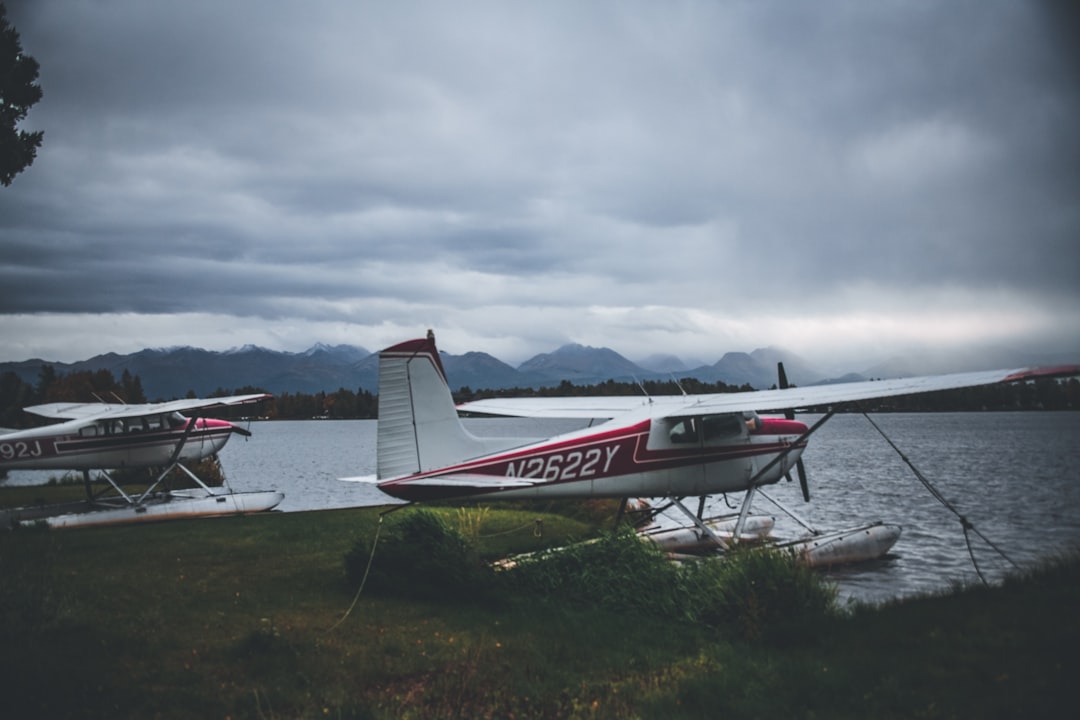
Anchorage handles more daily floatplane traffic than anywhere else on earth. Pull off International Airport Road, find the gravel shoulder along Lake Hood, and watch what happens for an hour: a single-engine bush plane taxis out of a slip, lines up on the channel, and is airborne before you've finished your coffee. Another lands while the first is still climbing. Most visitors see a free air show — pontoons, propwash, a photo that does well on social media. But a closer look reveals something that changes how you understand the state you flew in to visit. Every one of those takeoffs is someone headed to a place a car cannot reach. Then there's the second way to stand at this lake — the one where the plane itself stops being the point.
Lake Hood averages 190 flights a day and has held the title of the world's busiest seaplane base for decades. The base had its own control tower until 1977, when operations were folded into the new tower at Ted Stevens Anchorage International Airport next door — which makes the whole operation feel bigger than a lake and smaller than an airport at the same time. The viewing shoulder along the takeoff channel is free. There are picnic tables. Planes pass close enough that the pilots are recognizable faces, not silhouettes.
That part is the spectacle, and it's worth an hour on any Anchorage trip. But most people stop there. They take the picture and drive to the next thing.
Here's what most visitors don't realize about the lake:
Most states have airports. Alaska has a network. Approximately 82% of Alaska's communities are not connected to the state's paved road system — a figure Alaska's Department of Transportation treats as the baseline reality of the state. The bush plane isn't a scenic indulgence in that math — it's groceries, medevac, mail, fuel, the midwife, the mechanic. When a single-engine floatplane lifts off Lake Hood at 2 PM, there's a reasonable chance someone in a village 200 miles from the road system is waiting for what's in the cargo hold.
Across the water, on the south shore, sits the Alaska Aviation Museum. It opened to the public in 1988, and it's the part of a Lake Hood visit that most itineraries skip — which is a mistake, because it's the layer that makes the lake make sense.
Four hangars of vintage aircraft — Main, Rasmuson, South, and the Cecil Higgins Restoration Hangar. A Consolidated PBY Catalina, the "Queen of Dago Lake", that emergency-landed at a shallow lake on the Alaska Peninsula in 1947 while operating with the 10th Rescue Squadron out of Elmendorf. The plane sat at Dago Lake for decades after the military declared it surplus, until museum volunteers and the Alaska Army National Guard recovered it in two stages — to King Salmon in 1984, then airlifted the rest of the way to Lake Hood in 1987 via Army training missions. A Curtiss P-40 still being restored by volunteers visible through the Cecil Higgins Restoration Hangar windows. And the Seybert Tower on the lakeshore — a renovated control-tower cab from Merrill Field, dedicated at the museum in September 2014, now equipped with a live audio feed of the air-traffic communications covering Lake Hood traffic.
Standing in the tower cab after walking through the hangars is a different experience than pulling off the road for photos. You hear a call sign, watch the plane it belongs to turn out of the slip, follow it down the channel, and realize you just heard the coordinates of a lake most maps don't label. The spectacle becomes legible.
Most travelers come to Alaska with a list — Denali, glaciers, bears, aurora. The list is fine. But nothing on the list is reachable the way things are reachable in the Lower 48, and understanding why starts at Lake Hood.
The bear-viewing day flight out to Katmai runs well into four figures per person because that's what it costs to charter a small aircraft to a place with no road. The lodge on the remote lake costs what it costs because the groceries arrived on the same kind of plane. The cabin in Skwentna — a wilderness village 70 miles from Anchorage that's an early checkpoint on the Iditarod and has no road in — exists as a destination because Lake Hood exists as a departure.
Once you've watched the tower feed for twenty minutes, the rest of the Alaska trip stops feeling expensive or inconvenient. It starts feeling accurate.
Where: Lake Hood Seaplane Base, approximately 3 nautical miles southwest of downtown Anchorage, adjacent to Ted Stevens Anchorage International Airport. The free viewing area runs along the takeoff channel — pull off International Airport Road or drive the loop roads around the lake.
Alaska Aviation Museum: 4721 Aircraft Drive, Anchorage, on the south shore of Lake Hood. Current admission, hours, and event schedule live at alaskaairmuseum.org — hours have historically run daily in summer with reduced winter hours. Verify before visiting.
Seybert Tower audio: The museum's lakefront tower cab carries a live air-traffic feed covering Lake Hood. This is the detail most visitors miss and the one that makes the visit cohere. Worth pacing the museum so you end here rather than start.
Best viewing window: Midday through early evening in summer typically brings the heaviest traffic, as most flightseeing and bush operations stage around weather windows. Winter operations continue — the frozen lake is maintained for ski-equipped aircraft (maximum 12,500 lb) — but volume drops significantly.
Cost: Lake Hood shoulder viewing is free. Museum admission is set annually — check their site for the current rate. Museum parking is on-site; call ahead for current accessibility if that's a planning factor.
Pairing: Lake Hood pairs naturally with an arrival or departure day. The museum sits roughly five minutes from Ted Stevens Anchorage International Airport, which makes it one of the few Anchorage attractions you can legitimately visit with a carry-on in the trunk.
If a flight is on your itinerary: If a Lake Hood flightseeing or bear-viewing flight is booked (Rust's Flying Service, Alaska Air Service, Fly Katmai, and others depart from here — see Blog #3 for the operator-level comparison), the museum becomes the pre-flight orientation most operators don't provide. Hangar tour first, tower cab second, then walk to your departure dock already knowing what you're looking at.
The lake is free. The museum is not. Either way, you leave with something most Alaska trips don't include: an honest answer to the question of why the state costs what it costs, why the distances feel wrong on a map, and why the plane in the sky above your rental right now is probably carrying someone home. Alaska isn't scenic because nobody developed it. Alaska is scenic because nobody could reach most of it — and the bush planes that made what little access exists still take off from a lake three miles from downtown. You can watch them without understanding, and that's a fine afternoon. Or you can cross the water, sit in the Seybert Tower, and let the state's whole infrastructure become a thing you can hear.
Want to feature your business on the DirectStay Blog?
Want to feature your business on the DirectStay Blog?

Connect with travelers, share your space, and join a community of hosts earning together.
Become a host