

 DirectStay

The Anchorage region puts you within reach of more glacier access points than almost any city on earth, and that turns into a filtering question fast. Ice that arrives through a boat window behaves differently than ice you hike to, which behaves differently than ice you walk on with crampons or watch calve from a floatplane. At Exit Glacier near Seward, a paved path leads you past dated signs marking where the terminus sat in past decades — the walk itself becomes a timeline, each sign further from the ice than the last. Then there are paths where the glacier doesn't sit still for you at all, where you're moving at boat-speed or flight-speed, and the scale of what Alaska actually is starts to register differently. The question isn't whether you'll see a glacier. It's how much distance you want between you and it.
Five access points, same region, radically different experiences. The decision narrows quickly once you name what you want from the encounter.
Portage Valley, about an hour south of Anchorage via the Seward Highway. The glacier itself no longer reaches the lake, so the view from the Begich, Boggs Visitor Center is across water where ice used to sit. The mv Ptarmigan runs an hour-long cruise across Portage Lake to the glacier face. Half-day commitment total. The trade: low effort, modest payoff, but the Turnagain Arm drive alone earns the gas.
Same Portage Valley corridor. US Forest Service lists it as a short, easy trail — roughly 1.4 miles one-way through an alluvial plain of alders and rocks to a viewing area beneath Byron Glacier. Free. You won't touch the ice, but you'll stand close enough to understand the scale. Two to three hours including the drive.
In July 2018, Brittany Boegel, a 32-year-old Minnesota schoolteacher, was killed when a hollowed-out compressed snow formation resembling a snow cave collapsed on her and two others at Byron Glacier. The Chugach National Forest and the Chugach Avalanche Center have both issued standing warnings against entering snow caves or ice caves here — avalanche hazard runs from winter into early summer, and collapse hazards on the debris features can present year-round. Stay on the maintained trail. Do not enter snow or ice caves.
Exit Glacier
Kenai Fjords National Park, outside Seward. About 2.5 hours from Anchorage. No park entrance fee. Exit Glacier is the only part of Kenai Fjords National Park accessible by road, and the access road closes in winter.
The paved Glacier View Loop is wheelchair-accessible; the Glacier Overlook Trail continues up for a closer approach. This is where the retreat markers live — dated signs along the path and road showing where the terminus stood in past decades going back to the 1800s. The National Park Service has recorded Exit Glacier retreating approximately 187 feet between 2013 and 2014 alone, and more than 1.25 miles since its Little Ice Age maximum in 1815. You're not looking at ice so much as reading a timeline.
For the ambitious, the Harding Icefield Trail continues up from the Glacier Overlook — 9 miles round-trip, substantial elevation gain, 6–8 hours to complete, with panoramic views from Marmot Meadows and above. Bears frequent the trail. Exit Glacier received its name in 1968 when the first documented mountaineering party to cross the Harding Icefield used this glacier as their descent route.
Full-day commitment once you factor the drive both ways.
26 Glacier Cruise (Phillips Cruises & Tours)
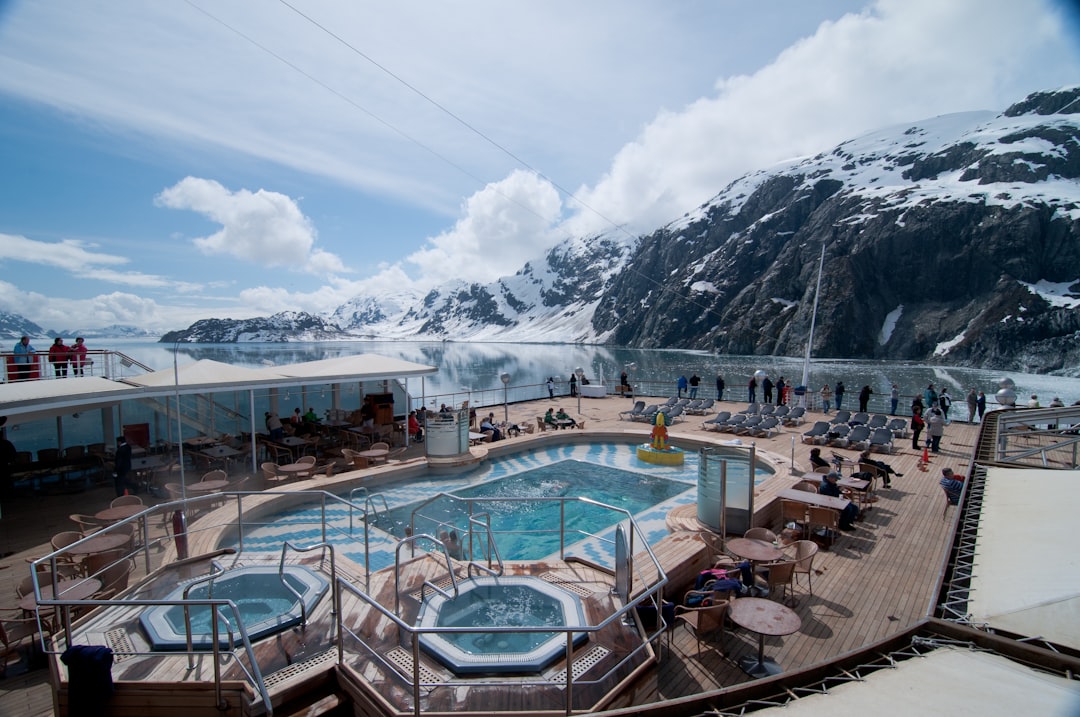
Departs Cliffside Marina in Whittier, accessed via the Anton Anderson Memorial Tunnel (single-lane, alternates direction on a schedule — check before you go; passenger-vehicle toll is charged roundtrip on the Whittier-bound entry). A 5.25-hour high-speed catamaran route covering 130 miles round-trip through Passage Canal, Esther Passage, College Fjord, and Harriman Fjord in Prince William Sound, past 26 named glaciers. The glaciers in College Fjord were named during the 1899 Harriman Expedition after Ivy League colleges — Harvard, Yale, Bryn Mawr, Barry, among them. Running since 1987. Hot lunch included. U.S. Forest Service ranger narrates.
You don't work for this; the boat does. What you get is scale — the kind you can't build from a trail because the ice is too big for anything smaller than a vessel to frame. Full day, gate to gate.
Matanuska Glacier
Near Glacier View, along the Glenn Highway about 100 miles northeast of Anchorage (roughly 2–2.5 hours, past Palmer). Privately managed access through Glacier Park at Mile 102 via South Glacier Park Road. Self-guided entry is available for a per-person fee; guided glacier treks (crampons, helmets, poles provided) run longer and cost more. 27 miles long and 4 miles wide at its terminus, the Matanuska is the largest glacier accessible by car in the United States, and one of the few where you can walk directly onto the ice. Unlike Exit, Matanuska has been largely stable over the past few decades — it flows about a foot per day but the terminus position has moved relatively little. Full day once you factor the drive.
Under three hours, short hike: Byron Glacier Trail (stay on the maintained trail)
Half-day, minimal physical ask: Portage Glacier boat
Full day, moderate walking, geological story: Exit Glacier with retreat markers
Full day, passive immersion, maximum scale: 26 Glacier Cruise
Full day, options from self-guided viewing to on-ice trekking: Matanuska Glacier
None of these substitutes for another. A cruise doesn't replace a walk. Walking to a terminus doesn't replace stepping onto the surface. The question is which relationship with ice you want first.
Where the access points live: Glacier access spans the Seward Highway south (Portage corridor to Seward), Whittier via tunnel, and the Glenn Highway northeast (Matanuska). Each is a distinct day trip from Anchorage.
Seasonal access: Most boat-based glacier experiences run mid-May through mid-September. The 26 Glacier Cruise 2026 season is May 2 – September 14. Portage Glacier Cruises and seasonal guided Matanuska treks operate in similar windows. Verify current-year operating dates on the operators' sites before planning around specific days.
Kenai Fjords National Park fees: None. The park charges no entrance fee at Exit Glacier. Current trail conditions and seasonal road status are posted by the National Park Service — check the park's Current Conditions page before heading to Seward.
Whittier tunnel: The Anton Anderson Memorial Tunnel is single-lane and alternates direction on a published schedule. A roundtrip toll is collected on the Whittier-bound entry (passenger-vehicle rate posted by Alaska DOT). Check current schedules and toll rates at dot.alaska.gov before your Whittier day — missing your window can add 30+ minutes.
Portage Glacier Cruise: mv Ptarmigan, approximately one-hour cruise across Portage Lake, multiple daily departures in summer. Current schedule, pricing, and booking at the operator's site.
26 Glacier Cruise: 5.25 hours out of Whittier's Cliffside Marina (100 W Camp Rd, Whittier). One cruise daily, 12:00 PM – 5:15 PM. Self-drive guests are recommended to arrive via the 10:30 AM tunnel opening. Advance booking strongly recommended in peak summer. Cruise-only, coach+cruise (from Hotel Captain Cook, Anchorage), and rail+cruise packages available at phillipscruises.com.
Matanuska access: Access is privately managed by operators at Mile 102 of the Glenn Highway (South Glacier Park Road). Self-guided access and guided treks both offered. Current self-guided access fees run about $25 per person; guided trek pricing varies. Current entry fees, trek pricing, and hours on the operators' sites. Do not attempt to access the glacier surface from public rights-of-way.
Byron Glacier safety: Stay on the maintained trail. Do not enter ice caves or snow-debris caves. Avalanche hazard persists from winter into early summer; collapse hazards on the debris features are year-round. The Chugach Avalanche Center publishes observations for this valley.
Drive times: Anchorage to Portage Valley ~60 minutes. Anchorage to Whittier ~90 minutes plus tunnel wait. Anchorage to Seward ~2.5 hours. Anchorage to Matanuska ~2–2.5 hours. These are dry-road, clear-weather baselines — add time in winter, reduced visibility, or peak summer traffic at scenic pullouts.
Weather: Glacier visibility on cruises is reduced in fog even when the boat still runs. Flight-dependent glacier access (covered in Blog #3) is more weather-sensitive than water or road access. Build backup days into any itinerary that includes ice.
What to pack: Layers on every approach, even in July — glacier surfaces generate their own cold air. Waterproof outer layer for boat decks. Sturdy footwear for Exit and Byron; boots required for guided Matanuska treks (operators typically provide crampons and helmets.
Glacier days run long, and the drives bracket them. Guests staying in surrounding communities — Girdwood, the Mat-Su Valley, or Seward depending on which glacier — can park once, build a full day in the area, and treat the return drive as decompression rather than a second commute. Booking in advance opens up quieter options outside the Anchorage core, especially in peak summer when the highway corridor compresses.
Five ways to stand near ice, each one changing what standing means. The Portage boat and the Matanuska trek aren't the same trip scaled up or down — they're different questions answered in different bodies.
The region gives you the option of holding more than one of them in the same week, and most of the people who come back for a second Alaska trip do so because the first one only answered one version of the question.
Want to feature your business on the DirectStay Blog?
Want to feature your business on the DirectStay Blog?

Connect with travelers, share your space, and join a community of hosts earning together.
Become a host