

 DirectStay

The Dena'ina Civic and Convention Center sits in downtown Anchorage and hosts conventions under a name most visitors walk past without registering. The name isn't decorative. The Dena'ina Athabascans have lived along Knik Arm and Cook Inlet for thousands of years — long before the U.S. Post Office Department, in April 1915, overrode a town-naming election to make the English word stick on the signs you're reading now — and the Center's 2008 opening was the moment their name became publicly visible in the city they've always lived in. Walk the Coastal Trail and you'll find Dena'ina place-name markers at Westchester Lagoon and Point Woronzof. Then there's the other door — a 26-acre campus on the north side of town where the introduction happens on the Dena'ina's own terms, with people in the room who can answer the question you're about to ask. Same heritage, two distances between you and it.
The Dena'ina are one of many Athabascan peoples in Alaska, and their traditional territory is where you're standing when you land at Ted Stevens — the Anchorage bowl, the Kenai Peninsula, parts of the Mat-Su. The Alaska Native Heritage Center organizes all of Alaska Native heritage into five major culture groups, covering eleven distinct peoples across the state. The Dena'ina sit within the Athabascan group, alongside other Interior and Southcentral Athabascan peoples who share linguistic roots but have different territories, different relationships to salmon and caribou and the coast. Most visitors arrive with a single mental folder labeled "Native Alaskan" and leave without ever separating it. The place names are one way to start separating. Eklutna, Tyonek, Kenai, Knik — Dena'ina words, Dena'ina places.
The Alaska Native Heritage Center sits on 26 wooded acres on the north side of Anchorage, about ten minutes from downtown, on the traditional territory of the Native Village of Eklutna. Inside, the Hall of Cultures walks you through all five culture groups with exhibits, regalia, and context. Outside, six life-sized traditional dwellings ring Lake Tiulana — representing the Athabascan, Iñupiaq/St. Lawrence Island Yupik, Yup'ik/Cup'ik, Unangax̂ (Aleut), Alutiiq, and the shared Eyak/Tlingit/Haida/Tsimshian peoples. The lake itself is named after the late Iñupiat artist and dancer Paul Tiulana. You walk from one dwelling to the next and see how the architecture answers the landscape it came from.
The part that changes what the place actually is: the staff leading the outdoor guided walks are culture bearers — Alaska Native practitioners demonstrating practices they grew up in. Daily dance performances in the Gathering Place aren't a show imported for tourists. They're the practices, performed by the people who practice them, in a space built to host them.
You don't have to go to the Heritage Center to meet the Dena'ina. You have to notice what's already around you. The Dena'ina Civic and Convention Center downtown carries the name because the Dena'ina Athabascans are the original people of this ground — not as history, as present tense. Walk the Coastal Trail and you'll pass a marker at Westchester Lagoon explaining that the Dena'ina name for Chester Creek is Chanshtnu — grass creek. Point Woronzof carries the Dena'ina name Nuch'ishtunt, "the place protected from the wind." Potter Marsh is Hkaditali, a reference to driftwood that collected on the tidal flats. These markers are part of an ongoing project — led by the Native Village of Eklutna in partnership with the Anchorage Park Foundation — that plans as many as 32 Dena'ina place-name signs across the city. The first two went up at Chester Creek in 2021; Potter Marsh's Hkaditali marker was dedicated on Indigenous Peoples' Day 2022; Point Woronzof's Nuch'ishtunt marker was dedicated in August 2023. More are in development.
Eklutna, about twenty-six miles north on the Glenn Highway, is a Dena'ina village that has been continuously inhabited for centuries — by some accounts close to a thousand years. Its historical park holds the St. Nicholas Russian Orthodox Church, built during the late-1800s mission to the Knik Dena'ina and relocated to its current site in 1897, alongside the brightly painted spirit houses that emerged when Dena'ina practice met Orthodox Christianity — small wooden structures built over graves, decorated in family colors, with the three-barred Russian Orthodox cross often included.
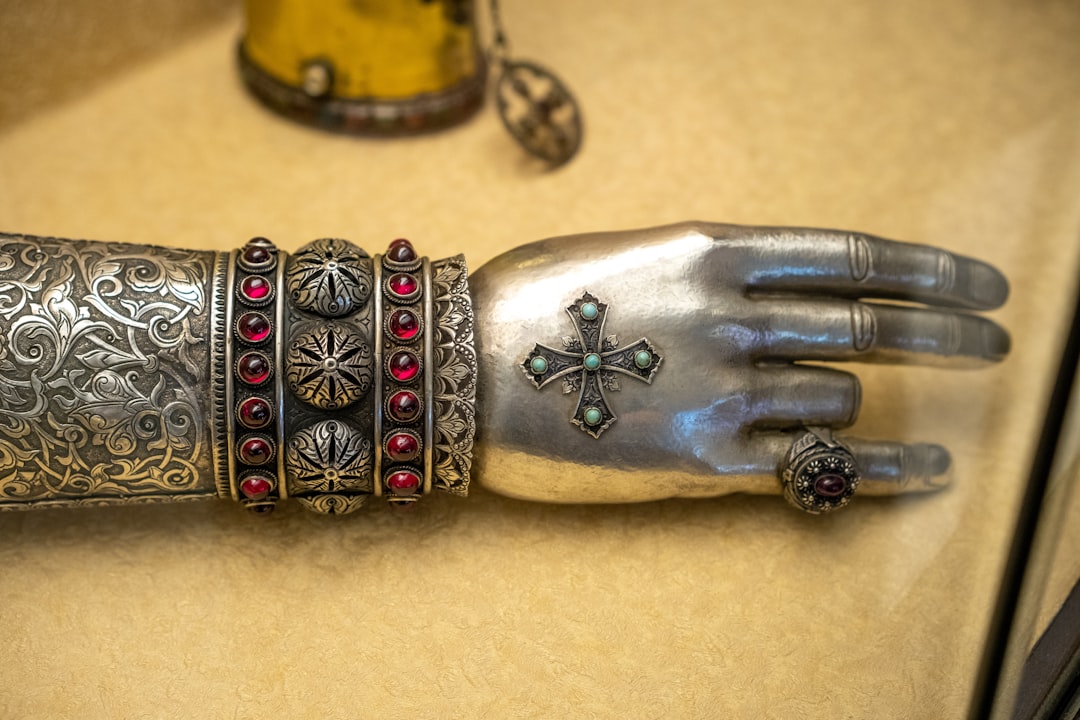
The Silver Hand sticker is the other ambient signal worth knowing. Since 1972, the Alaska State Council on the Arts has administered the Silver Hand program: a small silver-hand emblem that marks work handmade in Alaska by an Alaska Native artist. The program is opt-in and requires tribal enrollment, Alaska residency, and artist age 18+, so plenty of authentic Alaska Native work doesn't carry it — artists who live outside Alaska, or who haven't applied, won't have the sticker. But when you do see it, it means the piece cleared a verification bar. ANHC's Ch'k'iqadi Gallery, the Anchorage Museum store, and established downtown galleries are reliable starting points. When a piece isn't tagged, ask the seller who made it and where — a legitimate seller will have the answer.
The honest afternoon is the Heritage Center first, downtown second. Two or three hours at ANHC reframes what the Dena'ina Center sign means when you pass it on the way to Club Paris, and reframes what you're looking for in a gift shop. Reverse the order and the downtown signs are just downtown signs.
Where: Alaska Native Heritage Center, 8800 Heritage Center Drive, Anchorage. About ten minutes from downtown by car on the north side of the city.
Hours: Summer season (approximately mid-May through mid-September) runs seven days a week, 9am–5pm, with full daily programming — guided village site walks, dance performances, artist demonstrations. Winter season shifts to Monday–Friday, 9am–5pm, self-guided only. Verify current season dates and programming at alaskanative.net before planning.
Admission: Summer admission is a tiered ticket — standard adult, Alaska resident, military, student, and youth rates all differ. Winter admission operates on a suggested donation model instead of a fixed fee. Current pricing is published at alaskanative.net/about/faq — verify before planning a family budget.
What to allocate: Two to three hours for the Hall of Cultures, a dance performance, and a guided village site walk. Families with school-age kids often stay longer — the outdoor sites are physical enough to hold attention.
Free downtown shuttle: ANHC runs a free round-trip shuttle from the Log Cabin Visitor Information Center at 546 W 4th Avenue during summer season — June 1 through September 13, 2026. Shuttle schedule is posted each season at alaskanative.net.
Rideshare note: The ANHC site flags that Uber drops off but doesn't pick up at the Heritage Center; Lyft and Alaska Yellow Dispatch handle both directions. Worth knowing if you're planning to skip the rental car.
Silver Hand art: Look for the silver-hand emblem on the tag. ANHC's Ch'k'iqadi Gallery, the Anchorage Museum store, and established downtown galleries are reliable starting points. If a piece doesn't carry Silver Hand, the piece isn't necessarily inauthentic — ask where it was made and by whom, and get the answer on your receipt.
Eklutna Historical Park: For the ambient extension, Eklutna is at mile 26.5 of the Glenn Highway, about 30–45 minutes from downtown. Dena'ina village, St. Nicholas Russian Orthodox Church dating to the mid-1800s (relocated to the current site in 1897), painted spirit houses over the graves. Summer guided tours and hours run from the village — admission typically in the $3–$6 range. A half-hour to an hour stop, not a destination on its own.
Seasonality note: Winter visits to ANHC are a genuinely different experience than summer — self-guided, no live dance programming, the café closed. If cultural depth is the point of the trip and the visit is October through April, budget for the self-guided version and confirm what's running before committing a half-day.
Travelers who treat ANHC as a half-day tend to pair it with downtown museum time or a Coastal Trail afternoon, which makes central and north-side rentals both workable bases. Booking a rental with room to regroup between stops lets the day breathe — cultural afternoons land harder when nobody's rushing.
Two doors into the same heritage. One is a 26-acre campus where the introduction happens on purpose, with people whose job is to answer the question you've been carrying since you landed. The other is the sign you walk past on the way to dinner, the place-name marker on the trail, the small silver hand on the tag of the piece you're about to buy. Neither version is the real one. Both are. The difference is whether the Dena'ina are the subject of an afternoon you scheduled, or the subject of a city you're finally seeing.
Want to feature your business on the DirectStay Blog?
Want to feature your business on the DirectStay Blog?

Connect with travelers, share your space, and join a community of hosts earning together.
Become a host